
Last updated November 23, 2026
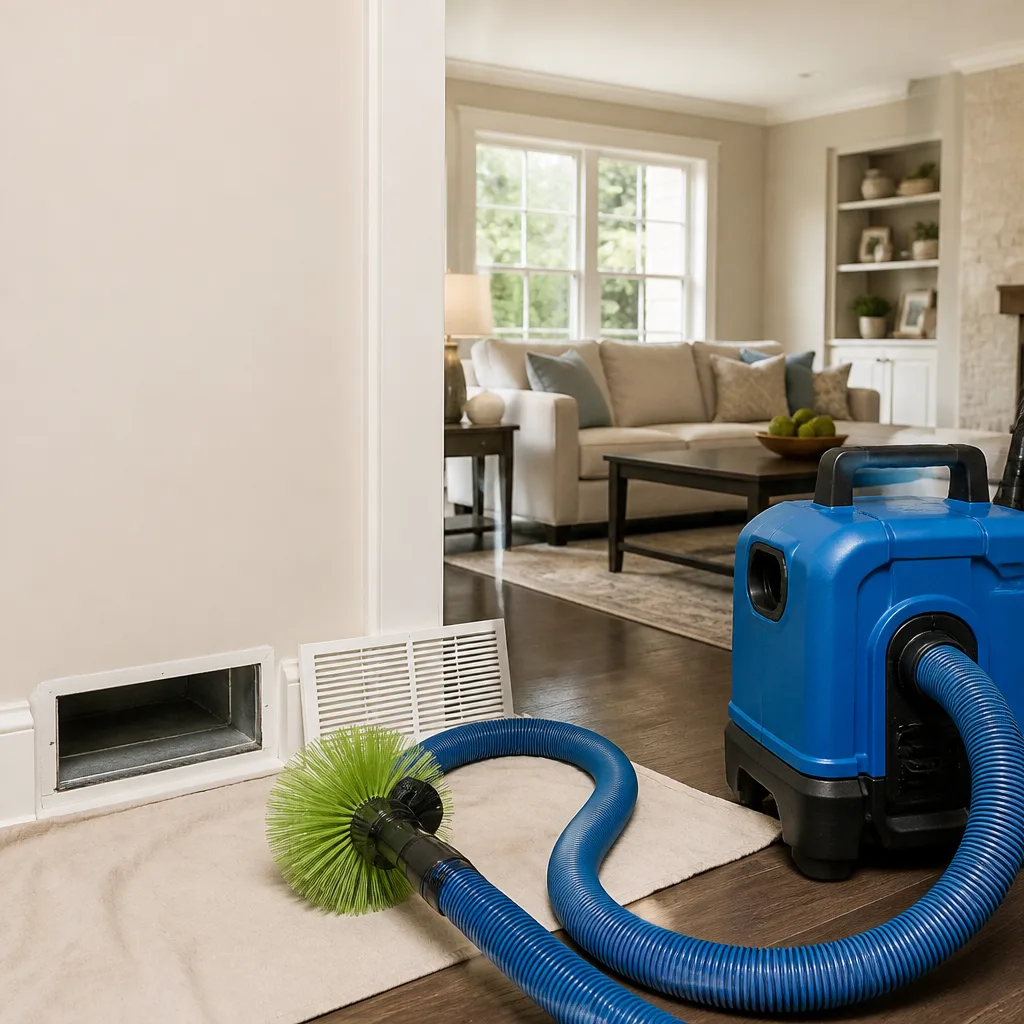 Whole-home duct cleaning
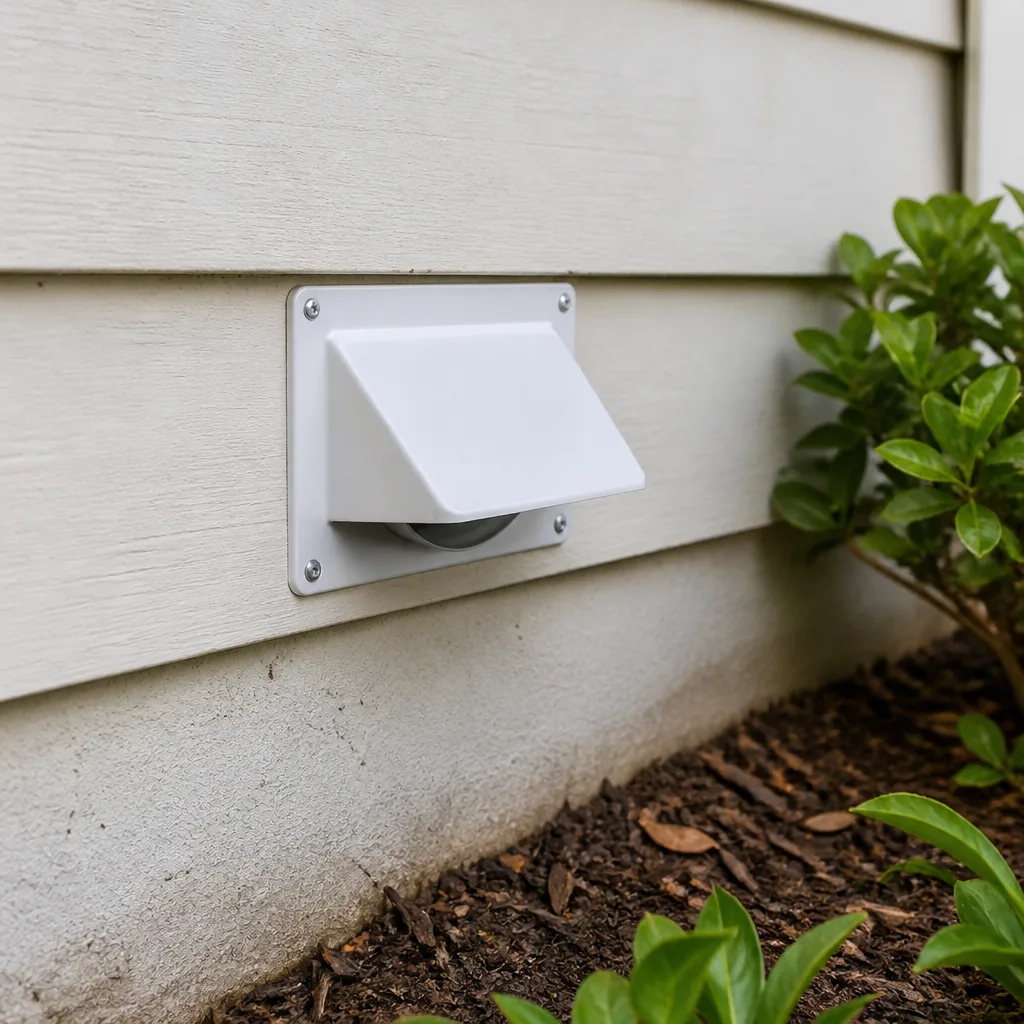 Dryer vent cleaning
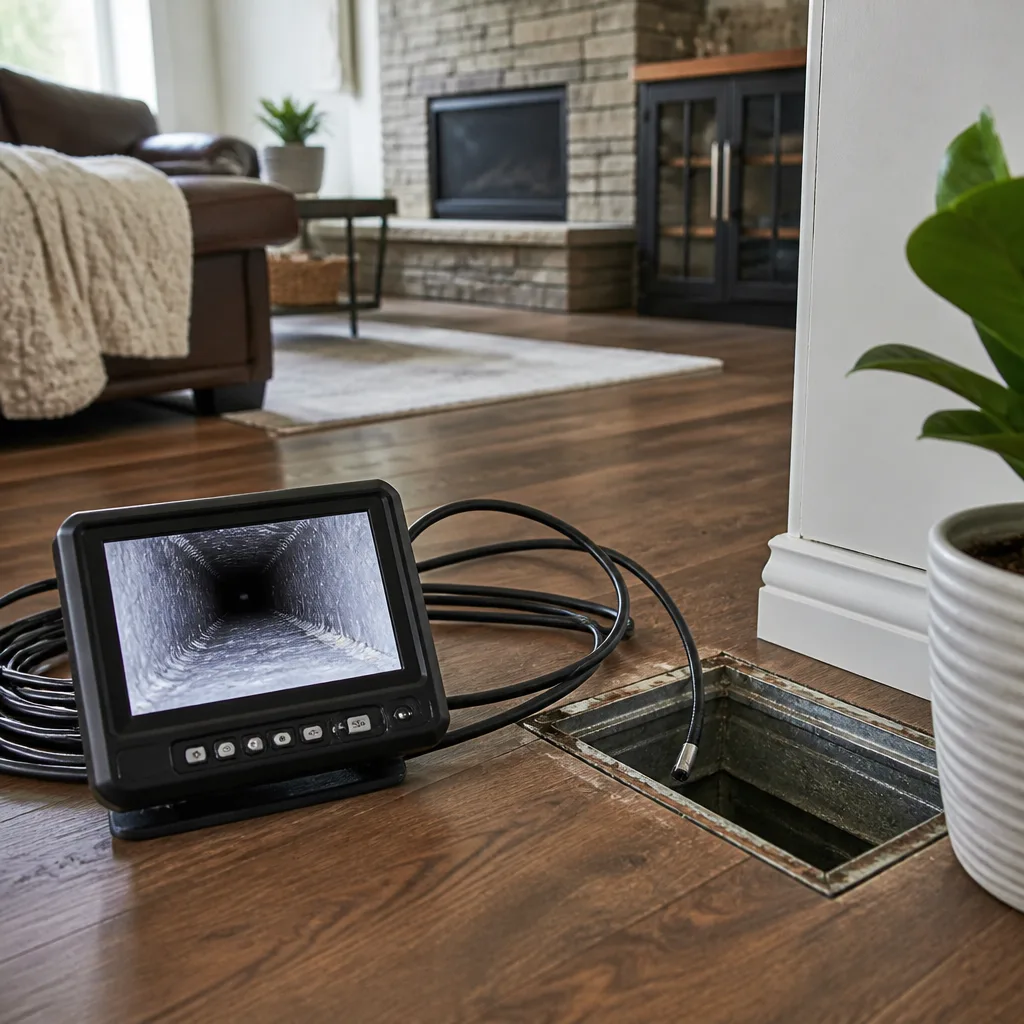 Camera inspection
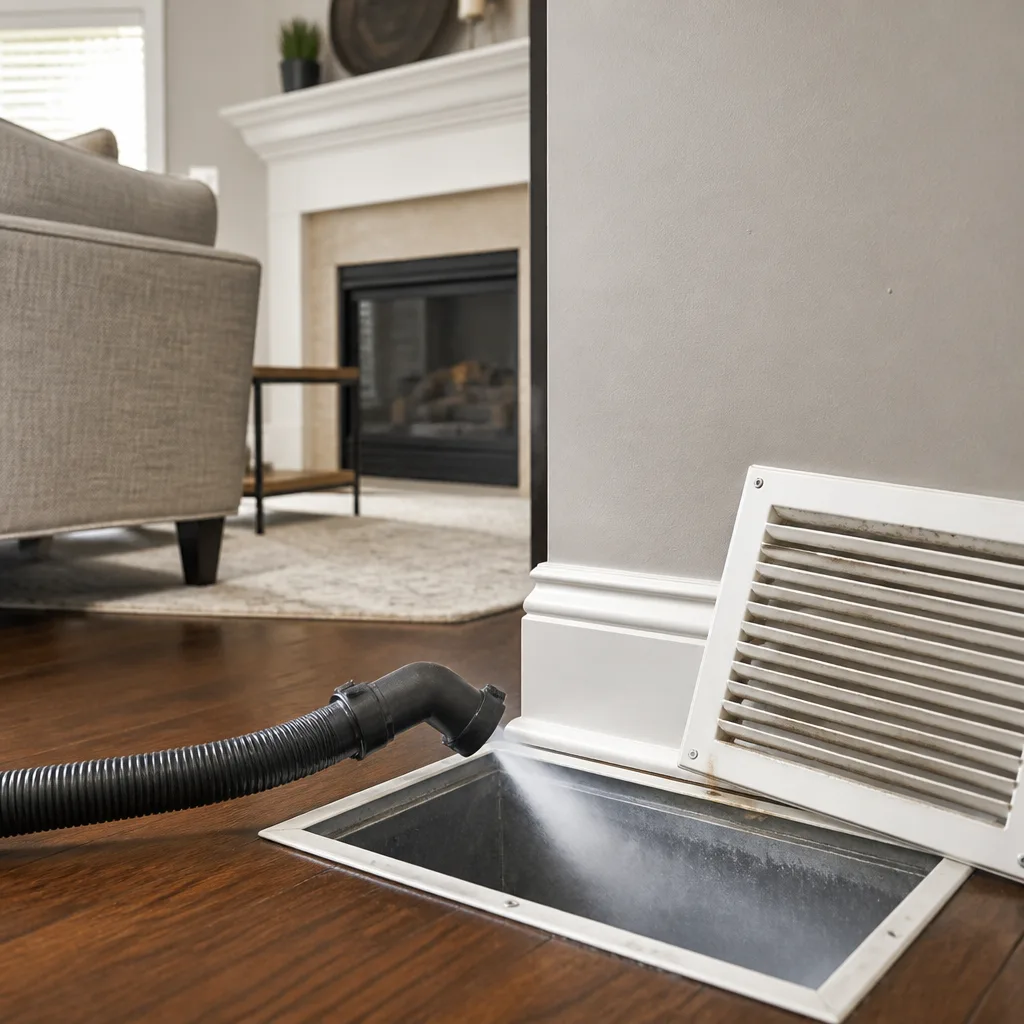 Sanitizing & deodorizing
Whole-system duct and dryer vent check with before-and-after photos - you see exactly what came out of your vents
That "$99 whole-house special" is a bait ad - the real number appears once they are in your hallway, or the "clean" is a shop-vac at the register. We photograph the inside of your ducts before and after instead.
Air Duct Cleaning Maintenance Checklist for Highlands Homeowners
The filter you change every 90 days is catching only what your system’s return duct has already pulled past your living space. By the time it looks dirty, the ductwork upstream has been loading up for months. That’s the gap most homeowners never see. A real maintenance checklist isn’t a calendar reminder to swap a filter, it’s a sequence of checks tied to the actual failure points inside your system, timed to when Highlands weather puts the most pressure on it. Below we walk through a flashlight-and-mirror inspection routine, three upstream contamination sources most lists skip, seasonally timed tasks, and clear thresholds for when a task stops being maintenance and becomes a professional job.
Quick Answer
A workable air duct maintenance checklist for Highlands homeowners covers four things: a quarterly register-by-register visual inspection, a seasonal check of the air handler cabinet, a monthly airflow balance log across rooms, and a professional cleaning on a timeline set by what those checks actually find. Most homes here need a professional deep clean every two to four years, sooner if the visual checks show buildup, moisture, or pest activity. Nothing on the homeowner side requires tools beyond a flashlight, a mirror, and a notepad.
Styles & brands we work with
- Whole-home duct cleaning
- Dryer vent cleaning
- Camera inspection
- Sanitizing & deodorizing
Table of Contents
- The Flashlight-and-Mirror Inspection
- What to Check at the Air Handler Cabinet
- Seasonal Timing for Highlands Weather
- Logging Airflow Balance Room by Room
- The Dryer Vent Task Most Checklists Miss
- When Maintenance Becomes a Professional Job
- Common Mistakes to Avoid
- When to Call a Professional
The Flashlight-and-Mirror Inspection
This is the single most useful thing a homeowner can do, and it takes about fifteen minutes per season. The goal isn’t to clean anything. It’s to catch early-stage buildup while it’s still a thin film on the duct wall rather than a matted layer that has already started shedding into the airstream. Move register to register with a small flashlight and an inspection mirror on an extendable handle. A dental mirror works for tight openings.
At each register opening, angle the light down the branch line and look for three things:
- A visible dust film on the duct wall. A light even coating is normal between professional cleanings. A textured, fuzzy layer means buildup has reached the point where airflow is starting to move it.
- Discoloration, especially dark or greenish patches. That points to moisture, which is the one finding that changes the whole timeline.
- Debris at the register boot, the short transition where the duct meets the grille. Debris collecting here is a leading indicator that the branch behind it is loaded.
Write down which registers show what. A pattern matters more than any single reading. If the same two or three rooms consistently show heavier buildup, that’s a sign of a branch that’s undersized or a damper that’s been throttled too far closed. In Highlands, where homes run heat hard through the cold months, the supply branches serving bedrooms often show heavier accumulation than the common areas, simply because they run longer at higher static pressure.
A mirror helps you see the top surface of the duct interior, where dust settles by gravity. If the top of the duct looks worse than the bottom, you’re looking at normal settling. If it’s uniform all the way around, you’re looking at airstream contamination that’s building faster than it’s settling.
What to Check at the Air Handler Cabinet
Most homeowner checklists stop at the filter and the registers. The air handler cabinet is where the three upstream contamination sources live, and it’s where the biggest problems start. You don’t need to open panels you’re not comfortable opening, and you should never touch wiring. But with the power off at the disconnect, several things are visible with the panel off or through an access port.
- The drain pan. Look for standing water, rust streaks, or a slimy film. Any standing water is a problem that needs attention before the next cooling season. A pan that drains slowly or holds a shallow pool feeds biological growth that the airstream then carries through every duct in the house.
- The coil face. The evaporator coil sits in the airstream and acts like a second filter. A coil face that’s matted with dust and lint reduces airflow, which in turn raises static pressure and pushes more dust into the duct joints. If you can see the coil, look for an even gray coating. If it’s visibly furry or blocked, you’re past the point where cleaning the ducts alone will fix the airflow.
- The blower wheel. The blower wheel is the fan that moves air through the whole system. Over time its blades accumulate a layer of dust that throws the wheel out of balance, which shows up as vibration and a low rumble. Look for a heavy, uneven coating on the blades. A lightly dusted wheel is fine; a caked one is a professional cleaning item, because cleaning it properly requires removing the blower assembly.
These three items matter because they’re upstream of every duct in the system. A clean duct network fed by a dirty coil and a caked blower wheel re-contaminates itself within a season. That’s why the equipment we use matters: a Rotobrush system agitates and vacuums simultaneously, and we run Abatement Technologies air filtration tools during service to capture what gets dislodged rather than recirculating it through the house.
Seasonal Timing for Highlands Weather
Highlands runs a real four-season climate, with cold winters and a heating season that starts earlier and lasts longer than most of the Front Range. That shapes the maintenance calendar in ways a generic national checklist doesn’t account for. The two checkpoints that matter most are the post-heating-season inspection and the pre-cooling-season check.
Post-heating-season inspection (late spring). After a long run of heating, the system has moved a lot of air and the ducts have accumulated whatever the furnace pulled in. If your home has a gas furnace, this is the time to look for fine soot or combustion byproduct residue around the supply registers nearest the furnace and at the flue connection area. Combustion byproducts should never be in the airstream. If you see sooting, stop and get the system checked by a qualified HVAC technician before running it again. That’s a safety issue, not a cleaning issue.
Pre-cooling-season check (early summer). Before the first hot stretch, check the drain pan and the coil face. Cooling season is when moisture-related growth develops, because the coil runs wet and the pan holds condensate. A pan that was dry all winter can start holding water the first week the AC runs.
Mid-winter filter and airflow check. Cold snaps mean long furnace run times. That’s when a restricted filter or a partly closed damper shows up as uneven heating.
Fall pre-season walk-through. Before the heating season starts, check the return grilles for debris and confirm every supply register is open and unobstructed. Furniture, rugs, and curtains pushed against returns are a common cause of restricted airflow that homeowners blame on the ducts.
Logging Airflow Balance Room by Room
Airflow balance is the leading indicator that duct restriction is building up somewhere. You can track it without instruments. Once a month, do a quick hand check at each supply register and note how strong the airflow feels on a simple scale: strong, moderate, weak, or barely there. Write it down with the date. Over a few months, a pattern emerges.
- One room weakening while others hold steady points to a branch-specific restriction: a damper that drifted, a collapsed flex run, or debris in that branch.
- Every room weakening at once points upstream: a dirty filter, a fouled blower wheel, a restricted coil, or a return that’s undersized or blocked.
- One room strong and adjacent rooms weak points to a balancing problem, which is a damper adjustment rather than a cleaning issue.
- Airflow that surges or cycles can point to a blower problem and warrants a technician, not a cleaning.
The value of the log is that it converts a vague sense that “the house isn’t heating evenly” into a dated record. When you call for service, that record tells the technician where to look first. It also justifies the cost of a professional cleaning when the log shows a steady decline that filter changes didn’t fix. A notebook on the fridge works fine for this. You don’t need an app.
The Dryer Vent Task Most Checklists Miss
Dryer vent cleaning is a fire-prevention task, not an efficiency task, and it belongs on the same checklist as the ductwork because it shares the same failure mode: lint accumulating in a concealed pathway until airflow drops and heat builds. Clothes dryers are a leading cause of residential fires, and the vent line is where that risk lives. Most general duct cleaning companies either skip the dryer vent entirely or run a quick pass that doesn’t clear the full run of the line.
What to check yourself, monthly:
- Lint behind the dryer and around the vent connection. A visible ring of lint at the wall connection means the transition duct is leaking lint into the cavity.
- Drying time. If a load that used to finish in one cycle now takes two, the vent line is restricted.
- The exterior damper. Go outside and confirm the flap opens freely when the dryer runs. A stuck damper keeps lint in the line.
- The transition duct material. If it’s the thin white vinyl flex, it’s a lint trap by design. A smooth metal transition duct is the right material.
What not to do: don’t run a consumer lint brush through a long vent run and assume it’s clear. Those brushes compact lint into a plug rather than removing it. A proper dryer vent cleaning uses a rotary brush and vacuum system that clears the full length of the line, and it’s a job worth scheduling on its own interval rather than treating as a tack-on.
When Maintenance Becomes a Professional Job
Vague guidance like “call if it looks bad” is useless. Here are the specific thresholds where a checklist item crosses from homeowner maintenance into professional territory. If any of these apply, stop and schedule a professional service.
- Visible buildup more than a light film at any register. If you can see texture in the dust layer, or if the mirror shows a matted surface, it’s past homeowner cleaning.
- Any moisture in a duct or drain pan that doesn’t clear within a day. Standing water or persistent dampness is a professional call, full stop.
- Mold-like growth anywhere in the system. Discoloration with a musty smell at the registers means the system needs cleaning and the moisture source needs fixing. Cleaning without fixing the source just resets the clock.
- Pest evidence. Droppings, nesting material, or a dead animal in a duct. This is a health and safety issue, not a maintenance item.
- Airflow that drops across two or more rooms within a month, after a filter change, that doesn’t recover.
- Sooting or combustion residue anywhere in or around the system. Stop using the furnace and get a technician out. That’s a safety threshold, not a cleaning threshold.
- Duct joints that are visibly disconnected, crushed, or taped with failing tape. A duct that’s leaking at the joint pulls attic or crawlspace air into the system. That’s a repair and sealing job, and it’s worth knowing we handle it as part of the same visit rather than leaving it for a second contractor.
Below these thresholds, the checklist is genuinely a homeowner job. Above them, it isn’t. Knowing where the line sits is the whole point of the routine.
Common Mistakes to Avoid
- Assuming a new filter means clean ducts. The filter sits downstream of the return duct. It protects the equipment; it doesn’t clean the ductwork. That’s why a filter change never resets the professional cleaning clock.
- Waiting for a visible problem before scheduling anything. By the time dust is blowing out of a register, the system has been contaminating itself for a while. The mirror check catches it months earlier.
- Letting a coupon set the scope. A price that doesn’t specify what’s being cleaned is a price for an unknown job. The real question is whether the whole system, supply and return, gets cleaned and whether you see before-and-after photos of your own ductwork.
- Cleaning the ducts without addressing a dirty coil or blower. The upstream sources re-contaminate the system within a season. Anyone who cleans the ducts and doesn’t at least inspect the air handler is doing half the job.
- Skipping the dryer vent because it “seems fine.” Drying time creeping up by ten minutes is the warning sign, and most homeowners don’t notice the drift. Put it on a calendar.
- Running a shop vac into a register. Homeowner vacuums can’t generate the airflow to pull a duct clean, and they stir up what’s there without capturing it. That’s why professional equipment uses agitating brushes and HEPA capture together.
- Treating air quality hardware as a cleaning substitute. A better filter or an in-duct purifier helps manage what’s in the air. Neither one removes accumulated debris from the duct walls.
When to Call a Professional
Call a professional when any threshold above is met, when the visual inspection shows buildup you can’t reach, when airflow logging shows a steady decline that filter changes didn’t fix, or when you simply haven’t had the system cleaned and can’t tell what condition it’s in. A professional service uses equipment that generates measurable negative pressure and captures dislodged debris, which is the difference between cleaning and stirring. If your system has a dirty coil, a caked blower, or leaking duct joints, a service that can clean, repair, and seal in the same visit saves you from coordinating a second trade. If you’d rather start by getting a clear picture of what’s actually in the system, air duct cleaning with a documented before-and-after is the right first step.
Air Duct Cleaning Highlands offers free estimates in Highlands. Call (855) 658-5079 to get one.
See the difference
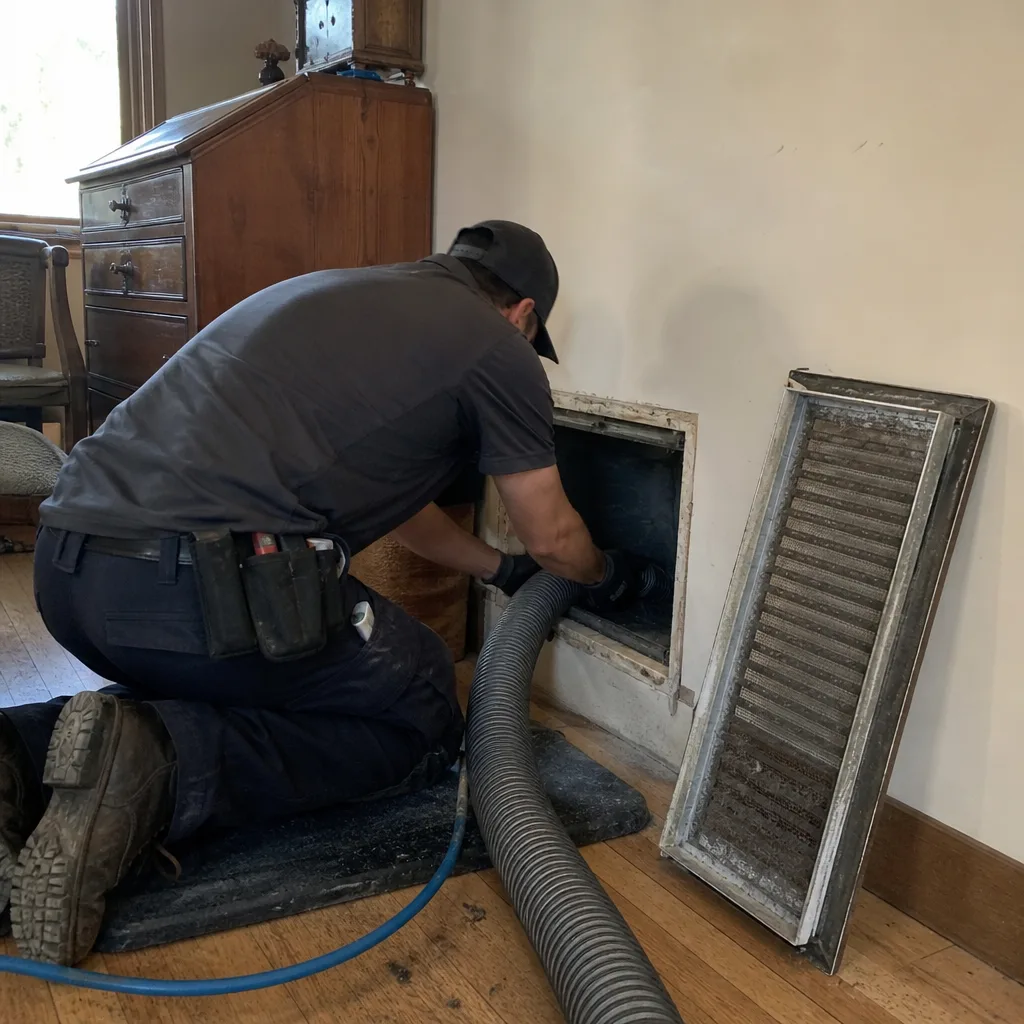 Before
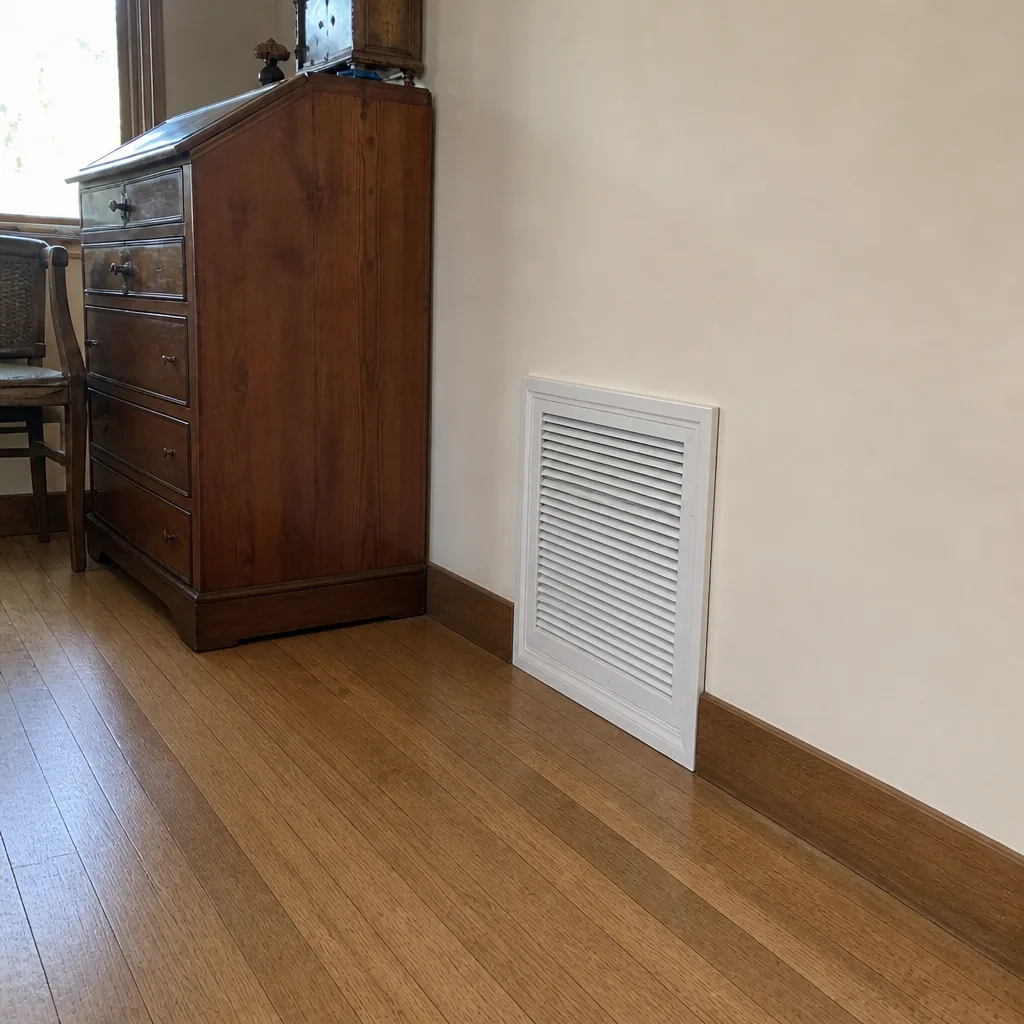 After
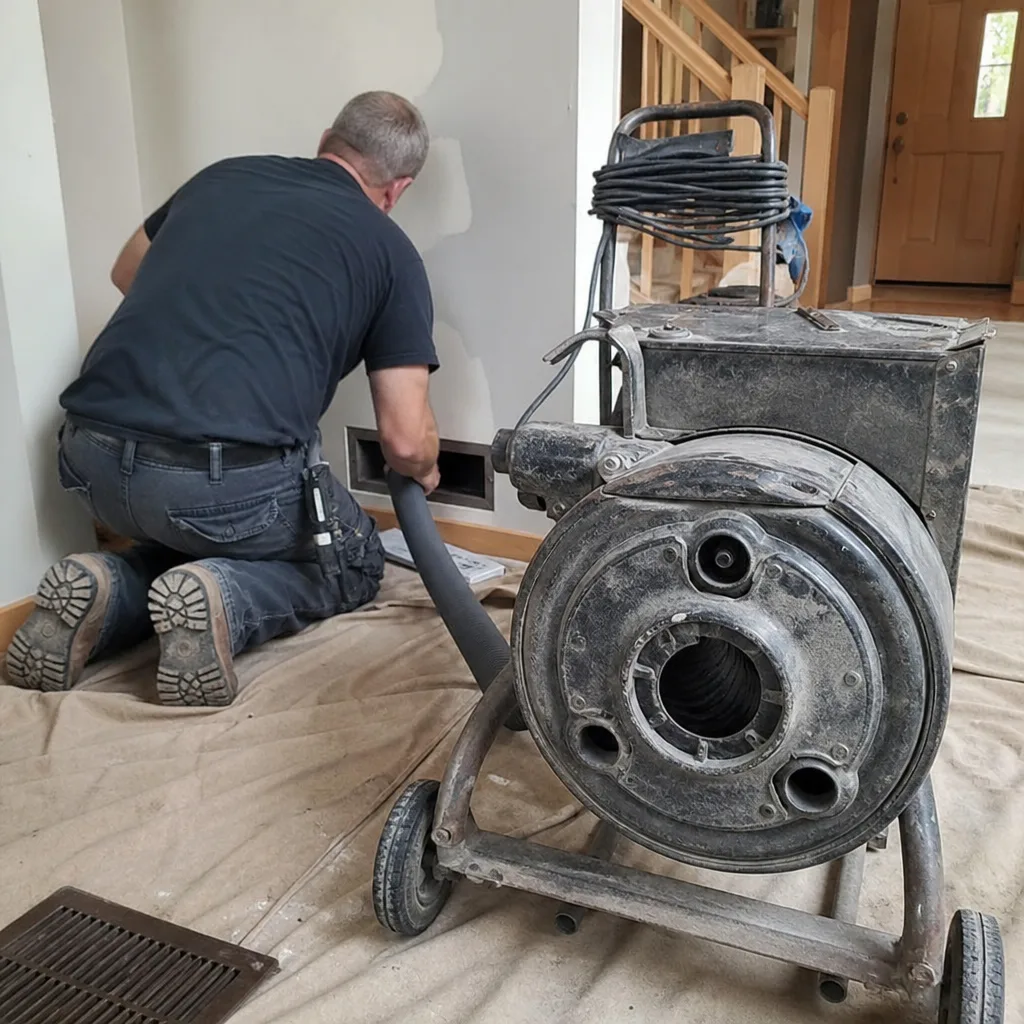 Before
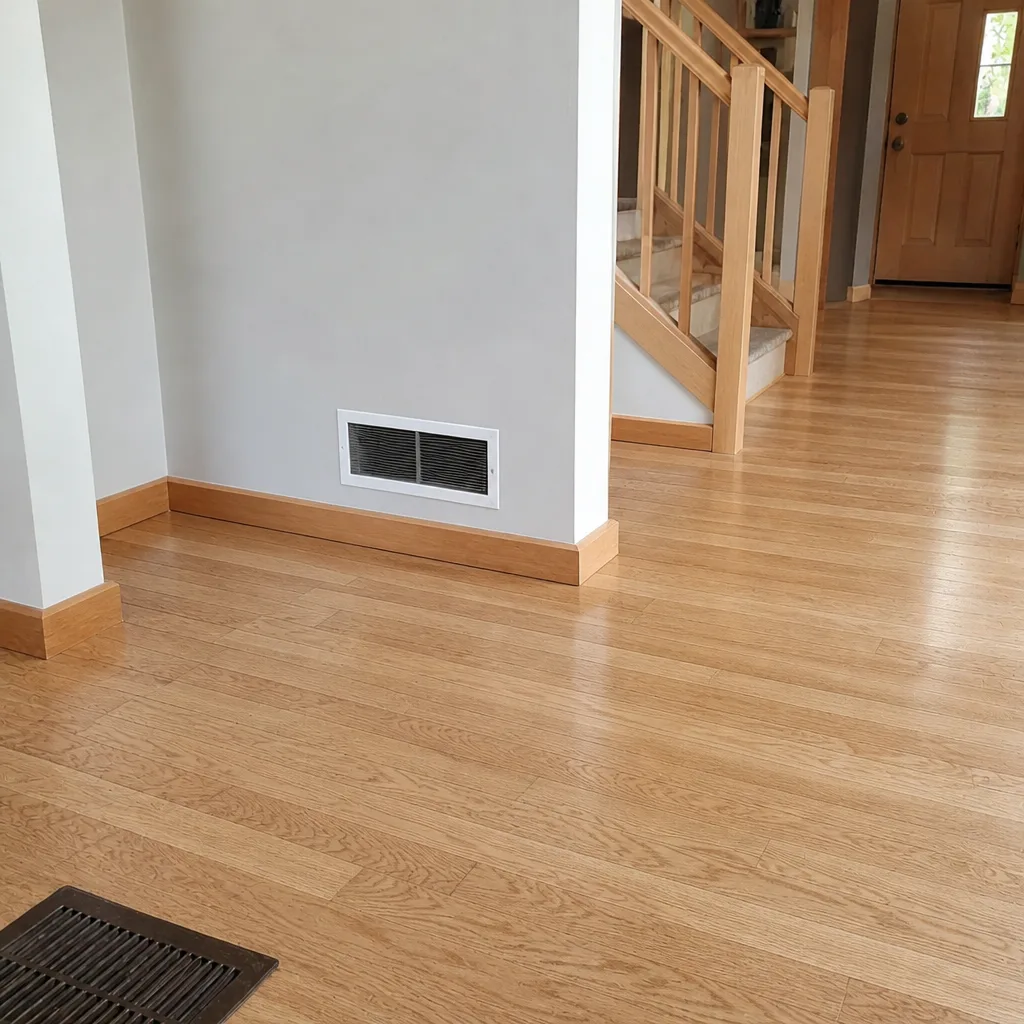 After
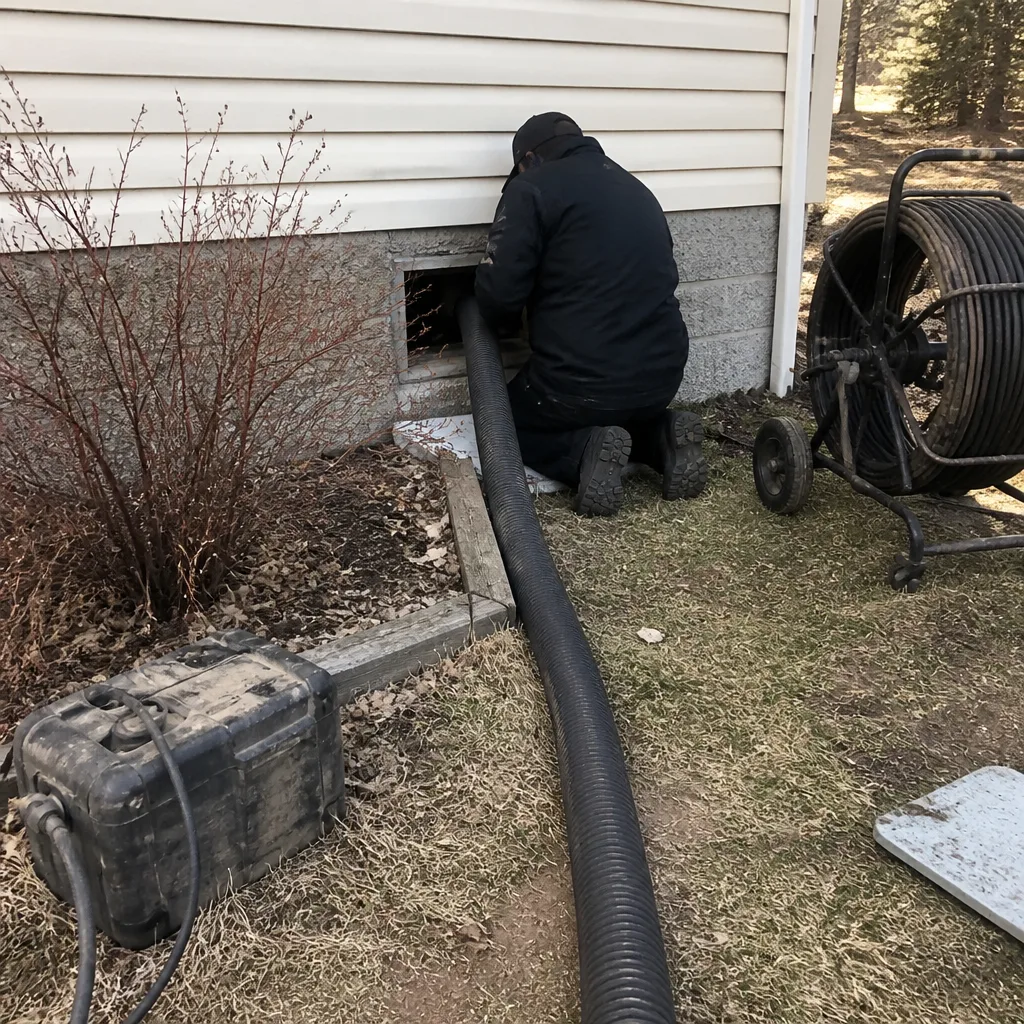 Before
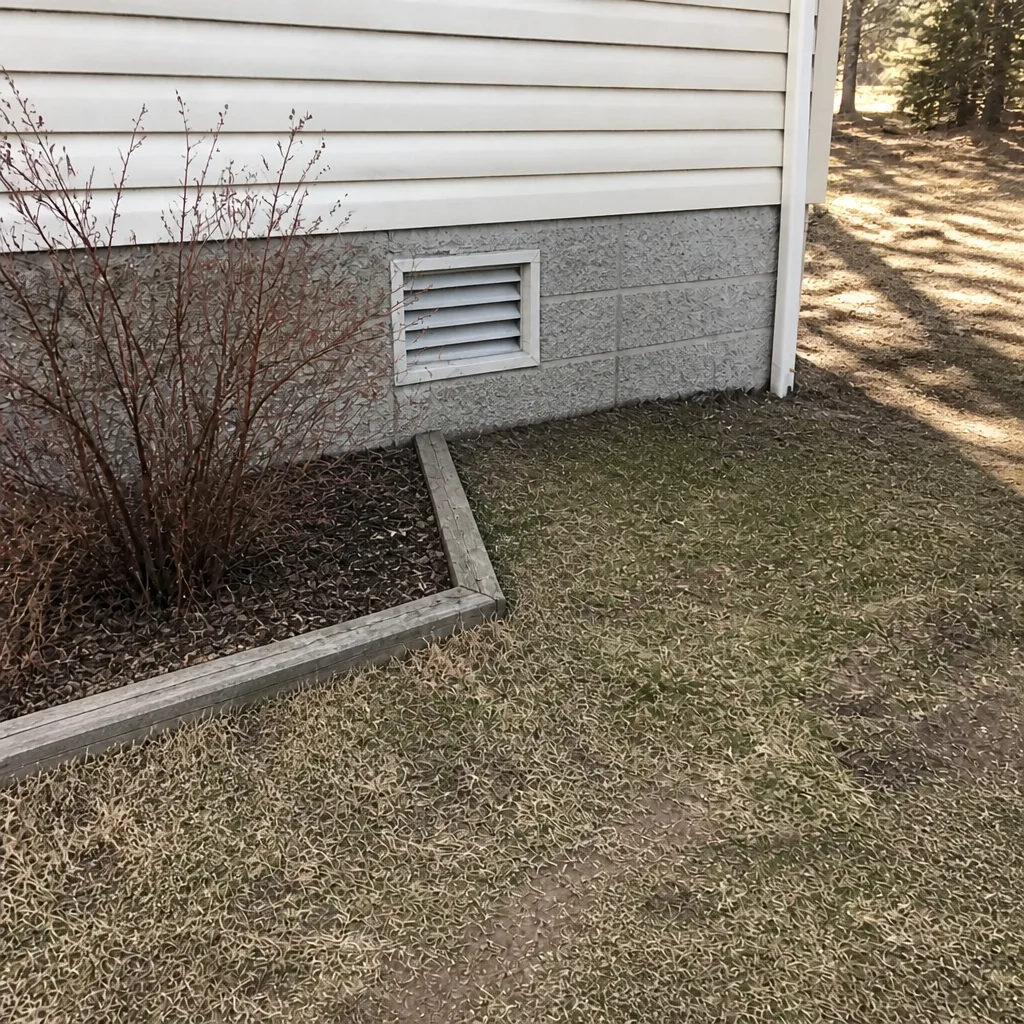 After
Frequently Asked Questions
Most Highlands homes need professional duct cleaning every two to four years, with the exact interval set by what the quarterly mirror check finds. Homes with pets, recent remodeling, or a history of moisture in the air handler tend toward the shorter end. Homes with a well-maintained filter and no pets often go longer. The checklist exists so you’re scheduling on evidence rather than a fixed calendar.
No, a shop vacuum can’t clean ductwork effectively. It lacks the airflow to pull material off the duct walls, and without HEPA capture it recirculates what it disturbs back into your living space. Professional systems like Rotobrush agitate and vacuum at the same time and run alongside filtration tools that capture dislodged contaminants rather than pushing them into the room.
Check the register in that room for airflow strength and compare it to a room that’s working. Then check the damper position on that branch if it’s accessible, and the filter. If airflow in that room is weak while other rooms are fine, the problem is likely in that branch rather than in the main system. Note it in your airflow log before calling for service; the pattern tells a technician where to look.
Fine dust and residue near the furnace after heating season can be normal settled dust, or it can indicate a combustion issue. If the residue is sooty or dark, or if it appears near the flue, stop using the furnace and have a qualified technician inspect it. Combustion byproducts should never be entering the living space, and that’s a safety concern that a duct cleaning cannot resolve.
Often yes. Cleaning a leaky duct system and leaving the leaks is temporary, because leaking joints draw attic or crawlspace air into the ducts and the system recontaminates. Sealing the joints after cleaning closes the pathway. It’s the reason we offer repair and sealing in the same visit rather than sending you to a second contractor.
Ask for before-and-after photos of your own ductwork before the job starts. A company that can’t provide them, or provides generic stock images, hasn’t given you evidence. A camera inspection with photos of your registers and your air handler is the difference between taking a company’s word and seeing the result.
Yes, and it’s more useful at scale. The airflow log works as a shared record across units, and the mirror check catches problems before they generate tenant complaints. Scheduling a professional cleaning on a rolling schedule across units keeps each one on its own interval rather than hitting all of them at once. HVAC cleaning paired with duct cleaning is the usual starting point for a multi-unit property.
The Bottom Line
The checklist that actually works isn’t a reminder card. It’s a small routine: a seasonal mirror check at the registers, a look at the drain pan, coil face, and blower wheel at each season change, a monthly airflow note in a notebook, and a dryer vent interval you don’t skip. Those four habits tell you when the system needs professional attention instead of leaving you to guess. Highlands homeowners run their systems long and hard through both heating and cooling seasons, which makes the post-heating inspection and the pre-cooling check the two dates that matter most. When the mirror shows buildup you can’t reach, or the airflow log trends down and stays down, that’s the call. Call (855) 658-5079. We answer 24/7. Fast dispatch from 7am to 7pm, Sunday through Friday.
Written by the team at Air Duct Cleaning Highlands.