
Last updated November 23, 2026
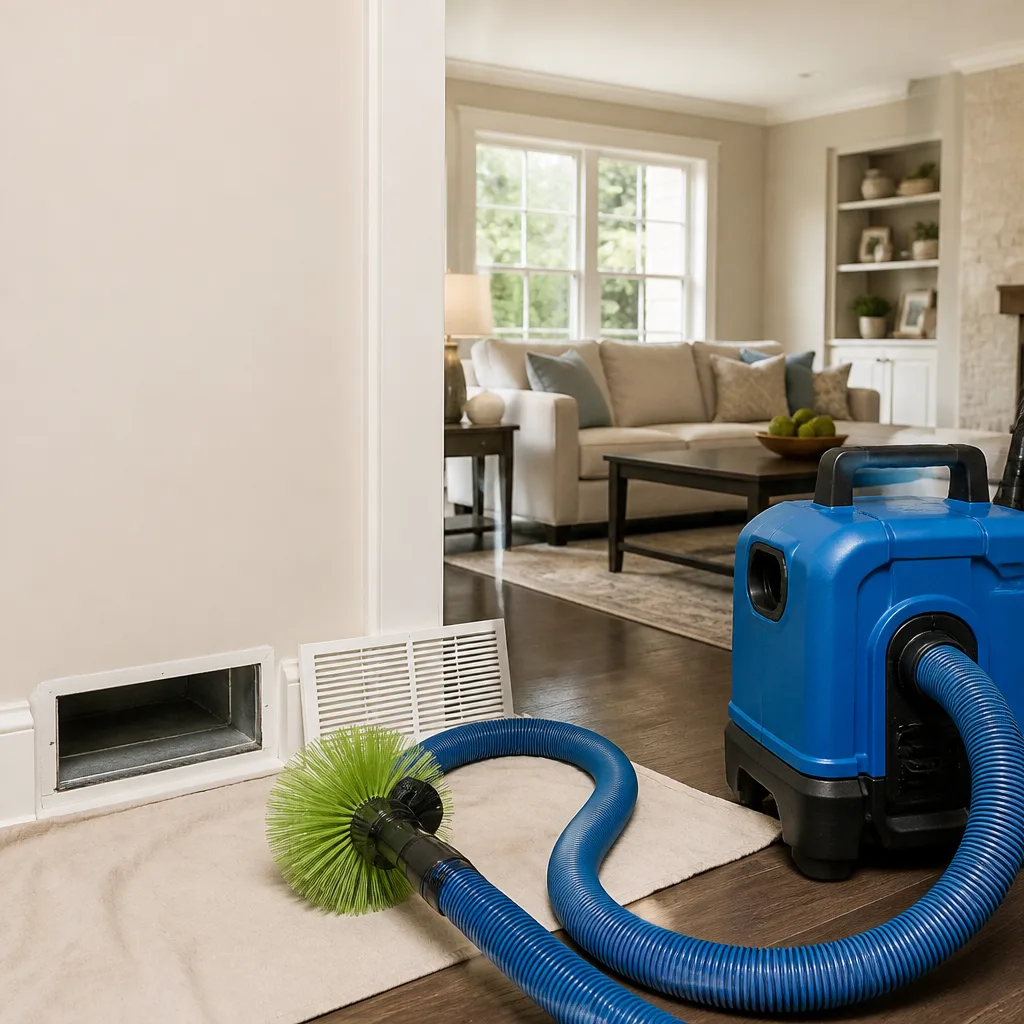 Whole-home duct cleaning
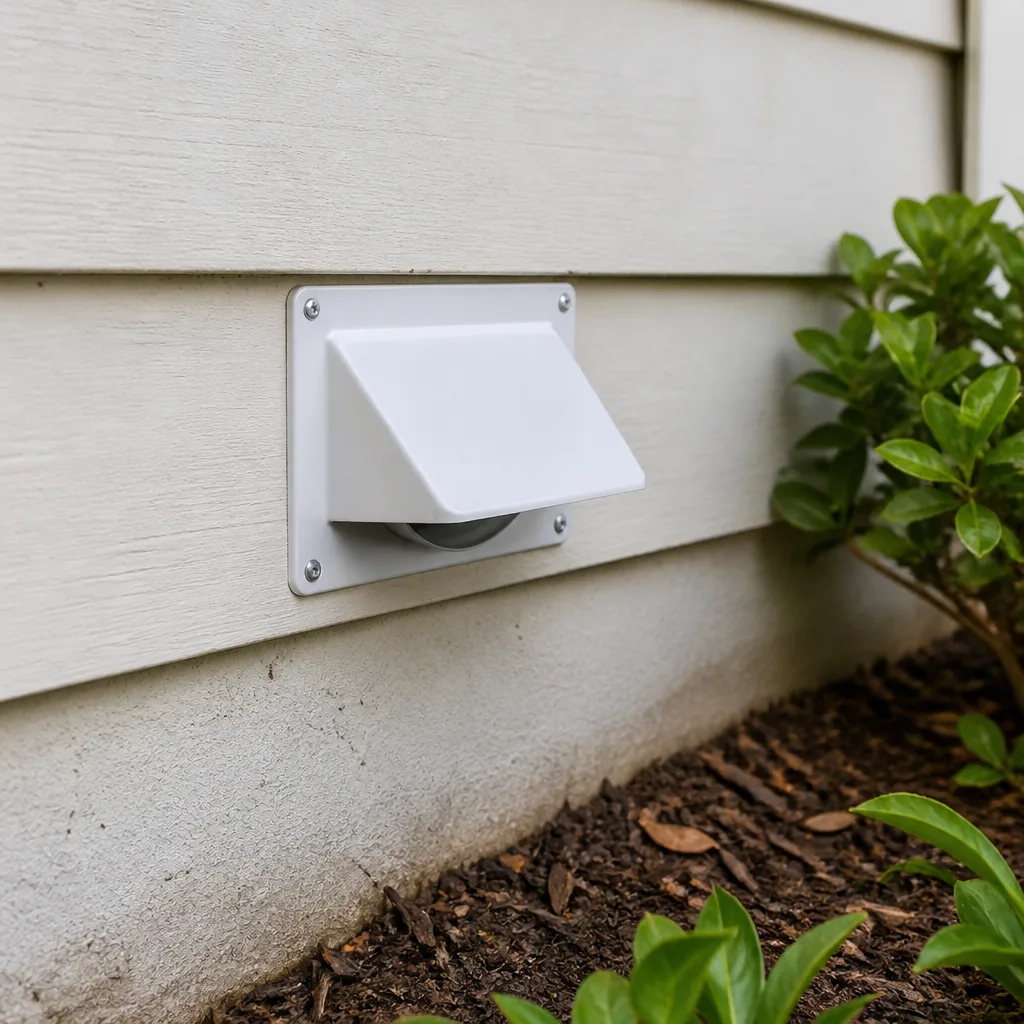 Dryer vent cleaning
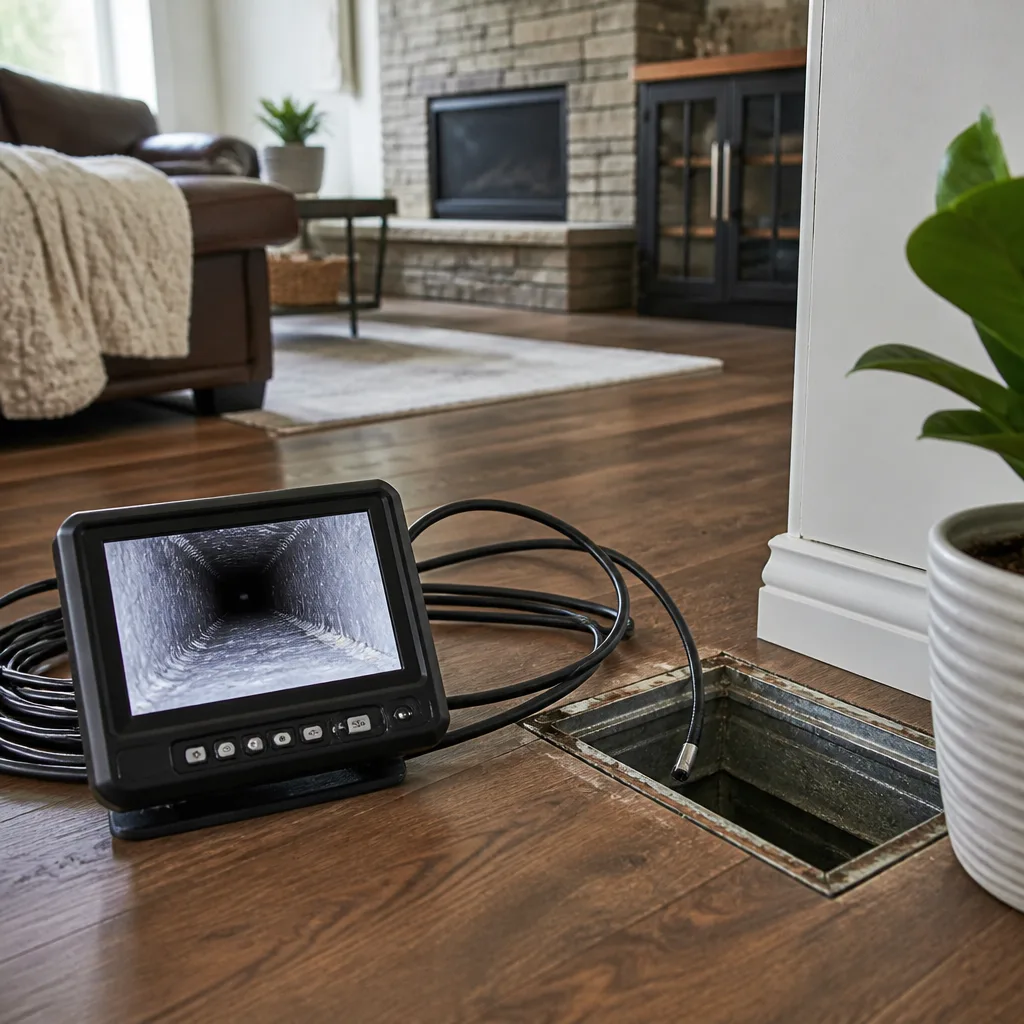 Camera inspection
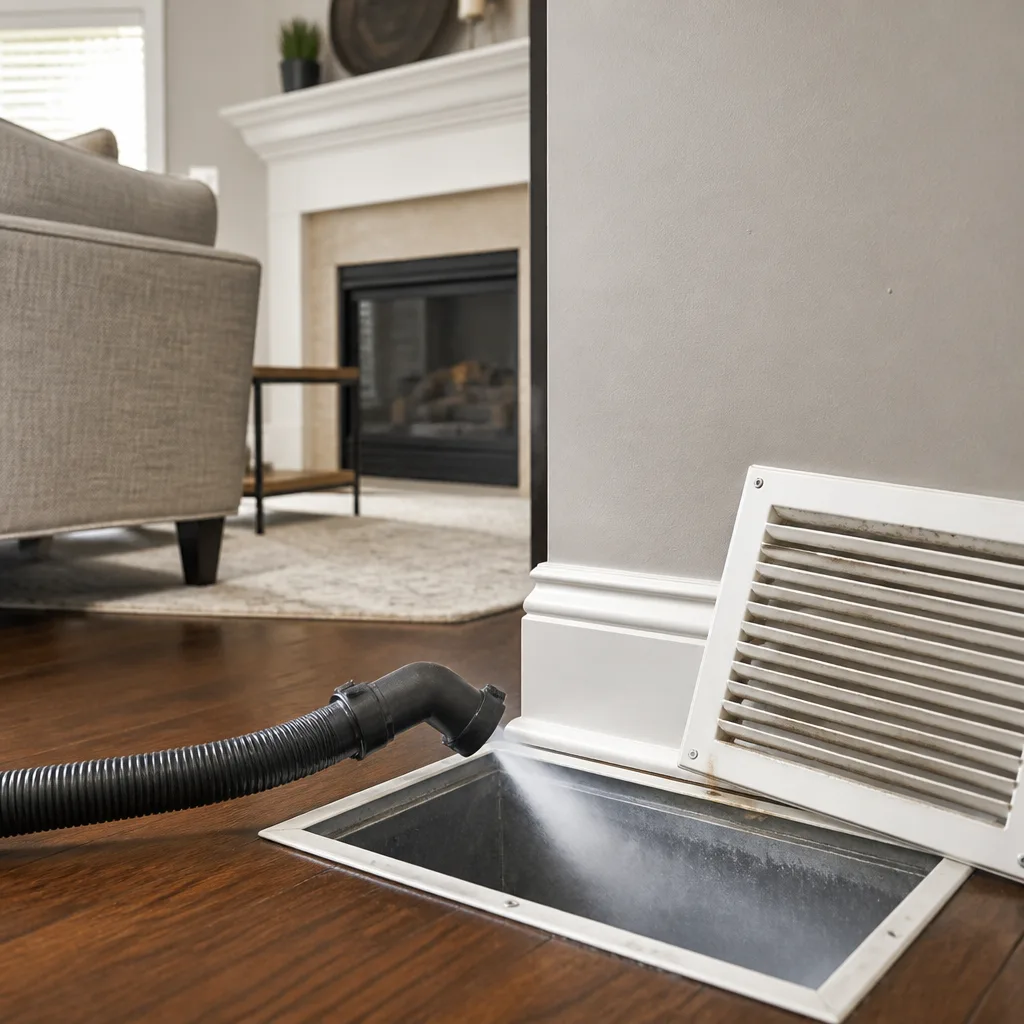 Sanitizing & deodorizing
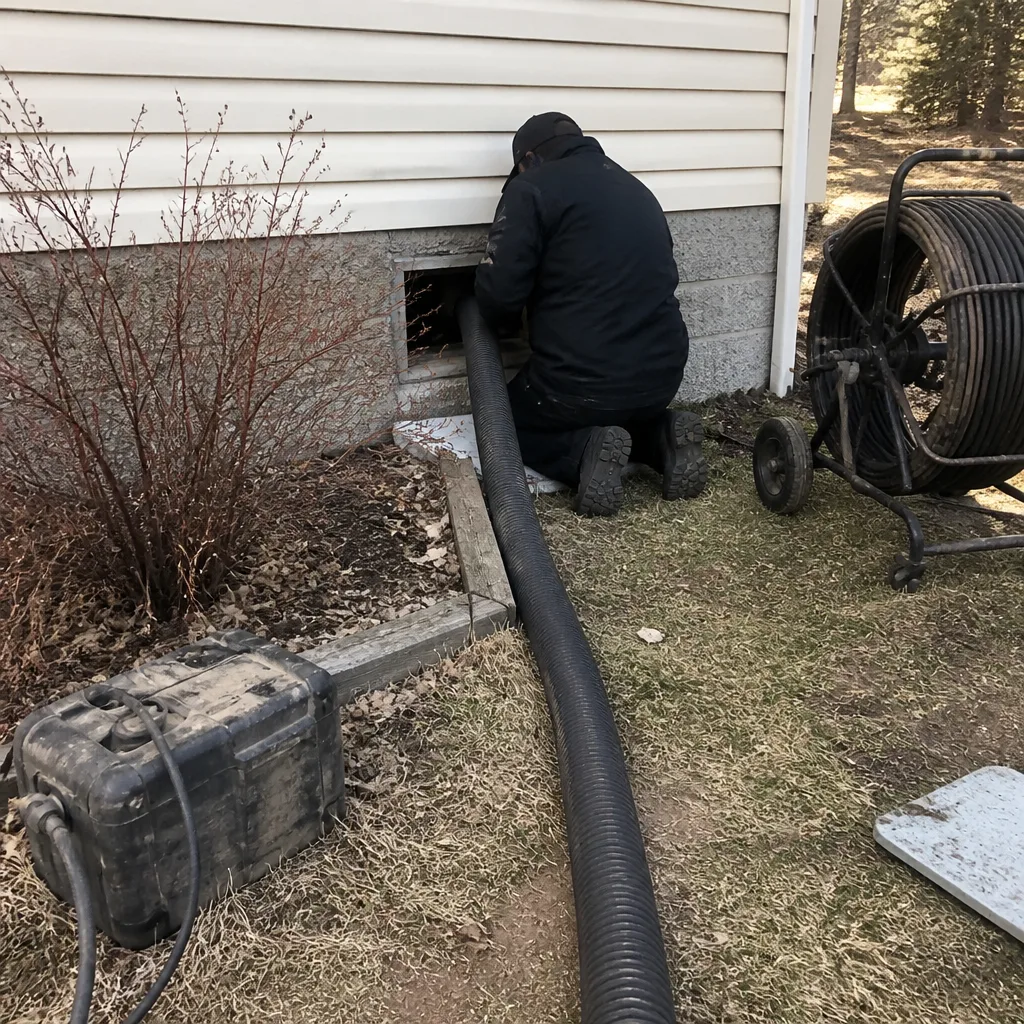
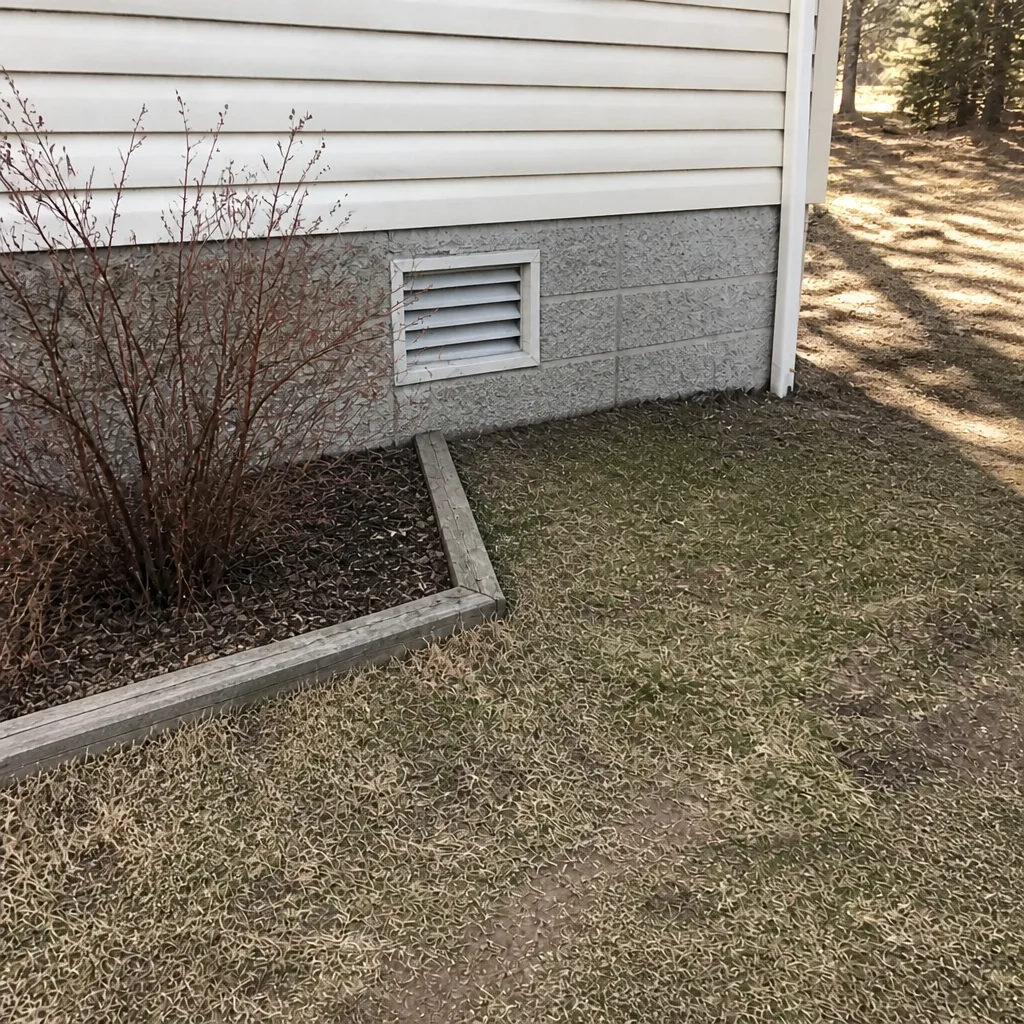
Whole-system duct and dryer vent check with before-and-after photos - you see exactly what came out of your vents
That "$99 whole-house special" is a bait ad - the real number appears once they are in your hallway, or the "clean" is a shop-vac at the register. We photograph the inside of your ducts before and after instead.
Air Duct Cleaning Warning Signs: A Highlands Homeowner’s Reference Guide
Most homeowners look for duct problems at the register. They see dust on the grille, feel weak airflow, and decide it’s time to clean. The trouble is that the register is the last place warning signs show up. By the time contamination reaches your supply vents, it has already been moving through your trunk lines and cycling into your living space for weeks. A musty smell when the heat kicks on isn’t the first signal, it’s one of the last. This guide repositions where you should actually look: upstream, inside the system itself. We’ll walk you through the physical, measurable indicators a Highlands homeowner can check before calling anyone, and what each one tells you about the state of your ductwork.
Quick Answer
The main warning signs that your air ducts in Highlands need professional attention are: uneven room temperatures that persist after thermostat adjustment, visible debris or staining at supply registers that returns after cleaning, HVAC filters that clog faster than they used to, a musty smell from supply vents, and rising allergy symptoms with no other clear cause. These signals point to contamination or leakage upstream in the trunk lines and plenum, not just at the vent face.
Styles & brands we work with
- Whole-home duct cleaning
- Dryer vent cleaning
- Camera inspection
- Sanitizing & deodorizing
Table of Contents
- Where the Evidence Actually Lives
- Uneven Room Temperatures as a Duct Restriction Signal
- What Visible Debris at Supply Registers Really Reveals
- Allergy and Respiratory Symptoms: The Honest Caveat
- Shortening HVAC Filter Life as an Early Warning
- Post-Renovation Warning Signs in Highlands Homes
- The Musty Smell: Why It’s the Last Warning, Not the First
- What a Professional Inspection Actually Checks
Where the Evidence Actually Lives
When we open up a duct system during an inspection, the interesting findings are almost never at the register. They’re in the trunk lines, the plenum above the air handler, and the branch connections where sections of duct meet. That’s where dust accumulates thickest, where microbial growth starts, and where the seals fail first. The vent face is just the point of delivery. If you’ve cleaned your registers and the dust comes back within days, the source isn’t at the vent, it’s upstream and the system is pushing material toward you.
This matters because it changes how you read your own home. A homeowner standing at a supply register with a rag is looking at the wrong end of the pipeline. The real question is what’s happening in the twenty or thirty feet of ductwork between the air handler and the room. That’s where professional equipment is designed to work, and it’s why air duct cleaning is a whole-system job rather than a surface wipe-down.
Highlands homes sit in a dry, high-elevation climate with distinct seasonal shifts. That means our duct systems see significant swings between heating season and cooling season, and those swings stress the seams and joints where leakage begins. When a seam opens, it pulls unconditioned air and whatever’s in the space around it into the airstream. The evidence of that leakage shows up as temperature inconsistency and filter loading long before it shows up as a smell.
If you want to understand the whole system before you call anyone, the honest starting point is this: the warning signs are physical and measurable, they live upstream, and they tell you what’s happening inside the duct rather than at the vent face. Let’s walk through each one.
Uneven Room Temperatures as a Duct Restriction Signal
If one room runs noticeably warmer or colder than the rest of the house and adjusting the thermostat doesn’t fix it, the problem is usually airflow, not the thermostat. A duct restriction, a crushed flex run, a disconnected joint, or a closed damper hidden somewhere in the system can starve a room of conditioned air. The room stays wrong no matter what the thermostat is set to because the thermostat is reading a different part of the house entirely.
How much difference is worth noting? A spread of 5°F or more between rooms that should be similar is the threshold where a duct problem becomes a reasonable suspect. A 2°F to 3°F difference is often just normal variation from sun exposure, window placement, or room size. Once you’re past 5°F and it’s consistent across days, you’re looking at an airflow issue. Past 8°F, it’s worth a professional look.
Here’s a simple way to test it before you call anyone:
- Place an inexpensive thermometer in the problem room, away from exterior walls and sunlight.
- Set your thermostat to a steady temperature and let the system run for several hours.
- Record the temperature in the problem room and in a room that feels normal.
- Repeat on a different day to confirm the pattern isn’t a fluke of weather.
- Note the difference. A consistent spread of 5°F or more points to a duct restriction.
This test doesn’t diagnose the cause, but it does separate “the thermostat needs adjusting” from “the system has a restriction.” That distinction is exactly what a technician needs to know when they arrive. In Highlands, where homes often have a mix of conditioned and semi-conditioned spaces and duct runs vary widely in length, uneven temperatures are one of the most common signs we hear about first.
One more consideration: if the room has always been that way, it may be a design issue, not a contamination issue. If the room used to be even and has become uneven over time, that change is the signal. The duct system didn’t suddenly redesign itself. Something shifted inside, and a professional inspection is the way to find out what.
What Visible Debris at Supply Registers Really Reveals
Surface dust on a supply grille is completely normal. Ducts move air, air carries dust, and some of it settles on the vent face. Clean your registers and they’ll collect dust again within a few weeks. That’s a maintenance task, not an emergency. The distinction that matters is between surface dust and systemic contamination, and the difference is visible once you know what to look for.
Here’s how to tell the two apart:
- Surface dust: Fine, even, uniform grey coating. Wipes off easily with a dry cloth. Returns slowly over weeks.
- Systemic contamination: Clumped, fuzzy, or fibrous material. Staining around the edges of the grille. Dust that returns within days of cleaning. Debris that falls out when the system turns on.
- Lint or fiber accumulation: Long, stringy fibers visible through the grille opening. Suggests upstream insulation breakdown or material shedding.
- Dark or discolored patches: Localized staining or discoloration on the grille or surrounding drywall. Can indicate moisture reaching the vent face.
When you see the second category of signs, the contamination you’re seeing at the vent is a fraction of what’s in the trunk lines. The vent is just the outlet. The material accumulated up there is what keeps producing the supply. Surface dust and systemic contamination look different because they are different.
For homeowners in Highlands, this distinction matters more than it might in a humid climate, because our dry air means dust stays loose and airborne longer. It doesn’t settle into a mat the way it does in a coastal home. That means the dust you’re seeing at the vent came from somewhere, and if it keeps coming back, the “somewhere” is upstream in your trunk lines.
Allergy and Respiratory Symptoms: The Honest Caveat
If you or someone in your household is noticing increasing allergy or respiratory symptoms, and there’s no obvious other cause, duct contamination is a reasonable thing to look at. But we want to be honest with you here, because oversimplifying this does no one any favors. Ductwork is one possible contributor to indoor air quality problems, not the only one, and not always the main one. Before you attribute symptoms to your ducts, rule out the other sources.
The other common contributors are:
- Pollen and outdoor allergens that enter through open windows, doors, and poorly sealed gaps.
- Pet dander and hair that accumulates on furniture, carpets, and soft surfaces.
- Dust mites, which thrive in bedding, upholstery, and carpet fibers.
- Humidity problems that encourage mold growth on surfaces outside the duct system.
- HVAC filters that are overloaded and no longer capturing particles effectively.
- Before-and-after indoor air quality measurements if you have them.
The reason this caveat matters is that if you clean your ducts and the symptoms continue, you’ll know the ducts weren’t the source and you can look at the other factors honestly. If you clean your ducts and symptoms improve, you’ve isolated the cause. Either way, the test is worth doing when the physical signs line up.
What ties this back to Highlands specifically is the seasonality. Our dry, windy periods during certain months of the year push a lot of particulate into the air, and homes that are tightly sealed during heating season trap that particulate indoors. If your symptoms follow a seasonal pattern tied to heating season, that’s a stronger signal than a year-round complaint that never changes. A professional duct cleaning in Highlands won’t fix an allergy to your neighbor’s cat, but it can reduce one significant source of indoor particulate if the physical warning signs point there.
Shortening HVAC Filter Life as an Early Warning
If you used to change your HVAC filter every three months and now you’re changing it every four weeks, that change is a signal. It’s one of the most underappreciated early warnings that upstream contamination is shedding into the airstream. The filter is doing its job by trapping particles, but if it’s loading up faster than it used to, more particles are arriving at the filter face than before, and a lot of them are being produced inside the duct system.
Here’s what the filter is telling you when it loads faster than it used to:
- The system is moving more particulate through the return than it used to, which can be caused by a leak in the return side pulling in dust from unconditioned space.
- Contamination in the trunk lines has reached a depth where normal airflow starts to resuspend it and carry it toward the filter.
- Recent work in the home (renovation, insulation, roofing) introduced debris the filter is now catching.
- The filter itself is the wrong MERV rating or is improperly seated, letting air bypass it.
Before assuming contamination, check the basics. Is the filter correctly sized? Is it seated properly in its slot, with no gaps around the edges? Is it the right MERV rating for your system? A filter that’s slightly undersized or improperly seated lets air go around it, which sends dust right past the filter and into the blower, and eventually into the ducts. If the filter is correctly installed and still loading fast, then the honest answer is that something upstream is producing particulate faster than before.
In our experience, filter life is one of the most reliable early indicators because it’s a measurable, observable change. You don’t need to guess whether something feels different. You just count how often you’re buying filters. If the answer has changed significantly, that’s data. We’ve seen this pattern in Highlands homes repeatedly, and it’s usually the first sign we hear about, before the smell and before the visible debris. When a homeowner mentions it, we know exactly where to look.
Post-Renovation Warning Signs in Highlands Homes
If you’ve had renovation work done in your home within the past year or two, there’s a strong chance your duct system is carrying something it shouldn’t. Drywall dust, insulation fibers, and construction debris enter the ducts during remodels. A standard HVAC filter captures some of it, but not all, and certainly not the finest drywall dust that can stay suspended for weeks and settle deep in the trunk lines. This is one of the most common situations we encounter in Highlands homes: a beautiful new room, and a duct system that needs attention it never got.
The specific signs after a renovation are worth watching for:
- White or grey dust appearing at supply registers in rooms you didn’t renovate.
- A chalky or powdery smell coming from the vents during heating or cooling.
- Filters loading up dramatically faster than they did before the work began.
- Fibrous material visible through the return grille, especially after insulation work.
- Newly noticeable temperature imbalance in rooms unaffected by the renovation itself.
- Respiratory irritation that started around the time the work began and hasn’t settled.
The reason a filter doesn’t fully solve this is that construction dust is finer and more plentiful than everyday household dust, and most filters are sized for normal loads. During a renovation, the dust load can be ten times what the filter was designed for. The filter does what it can, the system runs, and the rest ends up in the ducts. Once it’s there, it doesn’t come out on its own. It sits in the low points of the trunk lines and gets pushed into rooms every time the system runs.
In Highlands, we also see construction dust combined with the local dry air, which keeps the finest particles airborne longer. That means the dust from a renovation can stay in the air for days and drift into areas the renovation never touched. If you’ve remodeled within the last couple of years and you’re noticing any of the signs above, the duct system is a reasonable place to investigate. Cleaning after a renovation is not a scam, it’s a logical next step to reset the system once the work is finished.
The Musty Smell: Why It’s the Last Warning, Not the First
A musty smell when the heat turns on is a genuine warning sign, but it’s important to understand it’s a late one. If you smell biological growth coming through your supply vents, that growth has already been present in the duct system for weeks, moving air through your living space and depositing spores on surfaces throughout the house. The smell arrives when the growth reaches a density high enough to produce detectable odor, not when it first appears. By then, several other warning signs we’ve discussed have likely been present for a while.
The reason smell is late is mechanical. Biological growth needs moisture and organic material to flourish. In the duct system, that combination usually starts quietly: a small condensation drip, a humidifier that’s been running too warm, a return that’s pulling in moist air from a crawlspace. The growth starts small and builds slowly. Only when it reaches a certain mass does the odor become noticeable when warm air passes over it. A musty smell at the vent should be treated as a “this has been developing for a while” signal, not a first warning.
What to do if you smell it: first, verify the smell is coming from the vents and not from somewhere else in the home. Run the system with all registers open and walk through each room, noting where the smell is strongest. If it’s isolated to one or two vents, the source may be a localized duct issue. If it’s throughout the house, the source is likely in the central trunk or plenum, which is more common. Second, look for signs of moisture anywhere in the system, because moisture is what makes biological growth possible.
Highlands homes are dryer than many parts of the country, but that doesn’t eliminate growth risk. It changes where moisture comes from. Humidifiers, bathroom and kitchen exhaust fans that vent into the space above the ductwork, and condensation on cold supply ducts in a warm room can all contribute. When we inspect a home where a homeowner reports a musty smell, we’re not just looking for the smell itself, we’re looking for where the moisture came from, because if we clean the ducts but don’t address the moisture source, the growth comes back.
What a Professional Inspection Actually Checks
A real inspection looks upstream, not just at the vent face. When we arrive at a home, we look at the whole system, and the process is designed to find out what’s actually happening rather than to confirm a sale. Here’s the general shape of it:
- Visual inspection of accessible ductwork. We look inside supply and return trunks where they’re reachable, checking for accumulated dust, visible material shedding, and signs of growth.
- Filter condition and filter housing check. We check filter sizing, seating, and MERV rating. A misseated filter is a common cause of contamination, and it’s cheap to fix.
- Airflow and temperature differential testing. We measure supply and return temperatures and compare room-to-room airflow to identify restrictions.
- Seal and joint inspection. We look for disconnected joints, crushed flex runs, and gaps at the air handler connections where unconditioned air can enter.
- Moisture and condensation check. We check for moisture sources, drips, humidifier issues, and condensation on both supply and return sides.
- Equipment plan. Based on what we find, we explain whether cleaning, repair and sealing, sanitizing, or a combination is the right next step for this specific system.
The equipment matters here. Consumer-grade vacuums aren’t designed for ductwork and won’t create the negative pressure needed to remove what’s accumulated in the trunk lines. We use professional systems from Rotobrush, which agitates and vacuums the duct interior simultaneously, and Nikro equipment for the high-capacity extraction side. Abatement Technologies filtration is used during the work to capture dislodged contaminants, because the last thing you want is for the cleaning process to recirculate material into your living space.
If we find damaged or poorly connected ductwork, we fix it rather than cleaning around it. Duct repair and sealing are part of the same visit, which matters because a leaky duct system will recontaminate itself quickly after cleaning if the seams aren’t addressed. We also offer post-cleaning air quality hardware from Honeywell and Aprilaire for ongoing filtration, and Guardsman-backed sanitizing treatments for duct surfaces after the mechanical work is done. It’s one complete scope completed in one professional visit, not a sequence of disconnected services.
Common Mistakes to Avoid
- Reading the vent instead of the system. Cleaning your supply grilles and seeing dust return within days is a sign the problem is upstream, not that you failed at cleaning. Look at the trunk lines before deciding anything.
- Assuming a filter change will fix it. A new filter helps, but it doesn’t remove what’s already settled in the ducts. If filter life keeps shortening even with regular changes, the contamination is established and routine changes won’t fix it.
- Hiring on price alone. A low quote often reflects consumer-grade equipment that can’t generate the suction a real duct clean requires. Ask what equipment the contractor uses and whether it’s the professional-grade equipment used in restoration and abatement work.
- Skipping the dryer vent. Many duct cleaners treat dryer vent cleaning as an afterthought. It’s a dedicated fire-prevention service and should be part of the same visit.
- Cleaning without addressing leaks. A leaky duct system will recontaminate itself quickly after cleaning. If the seams and connections aren’t sealed, the clean won’t hold.
- Ignoring post-renovation dust. Remodel debris in the ducts is common and often overlooked because the room looks finished. If you’ve had work done recently, get the system checked.
- Assuming Highlands’ dry climate rules out biological growth. It changes where moisture comes from but doesn’t eliminate it. Look for moisture sources in humidifiers, exhaust routing, and duct condensation.
See the difference
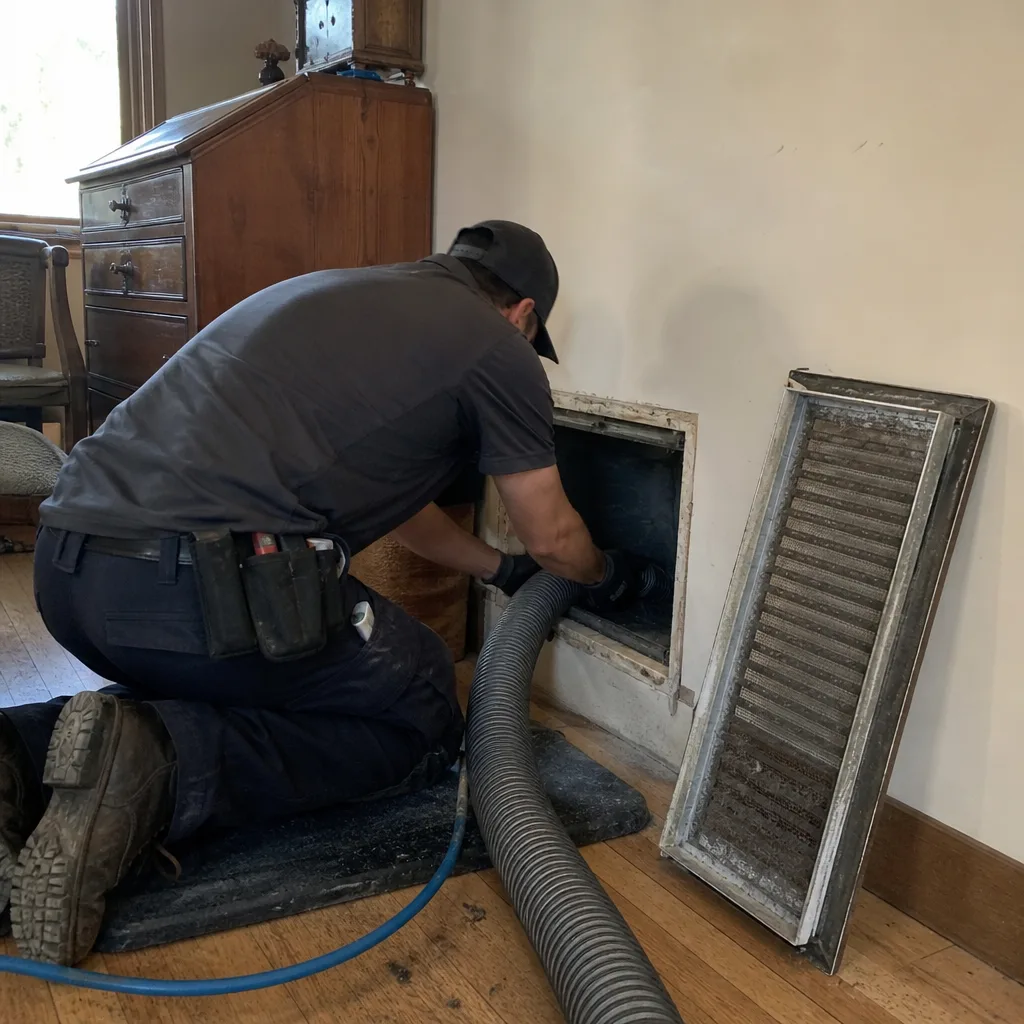 Before
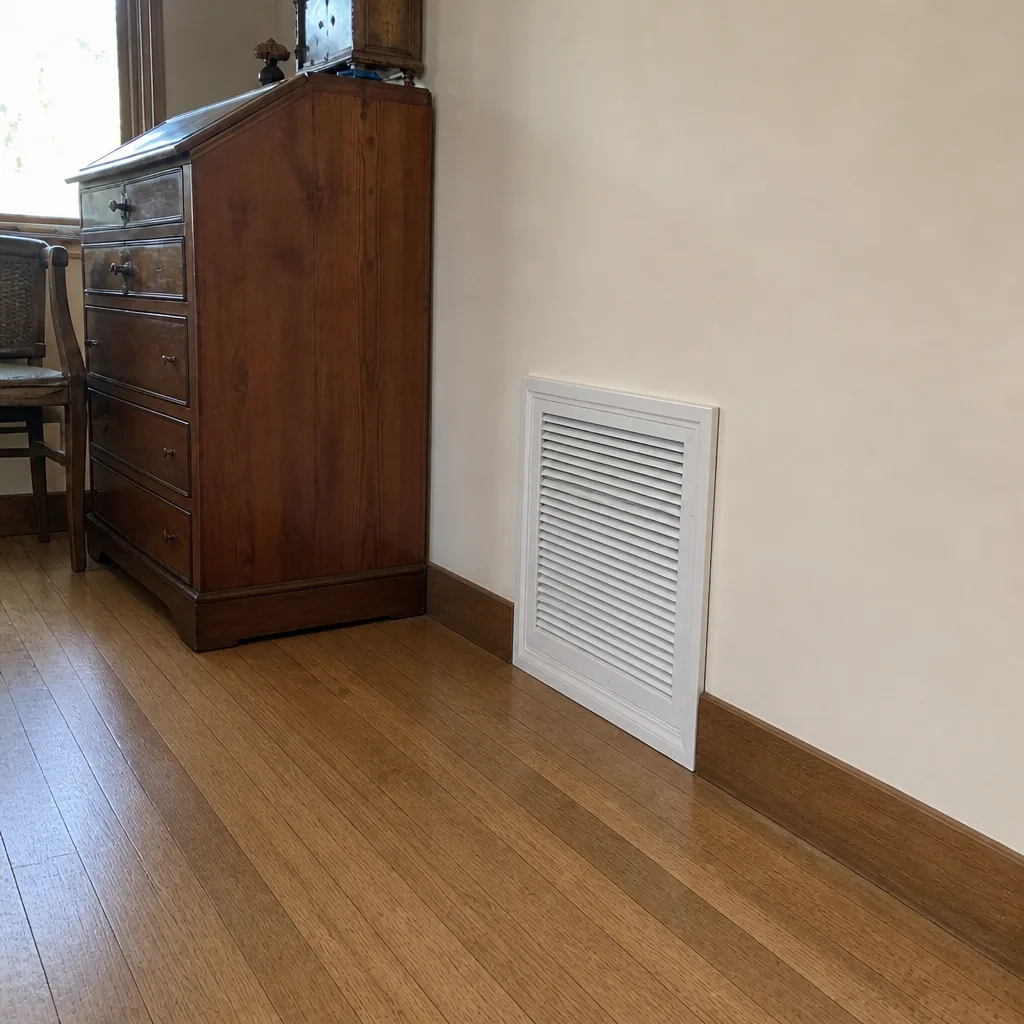 After
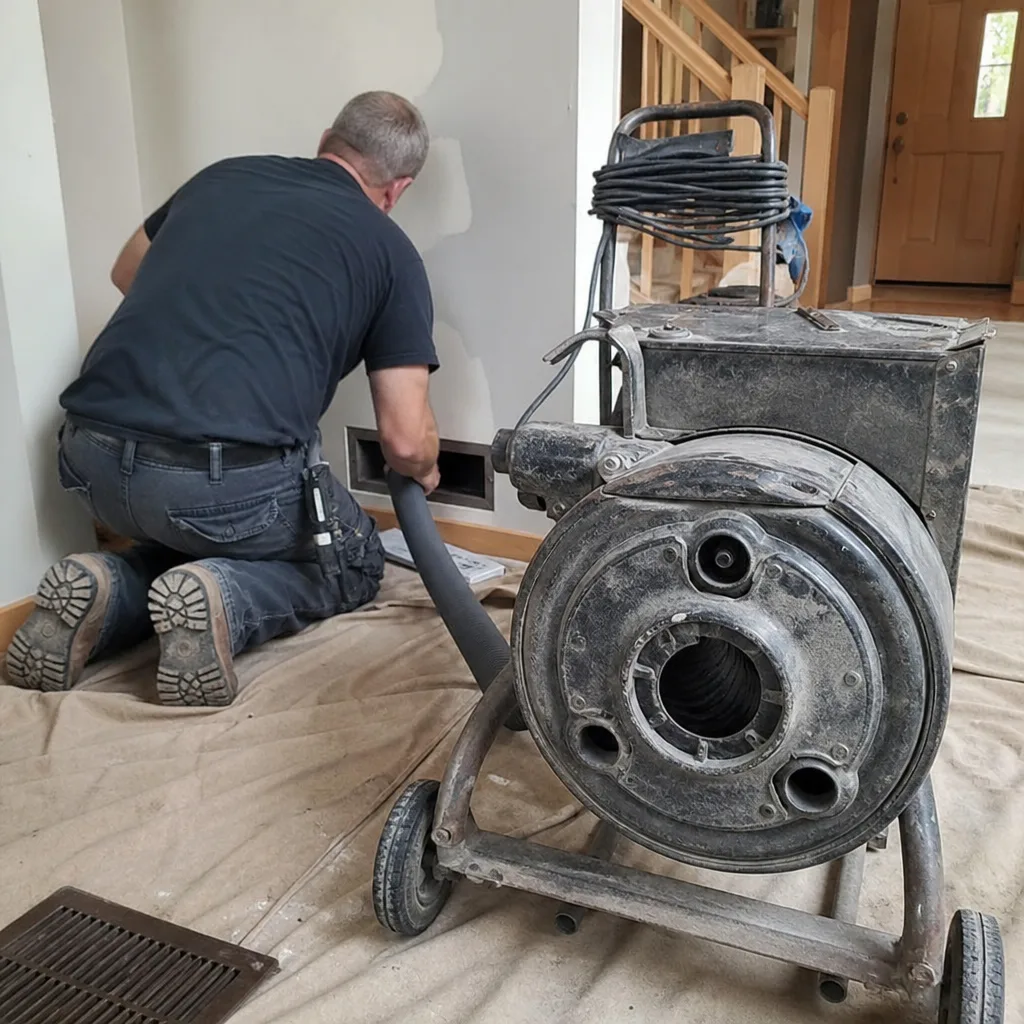 Before
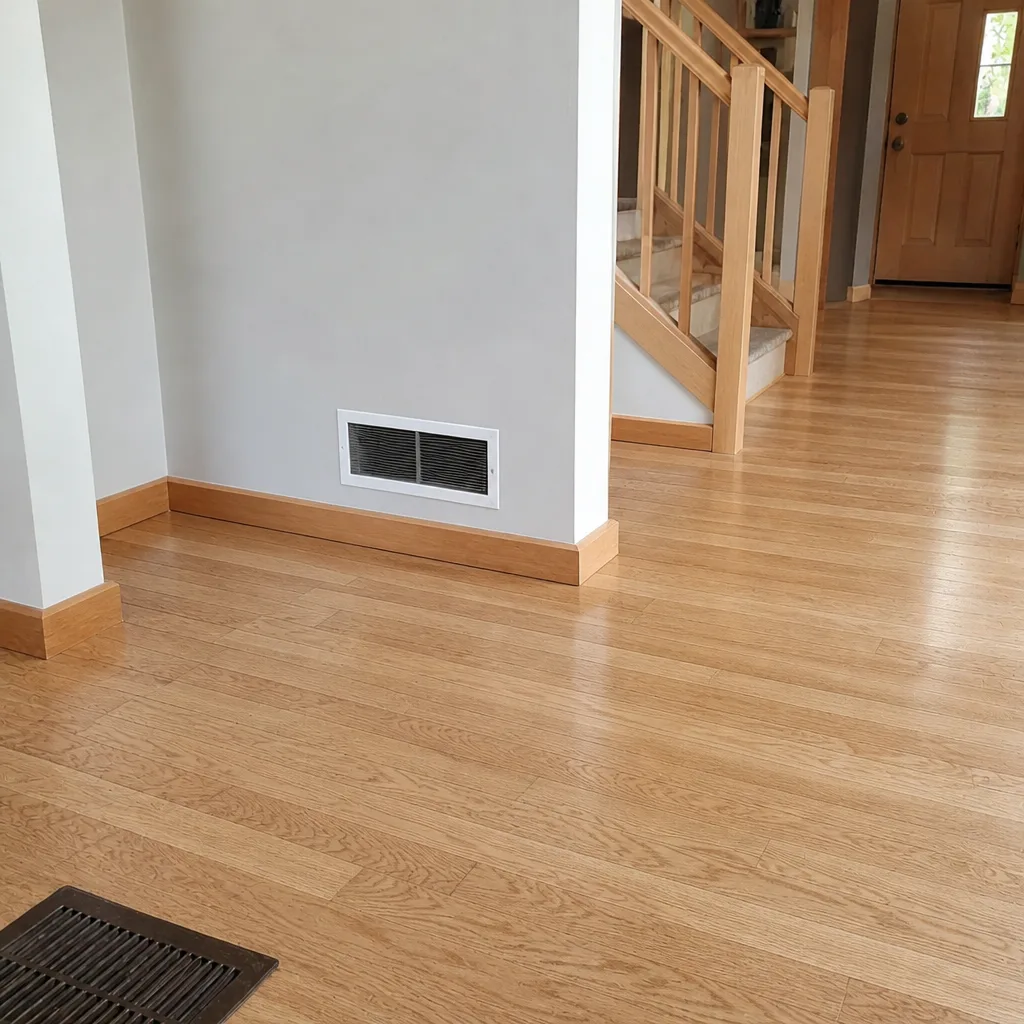 After
 Before
 After
When to Call a Professional
Call a professional when two or more of the warning signs in this guide apply to your home, or when any single sign is severe enough that you can smell or feel it in your daily routine. That means: a persistent musty smell from supply vents, a temperature spread of 5°F or more that won’t resolve, filters loading faster than before with no other explanation, visible debris returning to registers within days of cleaning, or persistent allergy symptoms that line up with heating or cooling season. Post-renovation is also a good time, since the system has likely taken on more debris than it was designed to handle. Air Duct Cleaning Highlands offers free estimates in Highlands; call (855) 658-5079 to schedule a walkthrough. The written estimate sets the final price, and we’ll show you before-and-after photos of your own ducts, not a generic brochure.
Frequently Asked Questions
Most whole-system duct cleanings in Highlands fall within a typical residential range, priced per system based on the number of runs, accessibility, and whether repair or sealing is needed. We don’t quote per vent and we don’t lead with a coupon number that changes once the technician is on site. The written estimate sets the final price, and the range you’re quoted is the price you pay unless you approve additional work. Call (855) 658-5079 for an exact quote; estimates are free.
Cheap quotes usually reflect consumer-grade equipment that can’t generate the negative pressure needed for real duct cleaning. Professional-grade systems like Rotobrush and Nikro, paired with Abatement Technologies filtration to capture dislodged contaminants, are a different class of machine and a different job. The lower quote often means less equipment, less time, and less material actually removed. It’s a valid question to ask what equipment a company plans to use. Call (855) 658-5079 to talk through what a scope of work should include.
Ask for before-and-after photos of your own ducts. A real clean is documented: the interior of the trunk lines before the work and after, with dates. Not a generic stock photo, not a marketing image. We also walk through what we found on inspection so you understand what changed and why. If a company won’t show you what they removed, that’s a signal. Call (855) 658-5079 to schedule an estimate with a documented scope.
Most homes don’t need routine cleaning on a fixed schedule. The honest rule is: clean when the warning signs show up, not on a calendar. Homes with pets, recent renovations, allergy-sensitive occupants, or a history of moisture problems may need more frequent attention. Most homes need it every several years at most, and some never need it. If you’re unsure, an inspection answers the question in a single visit. Call (855) 658-5079 to schedule one.
Duct contamination can contribute to indoor air quality problems, but it’s one factor among several and shouldn’t be over-attributed without ruling out other sources like pollen, pet dander, dust mites, and humidity issues. What we can say is that physical warning signs at the vent face are worth taking seriously, and the fix is measurable. If we clean and the symptoms improve, the ducts were a meaningful contributor. If not, you can look at other sources with confidence. Call (855) 658-5079 for an honest assessment.
Yes, and it’s a dedicated service line rather than an afterthought. Dryer vent cleaning is a fire-prevention measure and it’s often skipped or underperformed by general duct cleaners. We handle dryer vent cleaning as its own service, and it can be combined with HVAC cleaning in the same visit so the whole system is addressed at once. Call (855) 658-5079 to schedule both together.
The Bottom Line
Most duct problems announce themselves physically before they announce themselves by smell or discomfort. Uneven room temperatures that won’t resolve, filters loading faster than before, visible debris returning to registers in days, and post-renovation dust are all upstream signals, and they’re the ones worth acting on. A musty smell is a late warning, not an early one. The right response to two or more of these signs is a professional inspection, not a filter change. If you’ve read this guide and found yourself nodding at signs you’ve noticed in your own Highlands home, the next step is a walkthrough and a written estimate. That gives you specific answers about your specific system rather than general information. We can fix what we find, including leaky or damaged ductwork, so the clean holds. Call (855) 658-5079 to schedule your free estimate. We answer 24/7. Fast dispatch from 7am to 7pm, Sunday through Friday.
Written by the team at Air Duct Cleaning Highlands.