
Last updated November 23, 2026
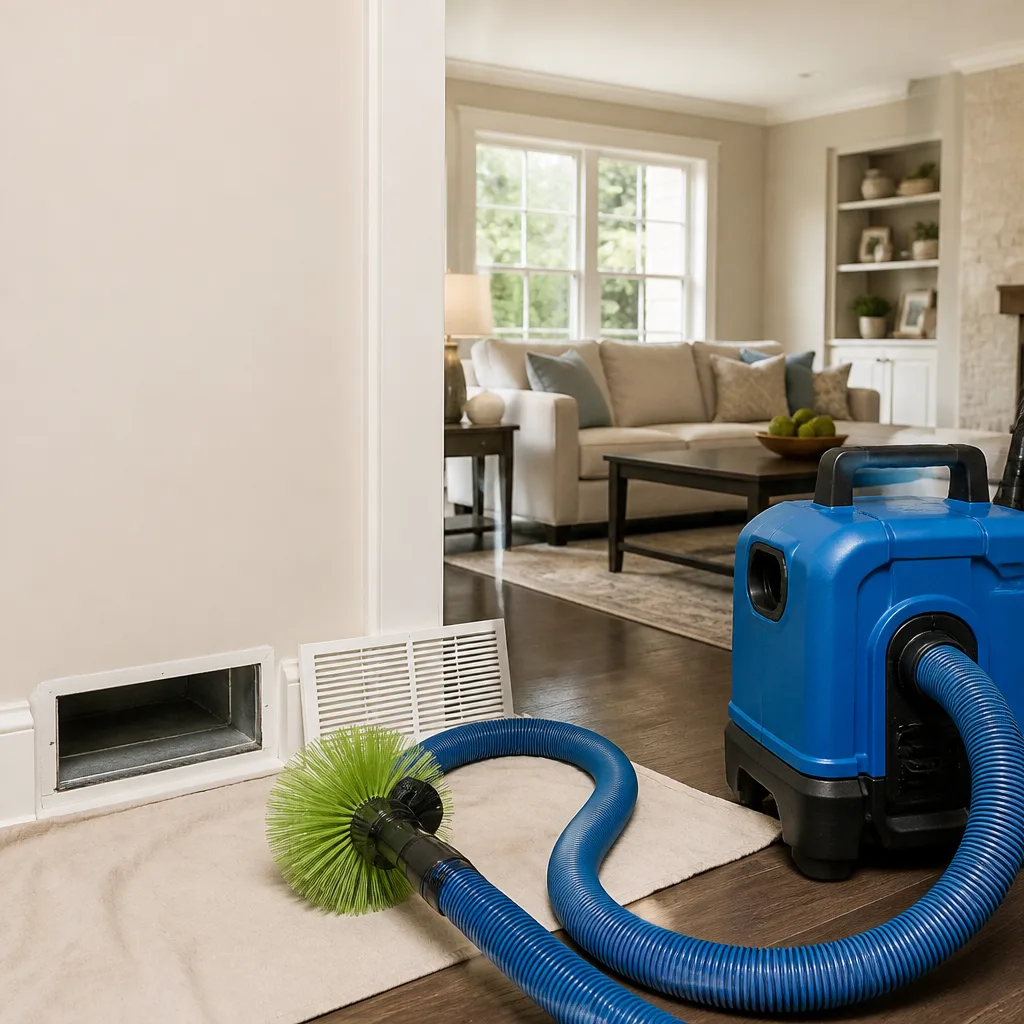 Whole-home duct cleaning
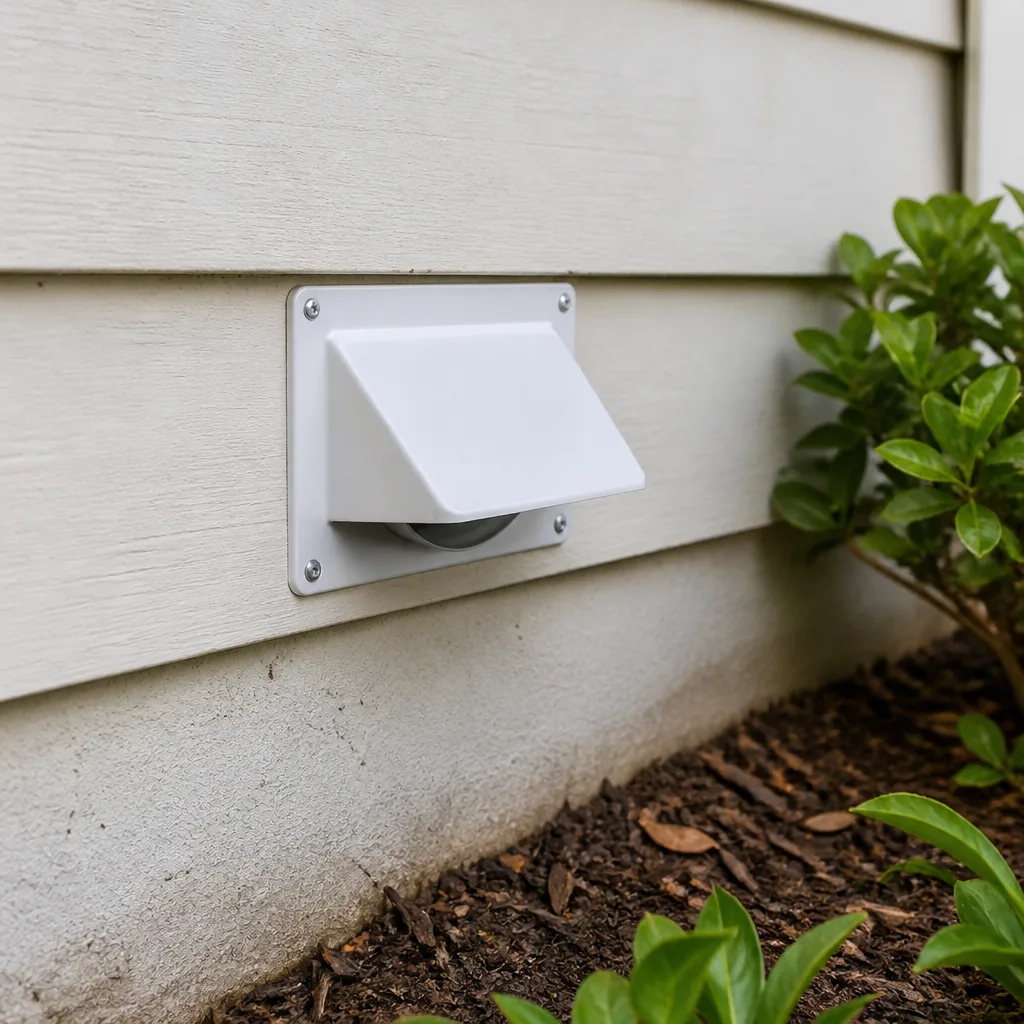 Dryer vent cleaning
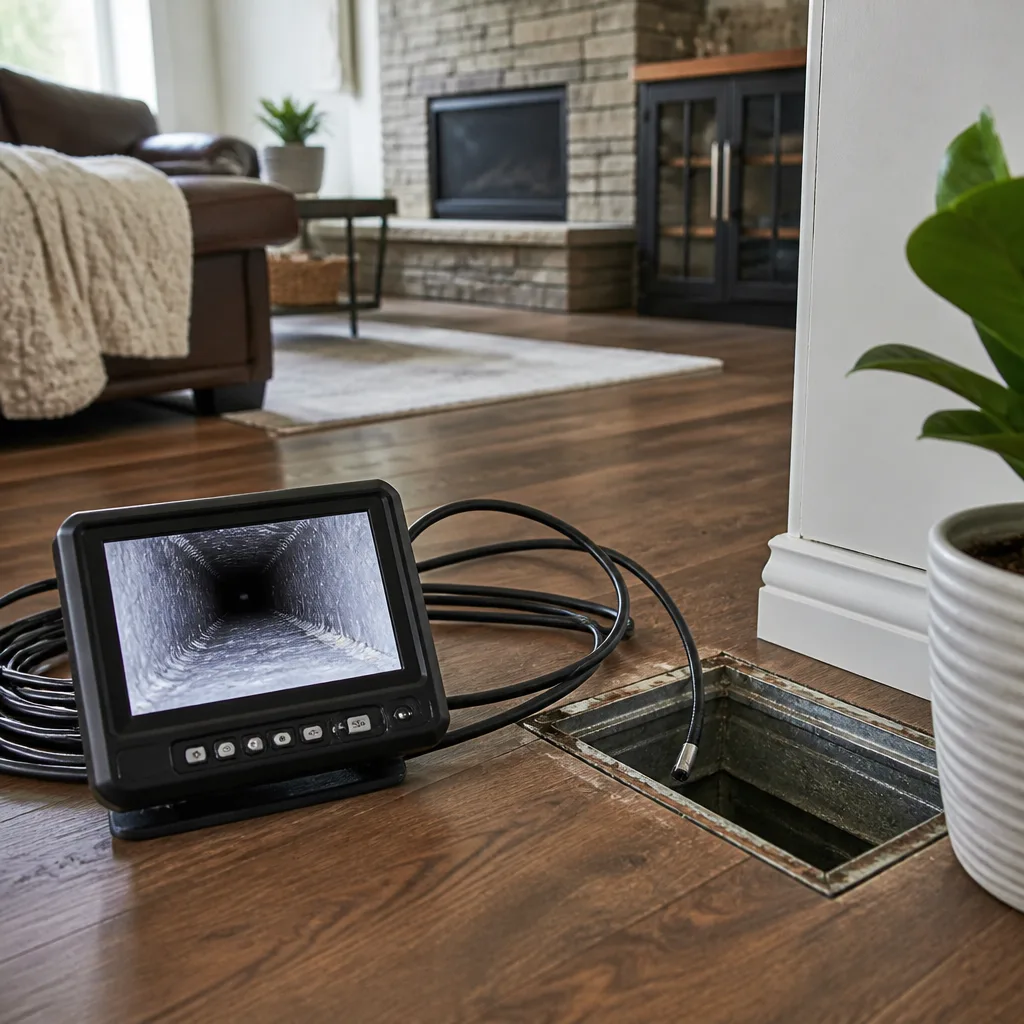 Camera inspection
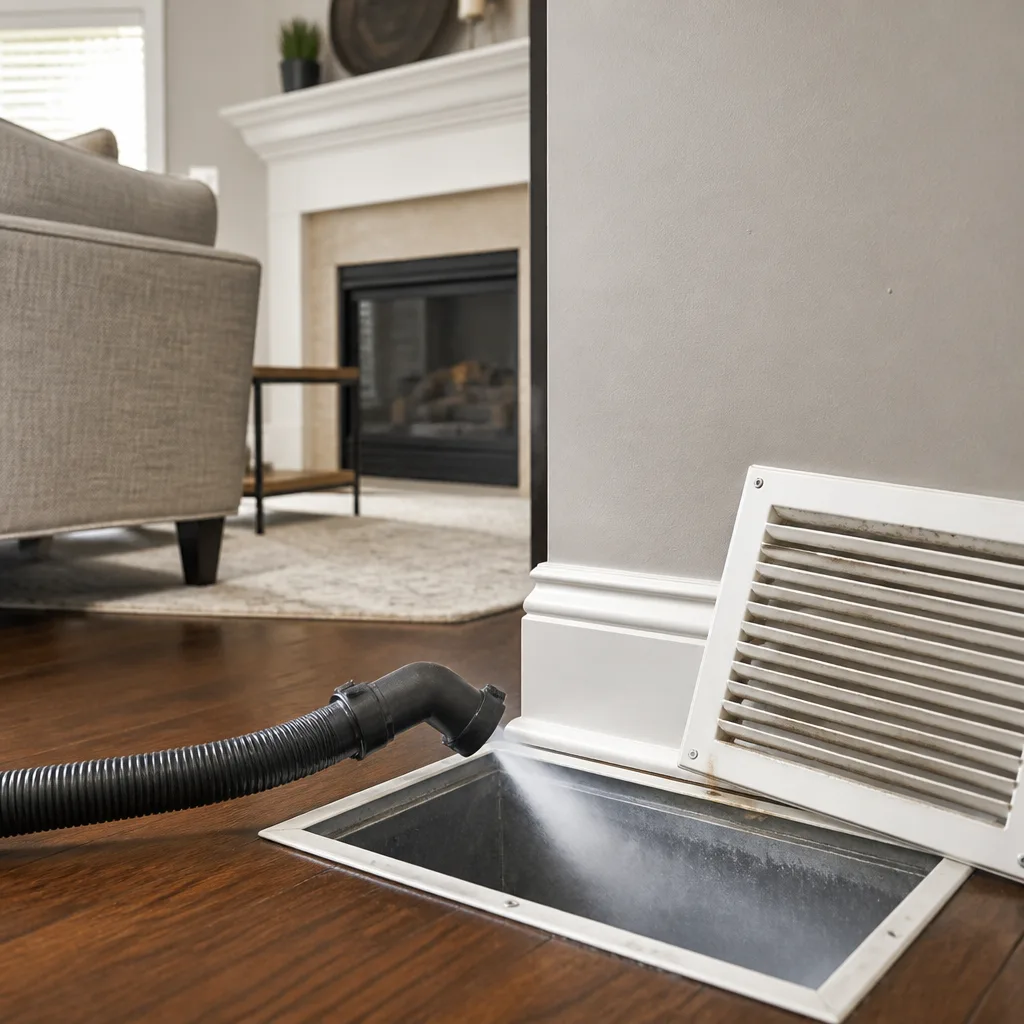 Sanitizing & deodorizing
Whole-system duct and dryer vent check with before-and-after photos - you see exactly what came out of your vents
That "$99 whole-house special" is a bait ad - the real number appears once they are in your hallway, or the "clean" is a shop-vac at the register. We photograph the inside of your ducts before and after instead.
Seasonal Air Duct Cleaning Care for Highlands: Year-Round Homeowner’s Guide
Most homeowners in Highlands book duct cleaning in January, when the furnace has been running for months and the air tastes stale, or in August, when the house won’t cool and they assume the ducts are to blame. Both are the worst timing choices you can make. By January, heating season has already pushed a full load of combustion byproducts and settled dust through the system. By August, you’ve lived through months of closed-window cooling with whatever was in the ducts in the first place. The best window comes earlier, and it comes twice a year. This guide walks through what Highlands’ specific climate does to ductwork month by month, what to check before each seasonal changeover, and how to build a care calendar that actually fits how homes here run.
Quick Answer
The best time to clean air ducts in Highlands is late May through early June, before cooling season starts, and again in early October, before the furnace runs its first cycle. Highlands has two high-demand periods (winter heating and summer cooling) bracketed by transition windows that are the smartest time to address duct health. Cleaning during a transition means you can run the system open to flush loose particulate before you depend on it for comfort, rather than paying to push dislodged dust through a house that’s already occupied all day.
Styles & brands we work with
- Whole-home duct cleaning
- Dryer vent cleaning
- Camera inspection
- Sanitizing & deodorizing
Table of Contents
- Why Highlands duct care doesn’t follow a national calendar
- April through June: snowmelt, humidity, and return duct migration
- July through September: the wildfire smoke contamination problem
- The fall heating startup protocol
- What heating season does to metal duct surfaces
- Month-by-month reference card for Highlands homeowners
- Dryer vent cleaning as year-round fire prevention
- Filtration and air quality upgrades that hold up year after year
Why Highlands duct care doesn’t follow a national calendar
Most air duct cleaning advice you’ll find online is written for a four-season Midwest model where each season has a roughly equal stretch and the humidity stays moderate. Highlands doesn’t work that way. The heating season here runs long and dry, the cooling season is intense but shorter, and the transition windows between them are brief and easy to miss. That shape means your duct system spends most of its life in one of two modes, and the maintenance that actually matters gets squeezed into a few weeks in spring and fall.
The other thing that separates Highlands from the generic advice is elevation and what that does to indoor air. Furnaces here work hard, and air that starts dry becomes drier as it’s heated. Homes stay sealed tight against the cold, which traps whatever the return ducts pull in. Meanwhile, spring brings snowmelt off the surrounding slopes, and that moisture finds its way into crawlspaces and basements that many properties here weren’t built to handle as well as the climate now throws at them.
So the calendar we build for a Highlands home doesn’t have equal quarters. It has two high-demand periods, two transition windows, and one specific contamination type (wildfire particulate) that shows up on its own schedule and needs its own response. Everything else is housekeeping:
- Heating season (roughly October through April): long, dry, furnace-heavy, with combustion residue and settled dust building in supply runs.
- Cooling season (roughly June through September): intense, closed-window, with wildfire smoke overlaying the usual seasonal load.
- Spring transition (late May to early June): the best window for a full cleaning, and the best time to catch moisture damage from snowmelt.
- Fall transition (late September to early October): the second-best window, and the last chance to prep the system before the furnace cycle starts.
Read the rest of this guide with that shape in mind. Every seasonal action below ties back to one of those four blocks. If you want the foundational service itself explained, see air duct cleaning before you book anything.
April through June: snowmelt, humidity, and return duct migration
Highlands snowmelt season runs April through June, and it creates a duct problem that homeowners here see but rarely connect to the ducts. As snow leaves the surrounding slopes and ground, moisture moves into crawlspaces and basements. Not all of it evaporates outside. Some of it enters the house through foundation air and finds its way into the return duct system, where it condenses on cool metal surfaces and stays put. Return ducts, by design, pull air from the rooms back to the air handler, and if that return path starts in a damp crawlspace or low basement return, the moisture hitches a ride.
What this does to your duct system over a few weeks:
- Surface moisture: fine dust that settles on the inside of return ducts during the dry winter becomes a damp film once the return air is humid, which is a much better home for mold spores than dry dust ever was.
- Insulation degradation: internal duct lining, if your system has it, absorbs moisture and loses both its acoustic and thermal performance.
- Seal failure: joint tape and mastic that were already marginal tend to open up under the seasonal moisture swing, which widens the very leaks that let crawlspace air in.
- Odor: a musty smell at the return grille during spring is the most common sign a homeowner notices first.
This is why late May is the single best duct-cleaning window of the year in Highlands. Heating is done, cooling hasn’t started, and the system can be run open for a flush without costing you comfort. More importantly, our technicians get eyes on the return path right after snowmelt, which is when moisture damage and failing seals are easiest to identify and fix. If the inspection turns up gaps or disconnected runs, we can handle the repair in the same visit rather than leaving you to call a second company. Our HVAC cleaning work is often booked together with this spring inspection for that reason.
One thing to check yourself before you book: walk the crawlspace or basement in early May and look for standing water, damp insulation, or rust at the base of the return duct. Those are the signs the moisture problem is structural and needs to be solved at the foundation before duct cleaning will make a difference.
July through September: the wildfire smoke contamination problem
Wildfire smoke season in the Highlands area runs July through September, and the contamination it leaves in ductwork is a different category from household dust. Fine particulate from wildfire smoke is small enough that standard furnace filters don’t stop much of it. It bypasses the filter at the air handler, enters the duct system along with the rest of the return air, and coats duct walls in a way that ordinary dust doesn’t. Instead of accumulating as fluffy masses on horizontal surfaces, smoke particulate adheres as a thin, sticky film on the vertical sides of supply runs and on the vanes of your registers. You can’t see it from the grille. You often smell it every time the system cycles.
If you’re running the furnace blower through a smoke event with windows shut (which is exactly what most homeowners do), the smoke load cycles through the whole system repeatedly. By September, your ducts have taken on a contamination type that cleaning alone won’t always fully address. That’s where sanitizing enters the picture, and it’s a step our technicians usually recommend specifically after a bad smoke season, not as a default upsell. Guardsman-backed treatment options are one route; what matters is that the mechanical cleaning comes first and the surface treatment follows, never the other way around.
The right moves for this window:
- Upgrade the filter before July, not during. A higher-MERV filter (within what your furnace can handle without straining the blower) captures more of what the smoke throws at you. Check your furnace manual for the MERV range it’s rated for.
- Run the system on continuous fan during heavy smoke days, briefly. This uses the filter as a whole-house air cleaner while the particulate is airborne. Don’t leave it on for weeks; a few hours during the worst of it is enough.
- Watch for the film. A visible brown tint on the inside of a register, or a smoky smell at startup, means the contamination has made it into the ducts.
- Book the cleaning in September, after the smoke season closes. Cleaning in July or August just means the ducts load back up before the season is over.
This is one reason our professional equipment matters for Highlands homes specifically. Rotobrush systems agitate and vacuum simultaneously, which is what it takes to release that adhered smoke film from duct walls. Consumer vacuums and shop-vac shortcuts can’t move enough air to lift it, and they put the particulate right back into your house. Abatement Technologies air filtration tools used during service capture dislodged contaminants rather than recirculating them, which keeps the cleanup contained to the duct system instead of the living room.
The fall heating startup protocol
Before the furnace runs its first cycle of the season, there are a few specific checks that make the difference between starting the winter with clean air and starting it by pushing months of settled material through an occupied house. Fall is the second-best cleaning window in Highlands (late September through early October), and this is the checklist we walk through when the timing works out:
- Change the filter before the first heat call. A filter that sat through summer cooling and fall smoke season is loaded. Start the heating season with a fresh one so the first few cycles aren’t fighting a clogged filter.
- Check every return grille for visible debris. Pet hair, dust bunnies, and building paper collect around the grille frame. If the grille face is heavy, the duct behind it is worse.
- Note any smells at startup. A burnt-dust smell in the first cycle is normal and short-lived. A stale or musty smell that lasts more than a few minutes is not, and points to material sitting in the ducts.
- Test airflow at each supply register. Hold a tissue or a light piece of paper in front of each register with the fan running. Weak airflow at one register while the others are strong is a duct problem, usually a disconnected run or a collapsed flex section.
- Inspect visible ductwork in the attic or crawlspace. Look for crushed runs, disconnected joints, or insulation that’s peeled away. If you find a broken joint, don’t wait until spring to fix it. A leaky supply run pushes heated air into an attic all winter and pulls cold air into the system.
- Book a cleaning before the heating season really starts. If you haven’t cleaned in more than a couple of years, October is the window. Once the furnace runs constantly, the system is either clean or it isn’t; there’s no easy mid-winter fix.
Most of what we find during fall inspections in Highlands is small and fixable. Crushed flex runs under a floor, disconnected collars at an air handler, joints that opened up during the dry summer. Duct repair and sealing is a core part of what we do, and it’s usually the difference between a system that heats evenly all winter and one that keeps one room too cold no matter what the thermostat says. Fixing what we find, rather than cleaning around it, is why the service is worth doing once and done properly.
What heating season does to metal duct surfaces
Here’s something most homeowners don’t think about: your furnace does more than heat air. Natural gas combustion produces water vapor and trace combustion byproducts, and even a well-tuned system sends a small amount of these into the supply air. Over a long Highlands heating season, that shows up on the inside of metal duct surfaces as a residue profile that isn’t quite dust and isn’t quite soot. It’s a fine, slightly tacky film that clings to galvanized surfaces and accumulates most heavily on the downstream side of the heat exchanger, in the first few feet of the main supply plenum, and on the register boots in the warmer rooms.
When we do a spring inspection in Highlands, this residue profile is one of the things we’re reading. A thin, uniform film is normal and gets cleaned off. A heavy, dark accumulation at the plenum is a signal to look closer at the furnace itself and its combustion side, which is outside our scope but worth flagging to your HVAC technician. An uneven profile (heavier on one side of the plenum) can indicate airflow imbalance, which points back to duct sizing or a partially blocked run.
The reason it matters for cleaning is that this residue doesn’t come off with a dry vacuum pass the way household dust does. It needs mechanical agitation against the metal surface, which is exactly what a Rotobrush-style system is designed for. Rotary brush heads that fit the cross-section of the duct, combined with simultaneous high-volume vacuum, lift the film without abrading the galvanized coating. Consumer vacuums and compressed-air shortcuts don’t touch it. When we recommend cleaning right after heating season ends, this residue load is one of the main reasons.
One safety note that belongs here: combustion byproducts are a furnace and venting issue, not a duct-cleaning issue, and any smell of gas, any soot visible around the furnace, or any repeated carbon monoxide alarm is a reason to stop using the furnace and call a qualified HVAC or gas technician. We don’t work on combustion systems, and we’ll tell you to call one if we see something on inspection. Duct cleaning handles what’s in the ducts. It doesn’t fix what’s coming out of a faulty heat exchanger.
Month-by-month reference card for Highlands homeowners
Here’s the whole year at a glance, with specific actions rather than vague suggestions. This is the version we’d tape to the inside of the furnace closet door:
- January: Change the filter mid-season if it’s loaded. Note any room that stays cold. Watch for dry, static-heavy air (normal for heating season; a humidifier helps but isn’t a duct issue).
- February: Check return grilles for visible debris. If any room smells stale, don’t wait for spring.
- March: End of heavy heating. Look at the furnace flue and venting (just a visual look for soot or corrosion) and call an HVAC tech if anything looks off.
- April: Snowmelt begins. Walk the crawlspace or basement for damp spots, rust at return duct bases, and standing water near the foundation.
- May: The best duct-cleaning window of the year. Book in the last two weeks. Verify the return path is dry before cleaning, and repair any failed joints found during inspection.
- June: First cooling cycle. Test airflow at every register with the AC running. Book a second-chance cleaning if May didn’t happen.
- July: Wildfire smoke season starts. Upgrade filter if you haven’t. Run the fan briefly on heavy smoke days. Watch for smoky smells at startup.
- August: Don’t book cleaning in the middle of smoke season; it reloads. Note the smoke load for September.
- September: Best window to clean out the summer’s smoke film. Book the last two weeks.
- October: Fall heating startup protocol. Change filter, test airflow, inspect visible ductwork, note smells at first furnace cycle.
- November: Heating season underway. Change the filter mid-season, check the register boots for visible residue.
- December: Mid-heating season. Watch for the reaction of a family member with allergies or asthma; if symptoms repeat indoors, plan the spring cleaning now.
Two cleaning windows in the year, with everything else being lighter housekeeping. For anyone new to Highlands, this is a housekeeping rhythm that matches the climate, not a national four-season checklist copied from a coast.
Dryer vent cleaning as year-round fire prevention
Dryer vent cleaning belongs in this guide because it’s a year-round safety issue that most air duct cleaners either skip or treat as an afterthought, and both are mistakes. Lint accumulation in a dryer vent is a leading cause of residential fires, and unlike ductwork contamination that builds slowly and mostly hurts air quality, lint buildup is a fire load that can go up fast. The problem is worst in winter, when a full house does more laundry and the vent runs against cold outside air (which can cause condensation and compaction at the exterior flap), and worst in summer, when lint near an exterior termination can ignite from a hot dryer cycle on a hot day.
What makes Highlands’ dryer vent situation specific:
- Long vent runs: many homes here have the laundry in a basement or interior position, meaning the vent run to the exterior wall is longer than the ideal short, straight run. Longer runs collect more lint per dry cycle.
- Elevation and moisture: cold outside air during winter can condense moisture inside the vent run and compress lint into a dense mat that’s harder to clear than loose lint.
- Rigid vs. flexible duct: flex duct has ridges that catch lint, and the ribbed interior is where a hidden clog starts. Rigid metal venting is far less prone to this.
Our dryer vent cleaning is a dedicated service line for exactly this reason. The equipment matters: a lint mat at the bottom of a long run needs mechanical clearing and a high-volume vacuum, not a shop-vac pass at the exterior flap. If your dry cycle is taking longer than it used to, or the exterior vent flap doesn’t pop open freely when the dryer runs, book the cleaning now rather than waiting for a seasonal slot. A fire prevention service shouldn’t be scheduled on a season, it should be scheduled on the sign.
Filtration and air quality upgrades that hold up year after year
Cleaning your ducts resets the system. What you do after that determines whether the next few years of heating and cooling are cleaner or just reloading the same contamination. This is where we lean on specific equipment recommendations rather than generic “upgrade your filter” advice, because a Highlands home going through a full smoke season needs filtration that’s sized for it.
A few upgrade categories worth understanding:
- Whole-home media filters: these replace a 1-inch furnace filter with a 4- or 5-inch pleated media cabinet, mounted at the air handler. Higher surface area means a higher MERV rating without straining the blower. Honeywell and Aprilaire make media cabinets that fit most residential air handlers, and they’re the practical upgrade for a home that sees wildfire smoke seasons.
- Air cleaners and UV systems: these sit downstream of the filter and address what the filter misses, including fine smoke particulate and biological contamination on wet coil surfaces. Aprilaire and Honeywell make the whole-home units we recommend. Not every home needs one; a Highlands home that runs the AC through smoke season is the strongest case for one.
- Post-cleaning sanitizing: applied after the mechanical cleaning (never instead of it), a Guardsman-backed surface treatment helps prevent regrowth of mold spores on duct surfaces and reduces odors from the smoke film left behind after cleaning. This is the step that makes the cleaning hold through the next smoke season.
The key point is sequencing. A high-MERV filter on top of contaminated ducts just loads faster, because the filter is pulling in more of what’s already there. A UV unit on a dirty coil doesn’t do much. Clean first, seal any leaks, then upgrade filtration and treatment. That order gives you a system that starts clean and stays clean longer, which is the whole reason we treat indoor air quality as a system rather than a series of separate services. If you’re planning the full scope in one shot, the natural home base is the Air Duct Cleaning Highlands service overview.
Common Mistakes to Avoid
- Cleaning during cooling or heating season. Cleaning in January or August means you spend money to dislodge dust you can’t flush out, because the house is sealed and the system is running hard. Book in the transition windows in late May or September.
- Assuming a filter change is enough after a smoke season. Fine wildfire particulate bypasses standard filters and coats duct walls. A new filter doesn’t clean the ducts, only what’s downstream of it going forward.
- Cleaning before fixing a leaky return. If the return path pulls from a damp crawlspace, cleaning it just gives the damp air a cleaner duct to travel through. Seal the leak, then clean.
- Using a shop-vac or rented blower machine. Consumer equipment can’t lift adhered combustion residue or wildfire smoke film from duct walls, and it recirculates what it does lift into the house. Professional-grade equipment isn’t a marketing line here, it’s the reason the job works.
- Skipping the spring crawlspace inspection. Snowmelt damage is easiest to catch in April and May, before the cooling season dries everything out and hides the problem until next spring.
- Treating dryer vent cleaning as a scheduled seasonal chore. It’s a fire prevention item driven by lint accumulation, not by a month on the calendar. When the dryer slows or the vent flap won’t open, that’s the sign.
- Forgetting the duct system includes the air handler and coil. Cleaning the ducts while leaving a dirty evaporator coil in place means the coil just reloads the supply side. Air handler and coil cleaning belong in the same visit as the duct cleaning, which is why our scope includes HVAC cleaning.
See the difference
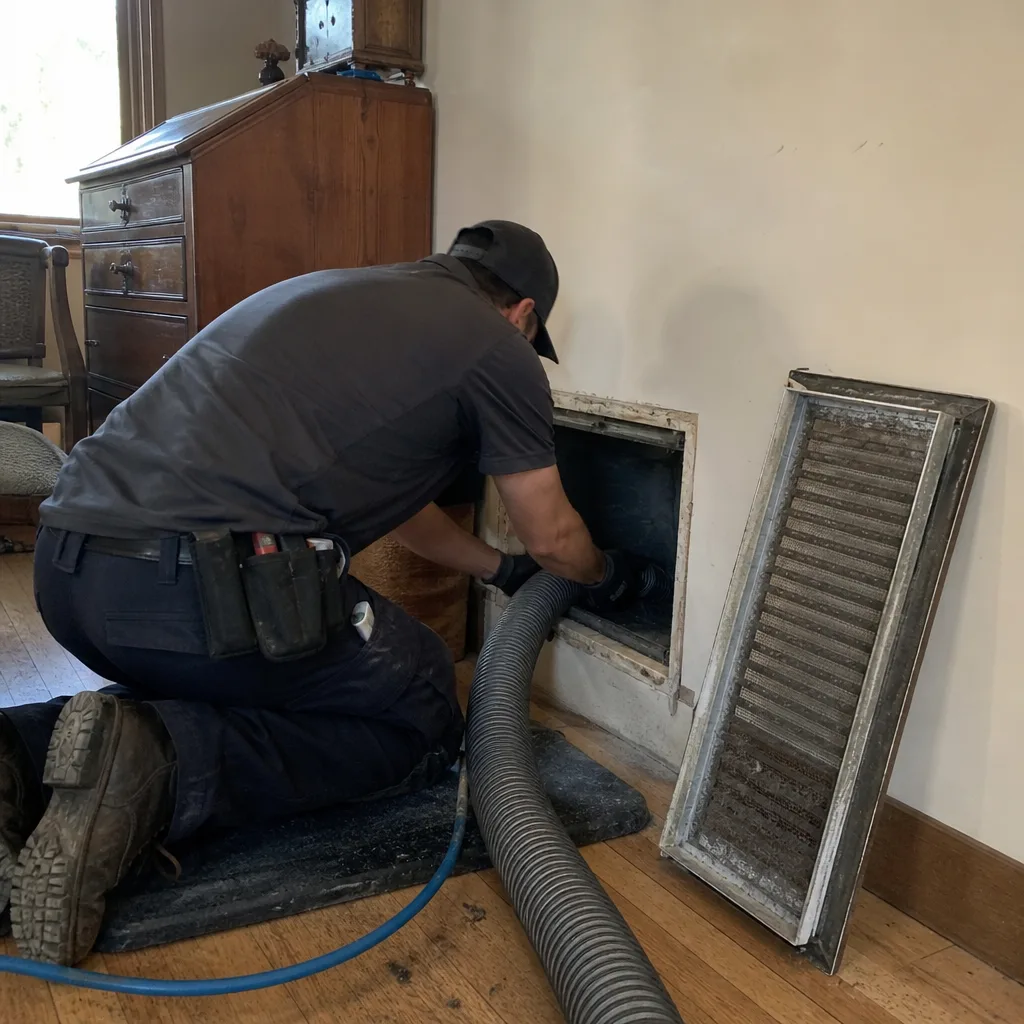 Before
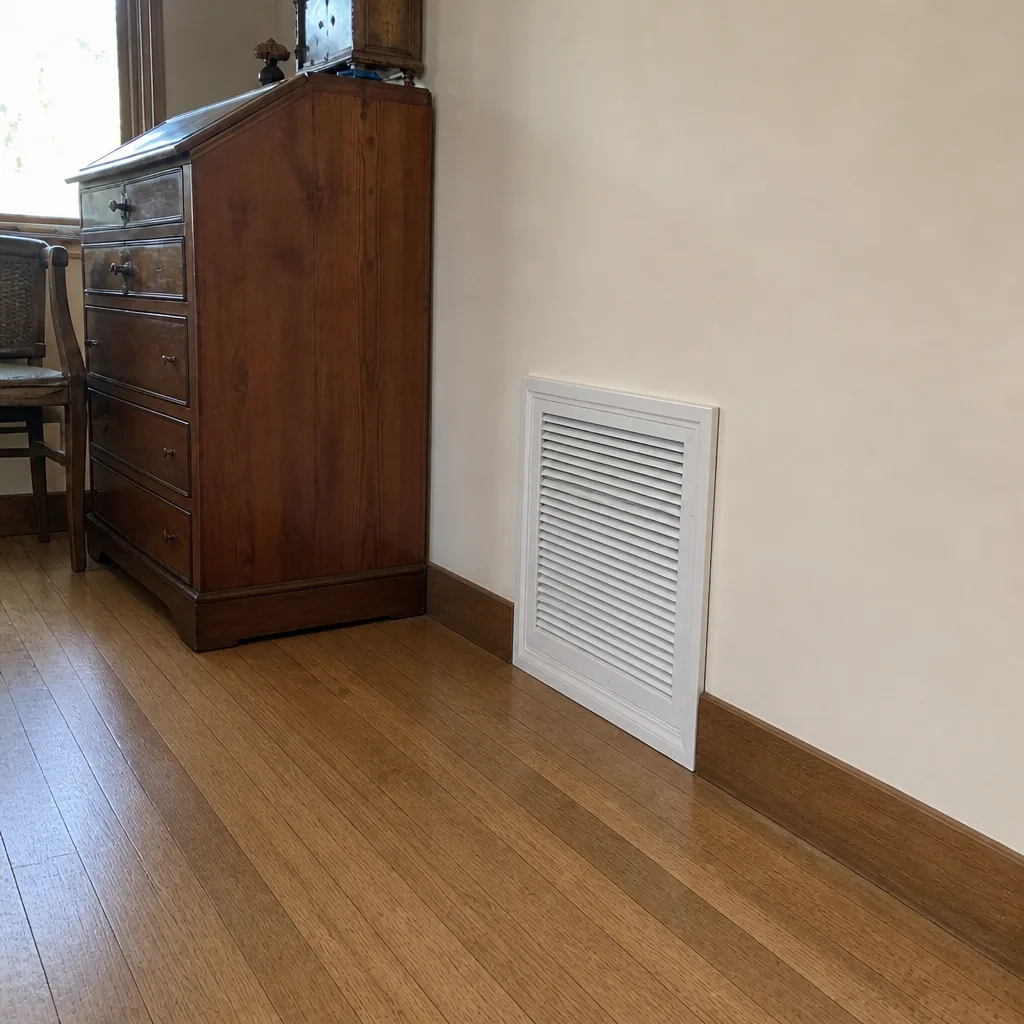 After
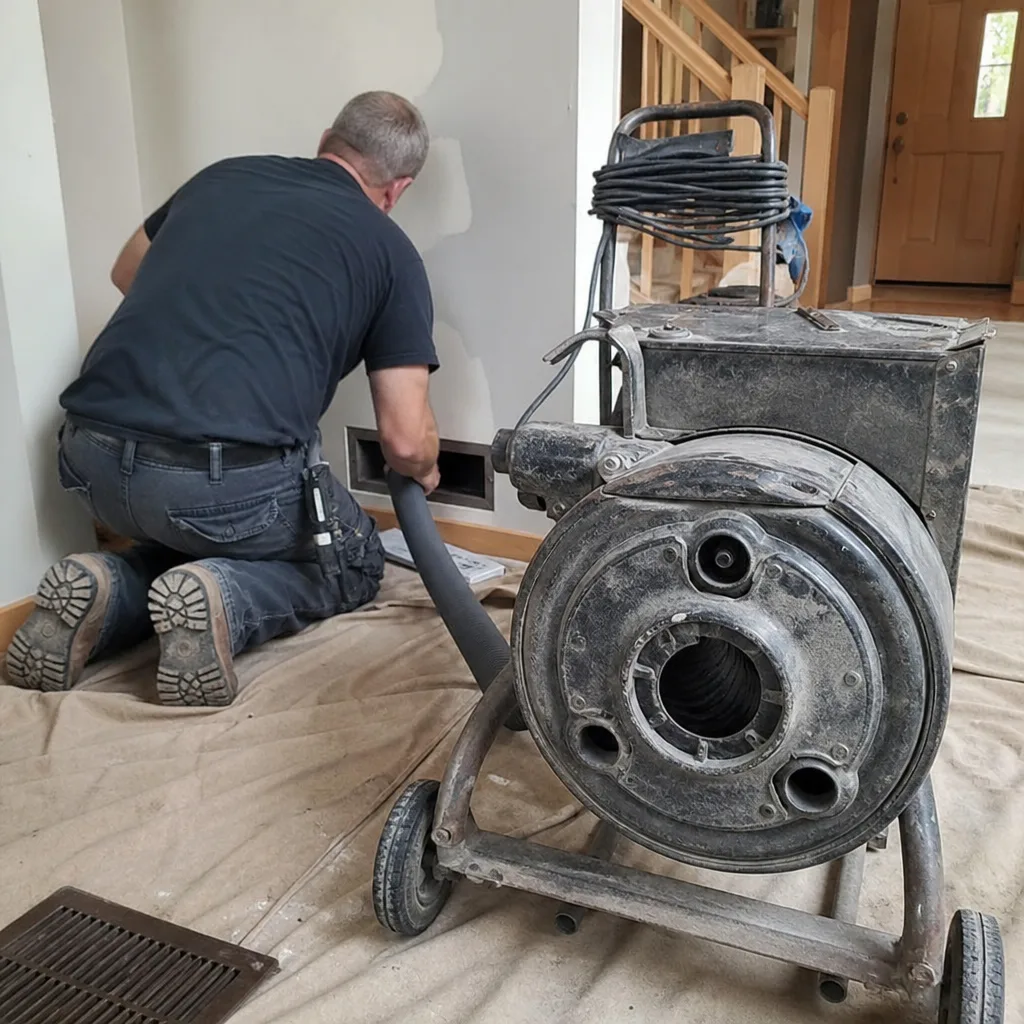 Before
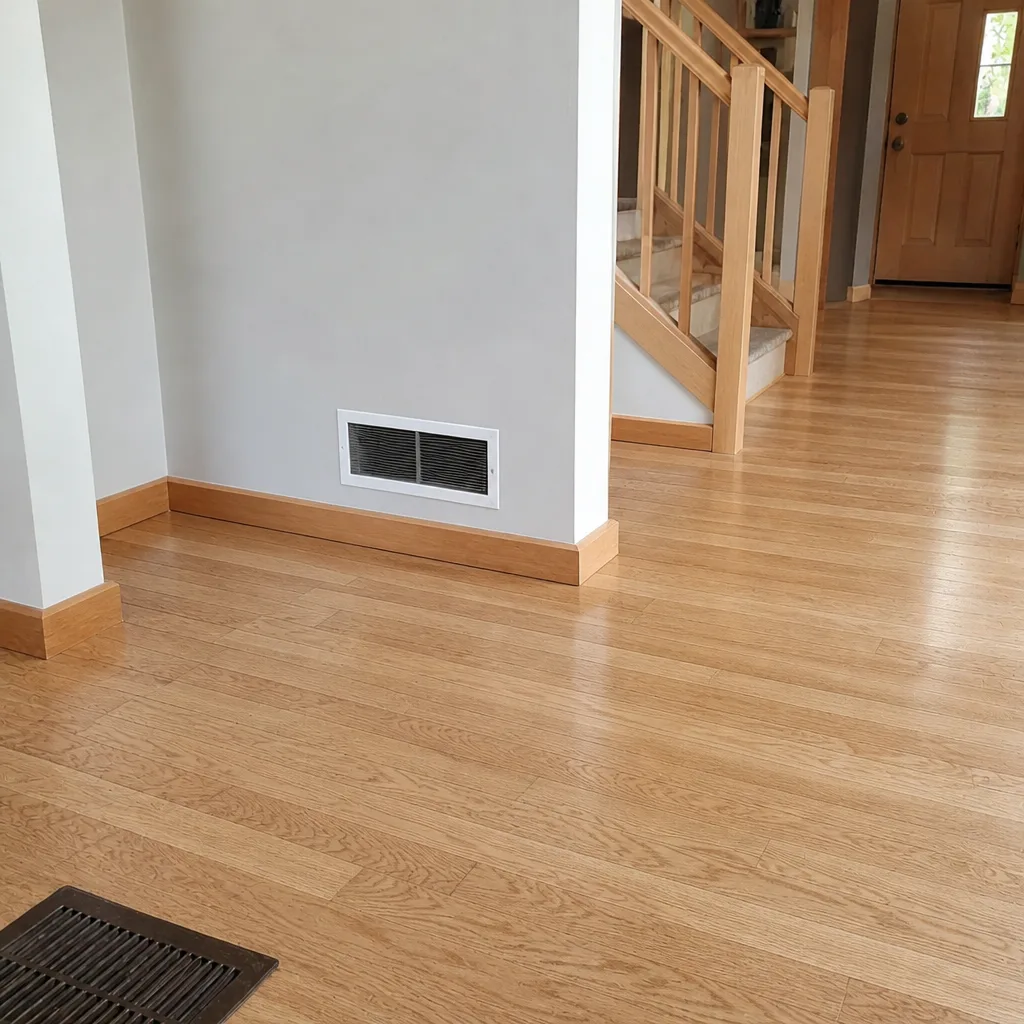 After
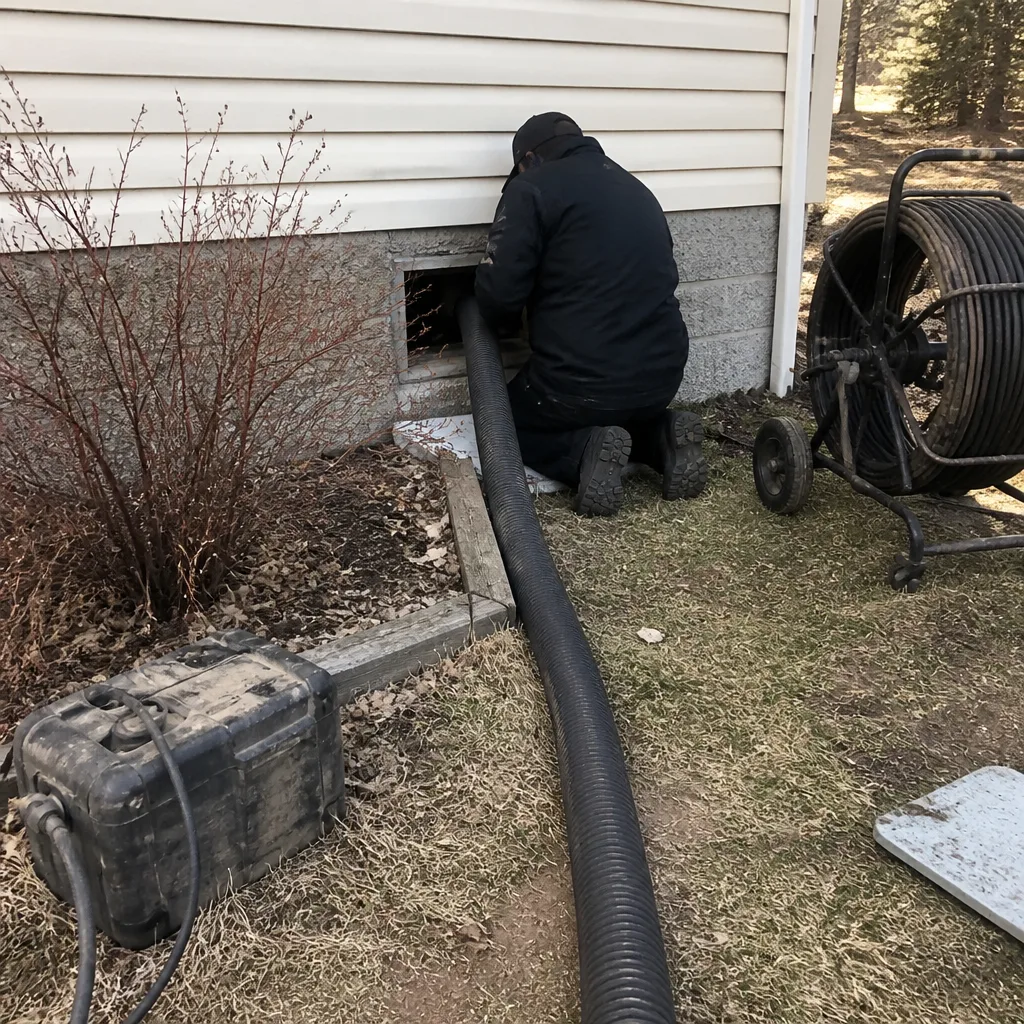 Before
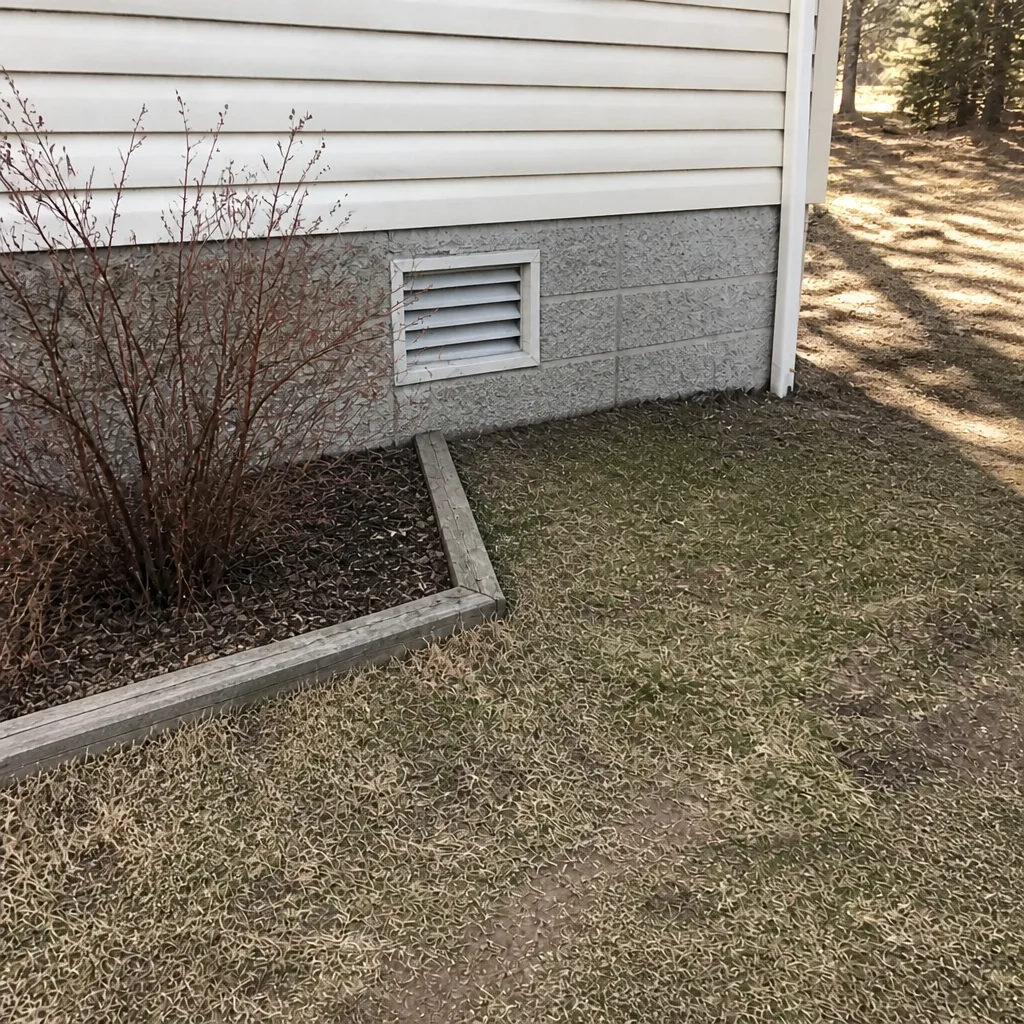 After
When to Call a Professional
You should book a professional duct cleaning in Highlands if you can see a visible film or debris on the inside of a register, if a smoky or musty smell appears repeatedly at startup, if anyone in the house has respiratory symptoms that ease when they’re away from home, or if you haven’t cleaned the system in more than a couple of years and you’ve been through at least one wildfire smoke season. You should also call if a fall airflow test shows a weak register that points to a broken or disconnected run, because a leaky supply is a repair job, not a cleaning job, and duct repair and sealing is part of what we do. If you’re not sure which category your home is in, that’s the conversation. Air Duct Cleaning Highlands offers free estimates in Highlands, and the written estimate sets the price before any work begins. Call (855) 658-5079.
Frequently Asked Questions
Most Highlands homes should be cleaned every two to three years, with the schedule anchored to the spring and fall transition windows rather than to a calendar month. Homes that have been through a heavy wildfire smoke season, that have pets or allergy sufferers, or that show signs of snowmelt moisture intrusion may need cleaning annually. The practical test is straightforward: if a register shows a visible film or a smoky or musty smell appears at startup, it’s time, regardless of how long it’s been. Call (855) 658-5079 for an exact quote. Estimates are free.
Late May through early June is the single best window, and late September through early October is the second best. Both are transition windows where the heating or cooling season is winding down, which means the cleaned system runs open for a flush without costing you comfort. Avoid January and August, the two most common booking months and the two worst choices from a duct-health perspective. If your house has been through a severe smoke season, book the September window specifically to catch the summer’s smoke film before heating season.
Yes. Fine wildfire particulate is small enough to bypass most standard furnace filters, and the blower cycles return air through the ducts many times during a smoke event. It adheres as a thin film on duct walls and register vanes rather than piling up as loose dust, which is why it survives ordinary cleaning. That’s one reason we recommend professional equipment for Highlands homes: the Rotobrush system agitates and vacuums the film off the duct wall rather than trying to blow it loose.
Cheap quotes usually reflect consumer-grade equipment or a per-vent pricing model that doesn’t cover the whole system. The number quoted up front often grows once the technician sees the house, or the work itself is a shop-vac pass rather than a proper agitation and vacuum cycle. We price the whole system flat, one price agreed before work begins, with no per-vent pricing. Before-and-after photos of your own ducts confirm the work was actually done. That flat price may not match the lowest quote, but it’s the number you’ll actually pay.
The proof is before-and-after photos of your own ducts, taken at the registers, at the air handler, and inside the supply runs where the machine reaches. Ask for those images before the technician leaves. A proper cleaning also changes what you can observe: airflow through the registers gets stronger, the startup smell goes away, and any visible film on register vanes is gone. If you haven’t been offered photos and can’t see a visible difference, ask why.
No, and it’s worth understanding why. Duct walls are only reachable with rotary brush heads sized to the duct cross-section, combined with a high-volume vacuum that captures the dislodged material. A shop-vac can reach the register boot but not the run behind it, and what it does lift goes back into the room as airborne dust. For adhered combustion residue or wildfire smoke film, a shop-vac has no effect at all. The mechanical lift from professional equipment is the whole reason a duct cleaning works. Call (855) 658-5079 to discuss the right scope for your home, and estimates are free.
The Bottom Line
Highlands doesn’t give you four equal seasons of duct care. It gives you two high-demand periods (a long dry heating season and an intense, smoke-laden cooling season) bracketed by two transition windows that are the smartest time to act. Late May catches snowmelt moisture before cooling starts. Early October catches wildfire smoke film before the furnace runs its first cycle. Every month between is housekeeping: filter changes, airflow tests, and watching for the smell at startup. Our technicians have up to 13 years of experience reading exactly these signals, and the equipment we bring (Rotobrush, Nikro, Abatement Technologies) is what turns the inspection into a fixed problem. Dryer vent cleaning runs on its own schedule year-round and shouldn’t wait for a season. Build the calendar once, run it for years, and your duct system stops being a guessing game.
Ready to Book the Right Window?
We’re taking cleaning bookings now for the spring and fall transition windows, and we’ll tell you honestly whether your home needs the full scope or a lighter visit. Call (855) 658-5079 for a free estimate. We answer 24/7. Fast dispatch from 7am to 7pm, Sunday through Friday. The written estimate sets the price before any work begins, and you’ll see before-and-after photos of your own ducts when the job is done.
Written by the team at Air Duct Cleaning Highlands.