
Last updated November 23, 2026
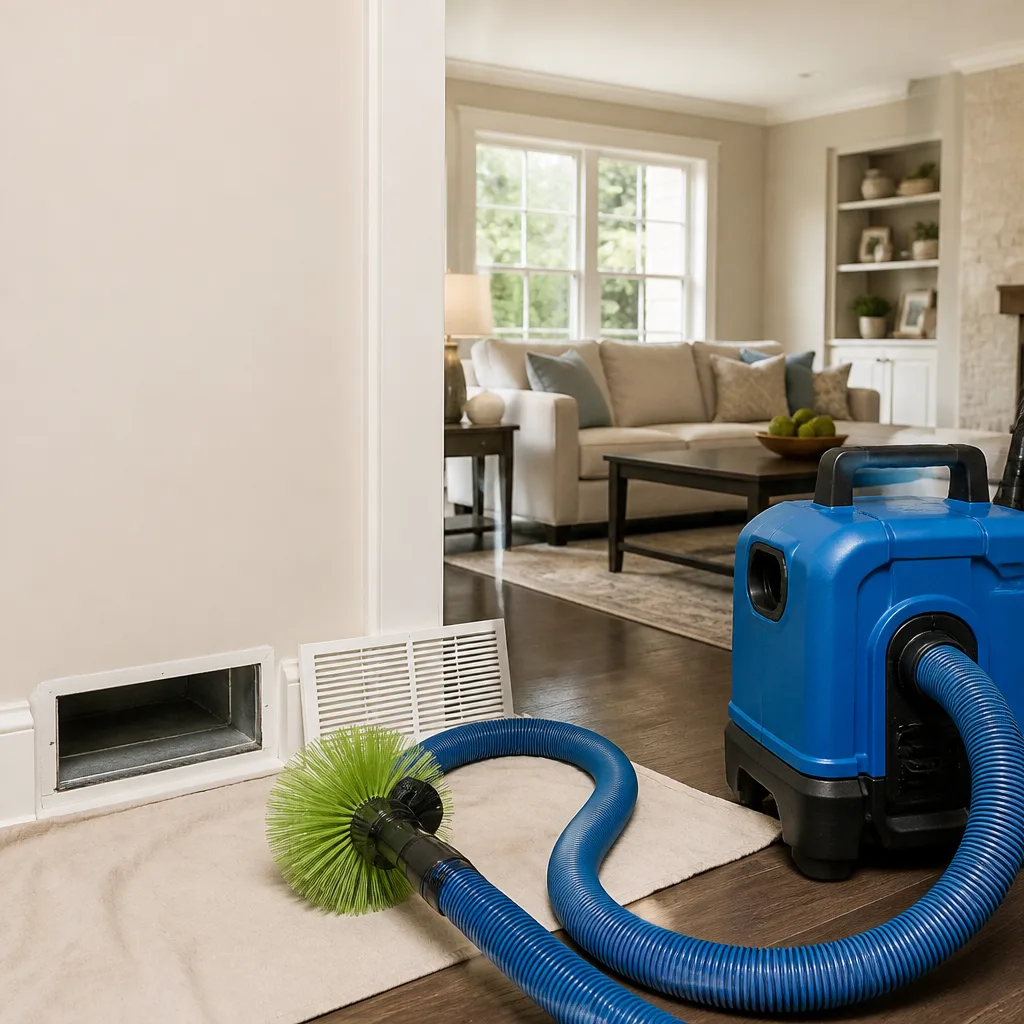 Whole-home duct cleaning
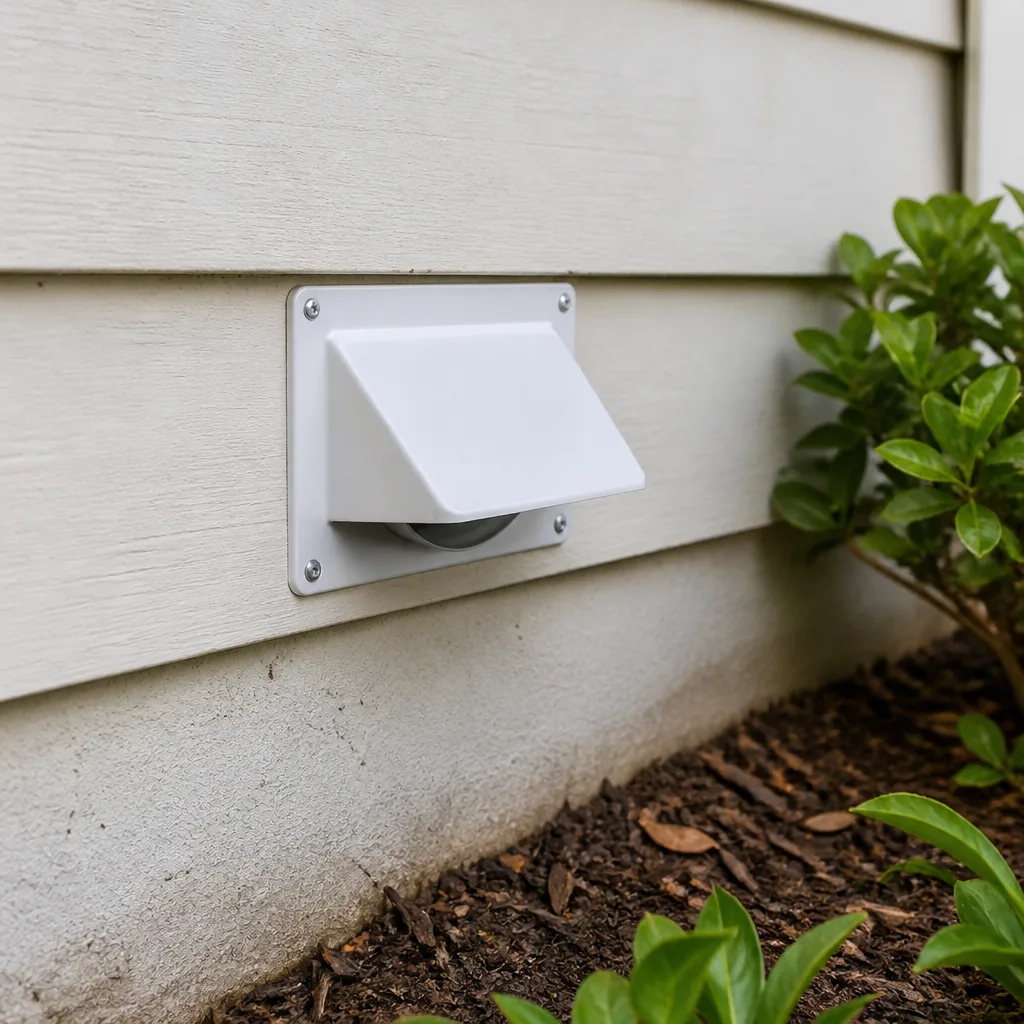 Dryer vent cleaning
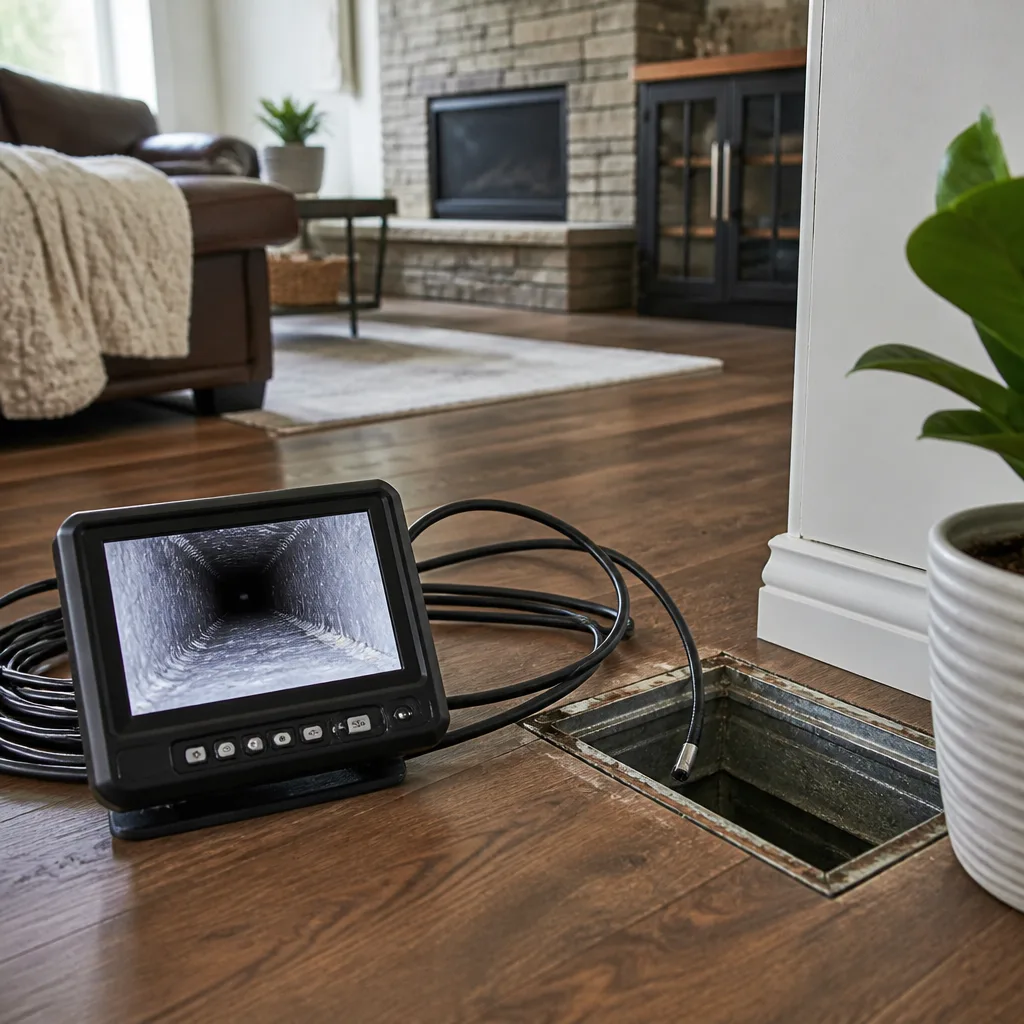 Camera inspection
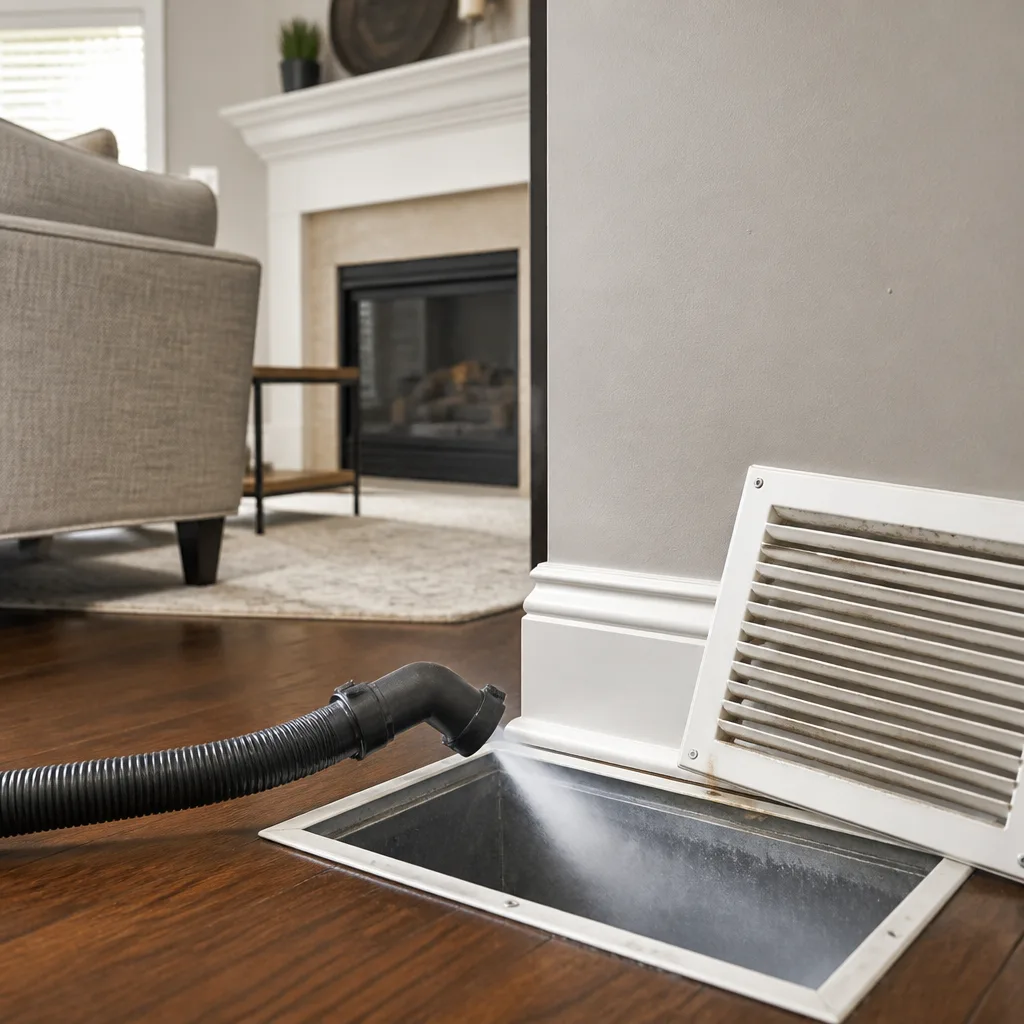 Sanitizing & deodorizing
Whole-system duct and dryer vent check with before-and-after photos - you see exactly what came out of your vents
That "$99 whole-house special" is a bait ad - the real number appears once they are in your hallway, or the "clean" is a shop-vac at the register. We photograph the inside of your ducts before and after instead.
DIY vs Professional Air Duct Cleaning: The Highlands Homeowner’s Decision Guide
A $60 dryer vent brush kit and a shop vac will clean your registers beautifully and leave most of your duct system untouched. That’s not a knock on your effort. It’s a physics problem, and no extension attachment on the shelf at a Highlands hardware store solves it. The contamination that actually affects your indoor air sits in trunk lines, return plenums, and the coil housing, places a homeowner tool simply cannot reach with enough force and capture to matter. This guide explains where the real line sits between what DIY genuinely handles well and what requires professional-grade equipment, so you can spend your time and money where they actually change your air quality.
Quick Answer
For routine register cleaning, visual inspection, and dryer vent lint removal near the exterior cap, DIY is a reasonable approach. For the duct system itself, meaning the trunk lines, return plenums, and coil housing where contamination concentrates, professional equipment is required because consumer tools cannot generate the negative pressure or agitation needed to dislodge and capture debris without redistributing it into your living space. In a Highlands home, that distinction usually decides the question.
Styles & brands we work with
- Whole-home duct cleaning
- Dryer vent cleaning
- Camera inspection
- Sanitizing & deodorizing
Table of Contents
- The Physical Reach Problem: Why Most of Your Duct System Is Off-Limits to DIY
- Where Contamination Actually Concentrates in a Highlands Home
- What DIY Is Genuinely Good For
- Why Negative Pressure Is Non-Negotiable
- What Professional Equipment Does That Shop Vacs Can’t
- When Professional Service Is Not Optional
- The Honest Cost-Benefit Picture
- Highlands Climate and Duct Contamination: What’s Specific to This Area
The Physical Reach Problem: Why Most of Your Duct System Is Off-Limits to DIY
Residential duct systems were not designed for homeowner access. That’s the first thing to understand before you buy any tool. A typical forced-air system in Highlands runs supply trunk lines through the basement or crawlspace, branches into rigid or flex runs inside wall cavities, and returns air through a plenum connected to the furnace or air handler. The accessible openings are the registers and the return grille. Everything between those points is sealed inside framing, insulation, and sheet metal.
Consumer tools reach the first few feet from an opening. A shop vac hose with an extension wand can get maybe four to six feet into a straight run before the bend defeats it. Brush kits follow a similar limit. The trunk line, which is where the largest volume of settled debris accumulates over time, is often twelve to twenty feet from the nearest register and has elbows, transitions, and takeoffs along the way.
Here’s what’s actually inside that inaccessible span, based on how these systems are built:
- Trunk lines: The large main runs carrying conditioned air from the furnace. Debris settles here because air velocity drops as the duct widens, letting particles drop out of the airstream.
- Return plenums: The return path pulls air back to the furnace, and because it often runs through unconditioned space in Highlands homes, temperature swings cause condensation and dust to stick.
- Coil housing: The evaporator coil sits in a cabinet downstream of the filter. Dust that gets past the filter coats the coil fins, and that housing is rarely accessible from a register at all.
- Branch takeoffs and elbows: Every transition point creates turbulence where debris collects, and every elbow is a hard stop for a homeowner brush.
None of this means you should ignore what you can reach. It means the reachable portion is a small fraction of the system’s internal surface area. Cleaning what you can see does make a difference at the register. It does not clean the system.
Where Contamination Actually Concentrates in a Highlands Home
Contamination doesn’t distribute evenly. It collects in the places where airflow slows, changes direction, or hits a surface. In the Highlands area, the dry high-altitude air and pronounced seasonal temperature swings shape which spots fill up fastest.
The return plenum is usually the worst offender. Because it sits under negative pressure and pulls from multiple rooms, it captures fine dust from every living space. If the system’s return pathway runs through a cool basement, that dust can combine with condensation on cool metal and adhere to duct walls rather than staying loose and movable.
The coil housing is the second concentration point. Dust builds up on wet coil fins, and once it’s wet it’s no longer something a brush will remove. It needs proper cleaning with the coil accessible and with the right equipment to flush it without damaging the fins.
Trunk lines come third, but in volume they can hold the most. In a Highlands home with forced-air heat running through long winters, the heating season pushes a large volume of air through those trunks, and settled particulate accumulates at a fairly steady rate over years.
Branch runs typically hold less, and the register boots near the floor or ceiling accumulate some. Register and boot cleaning, plus the first few feet of visible branch, is exactly where DIY does its best work. The pattern to remember: the deeper you go into the system, the more contamination you’ll find, and the less accessible it becomes.
If you’re managing several properties, the calculation is the same but the stakes shift. A sealed, professional air duct cleaning service performed with professional-grade extraction is easier to document and verify than a homemade effort, which matters when you’re accountable for indoor air quality across multiple units.
What DIY Is Genuinely Good For
Let’s be specific about the useful tasks. These aren’t consolation prizes. They’re real maintenance steps that keep your system working well between professional service intervals, and they’re worth doing properly.
- Register and grille cleaning: Remove the supply registers and return grille, wash them in a sink or outside with a hose, dry them fully, and reinstall. Do this whenever you notice visible dust buildup on the face. Takes fifteen minutes and improves airflow immediately.
- Register boot and visible duct cleaning: With the register off, you can reach into the boot and the first few feet of branch with a vacuum. Use a brush attachment. This handles the accessible surface.
- Visual inspection: A flashlight and a phone camera in a sealed-run area can tell you a lot. Look for visible dust accumulation, moisture staining, animal droppings, or disconnected joints. Document what you find. It’s useful information whether you DIY or call a pro.
- Dryer vent lint removal near the exterior cap: Pull the exterior vent cover off (if it’s easily accessible and safely reachable), remove visible lint from the flapper and the last foot of duct, and keep the termination clear. This is a genuine fire-prevention task.
- Filter upgrades: If your filter is underperforming, a higher-MERV filter, within the range your system can handle without restricting airflow, will do more for your air quality day-to-day than most duct-cleaning accessories. Check with your HVAC tech on the correct MERV ceiling.
What DIY does not extend to: cleaning the trunk lines, the return plenum, or the coil housing. It also should not touch the full length of a dryer vent duct run concealed inside a wall or floor assembly. That last one is a fire-risk area, and getting a brush stuck inside a concealed run is worse than leaving the lint for a pro.
The other useful DIY step: sealing obvious gaps at register boots and joints you can actually reach. Metal duct tape (not cloth duct tape) on accessible joints reduces air leakage and keeps more of your conditioned air inside the system where it belongs. Anything beyond that is professional territory, and if you suspect significant leakage, a proper HVAC cleaning visit includes checking for and addressing those connections.
Why Negative Pressure Is Non-Negotiable
This is the technical heart of the argument. Duct cleaning isn’t just “loosening dirt.” It’s loosening dirt and capturing it. Without both, cleaning is worse than leaving the duct alone.
Here’s why. Any agitation tool, whether it’s a brush or compressed air whip, dislodges settled debris into the airstream. If there’s no extraction running, that material gets redistributed into the rooms served by the registers every time the system cycles on. For a homeowner with a shop vac at the register, the vacuum sucks air toward the register but cannot overcome the system’s internal pressure dynamics or reach the accumulated material in the trunk. The result is agitation without capture.
Professional duct cleaning uses a high-volume negative-pressure vacuum system connected to the main trunk or plenum, pulling the entire duct system into controlled negative pressure. Then agitation tools work through the branches and trunks, and the loosened material is captured by the extraction system at the source. Abatement Technologies air filtration tools used alongside the main vacuum capture fine particulate at the work area rather than allowing it to recirculate into the home.
Negative pressure is what makes the difference between cleaning and stirring. It’s also the reason proper service involves sealing the system, setting up the extraction connection correctly, and running the right equipment in the right sequence. There’s no consumer-grade equivalent that reproduces this at scale. A shop vac and a brush don’t do it, and no accessory turns them into something that does.
What Professional Equipment Does That Shop Vacs Can’t
The equipment gap is real, and it’s not about brand names for their own sake. It’s about what each piece of equipment is engineered to do. Professional-grade gear used in abatement and restoration work has specifications that consumer equipment simply doesn’t share.
Rotobrush systems agitate and vacuum simultaneously from inside the duct. That combined function is the key difference from a homeowner setup where you’re either brushing or vacuuming, never both at the same moment in the same location. Rotobrush systems are designed to work inside the duct run with controlled agitation while extraction runs in tandem.
Nikro equipment covers the high-volume extraction and specialty agitation side. This is the equipment used on commercial and restoration jobs where capture efficiency isn’t optional. Abatement Technologies provides the HEPA filtration and negative-air side, ensuring that when ducting is opened for cleaning, contaminants don’t escape into the home.
The complete professional sequence for a full system cleaning typically looks like this:
- Inspect the system and document initial conditions, including photographs of duct interiors where access allows.
- Set up negative pressure with the extraction system connected to the main trunk or plenum.
- Install HEPA air filtration at the work area so any airborne particulate is captured at the source.
- Agitate and extract the supply trunks, branches, and returns with professional tools.
- Clean the coil housing and any accessible components.
- Sanitize duct surfaces, when indicated, using Guardsman-backed treatment options.
- Seal disconnected or leaky joints and re-verify system pressure.
- Photograph the after-condition and walk the homeowner through what was found and what was done.
The step most homeowners miss in the DIY-vs-pro comparison is step seven: fixing what the cleaning reveals. A lot of duct systems have disconnected joints, crushed flex runs, or poorly sealed connections that the homeowner will never see with a shop vac in hand. Duct repair and sealing capability within the same service call means the work doesn’t end at cleaning, and the improvement lasts. Fix what you find, rather than cleaning around the problem.
When Professional Service Is Not Optional
Some situations move this from a good idea to a required step. If any of the following apply, DIY is not the right call.
- Post-fire smoke: Combustion byproducts and fine soot particles penetrate the entire duct system and require specialized cleaning and treatment, not just extraction. Paint and surface cleaning don’t address the ducts.
- Confirmed or suspected mold: Mold inside ductwork means moisture is present. Cleaning without addressing the moisture source just creates a fresh surface for regrowth. A professional visit includes identifying the cause and cleaning with appropriate treatment.
- Vermin intrusion: Rodent or bird activity in ductwork leaves droppings and nesting material that require HEPA-level containment to remove safely. Attempting this with consumer equipment risks aerosolizing pathogens into the living space.
- Post-renovation contamination: Drywall dust, sawdust, and construction debris that distributed throughout the system during a remodel can be significant. This is one of the most common reasons Highlands homeowners call after a renovation.
- Extended dryer vent duct runs: If you have a long dryer vent run (including any concealed sections), professional dryer vent cleaning is important for fire safety.
- Persistent allergy or respiratory symptoms: If indoor air quality is a health concern, the professional evaluation that comes with a proper cleaning is worth more than an attempt to DIY the issue.
Outside those specific triggers, the DIY-vs-pro decision is a judgment call. But if one of them applies, it isn’t a judgment call anymore.
The Honest Cost-Benefit Picture
The DIY savings are real for the limited tasks. A kit and a decent shop vac cost less than professional service, and they’ll get you through register cleaning, visual inspection, and dryer vent lint removal near the exterior cap for years. That’s not a small thing, and it’s worth saying plainly.
What doesn’t close is the equipment gap. There’s no consumer product that generates the negative pressure and controlled agitation that professional equipment does. That’s the whole difference, and it can’t be bridged by buying a slightly better brush.
Comparing the two approaches honestly:
| Approach | What It Handles | What It Can’t Reach | Ongoing Value |
|---|---|---|---|
| DIY (register + boot cleaning, dryer vent cap, visual inspection) | Surfaces you can see and reach | Trunk lines, return plenums, coil housing, concealed duct runs | Good for maintenance between professional visits |
| Professional cleaning (full system) | Entire system under controlled negative pressure, including trunks and returns | Only requires access to the system, which a pro has via standard connections | Full-system improvement, plus identification of repair and sealing needs |
| Professional cleaning + repair + sealing | The full system plus fixing what’s found | Nothing the system’s condition allows | Long-term air quality and efficiency improvement, documented with before-and-after photos |
The other honest point: pricing for professional service should be a flat price per system, agreed before work starts. Not a per-vent price, not a coupon price that becomes a much bigger invoice once the technician is on site. Ask for a written estimate before booking anything, and get it in writing. That’s the safeguard against the bait-and-switch reputation the industry has earned in some places.
Beyond cleaning, if you’re serious about indoor air quality as an ongoing concern, pro-grade filtration and protection products from brands like Honeywell or Aprilaire make a measurable difference over time, and integrating them after a professional cleaning is when they perform best. Guardsman-backed treatment options also extend the protective value of sanitizing after cleaning. This is the kind of air quality management that starts with understanding the system and builds from there, not from a single coupon.
Highlands Climate and Duct Contamination: What’s Specific to This Area
Highlands sits at elevation in the Colorado foothills, and the climate works on duct systems in particular ways. Winters are long and cold, which means the heating season runs hard for a large portion of the year. Every heating cycle pushes a large volume of air through the trunk lines, and every hour of that operation is an opportunity for settled particulate to accumulate.
The dry air is also relevant. Low indoor humidity means dust particles are lighter and stay airborne longer, which keeps them in circulation and gives them more chances to land on coil surfaces and return plenum walls. Static attraction on duct surfaces is also stronger in very dry air, so fine dust clings to duct walls rather than settling loosely.
The seasonal shifts matter too. Spring and fall in Highlands bring wide swings between daytime and nighttime temperatures. That swings the temperature of ductwork running through unconditioned basement or crawlspace spaces, causing condensation cycles on those cold surfaces. Condensation on metal duct is a dust magnet, and combined with fine particulate from the home, it can create a sticky layer that no shop vac brush will remove cleanly.
Because of those conditions, a system that lives in Highlands tends to accumulate contamination more quickly in the return plenum and coil housing than in a milder climate, and the accumulation adheres more aggressively. That’s an argument for annual or biennial professional evaluations rather than a single clean and forget. If you want to understand where your specific system stands, a professional inspection is a reasonable first step, and our team at Air Duct Cleaning Highlands is set up to walk you through what a full-system cleaning involves when you’re ready.
The other Highlands-specific point: many homes here are older construction with ductwork that’s had multiple decades to develop joints and seals that need attention. When you clean, you also want to fix what you find, and duct repair and sealing are part of the complete job, not a separate add-on down the road.
Common Mistakes to Avoid
- Buying a shop vac and thinking it substitutes for professional cleaning. A shop vac is a good maintenance tool and a poor cleaning system. The vacuum captures what reaches the hose but does nothing for the accumulated material in the trunk line or the return plenum.
- Running agitation without extraction. If you use a brush or blower in the ducts without negative pressure, the dislodged debris goes into the living space on the next heating cycle. Agitation without capture is why some homeowners notice more dust after a DIY attempt.
- Ignoring the dryer vent because it seems like a small issue. Dryer vent lint is a leading cause of residential fires, and a partially clogged vent makes the dryer work harder and run hotter. This is one of the tasks where professional attention is genuinely worth it.
- Skipping the visual inspection because it feels unnecessary. A flashlight and a phone camera can reveal disconnected joints, moisture stains, or vermin activity that change the whole plan. Look before you decide.
- Assuming all duct cleaning quotes are comparable. Ask what equipment is used, whether negative pressure is part of the setup, and whether the quote includes repair and sealing. The cheapest quote often means consumer-grade equipment and no containment, which is not the same service.
- Cleaning without addressing obvious leaks. A duct system with disconnected or poorly sealed joints lets conditioned air escape into the crawlspace or wall cavities, and dirty air can enter from those same spaces. Cleaning without checking for and fixing those connections misses half the job.
- Assuming a higher-MERV filter will make up for dirty ducts. A good filter protects the coil and equipment downstream, but it doesn’t clean the duct surfaces upstream. Filters and cleaning work together, not as substitutes.
See the difference
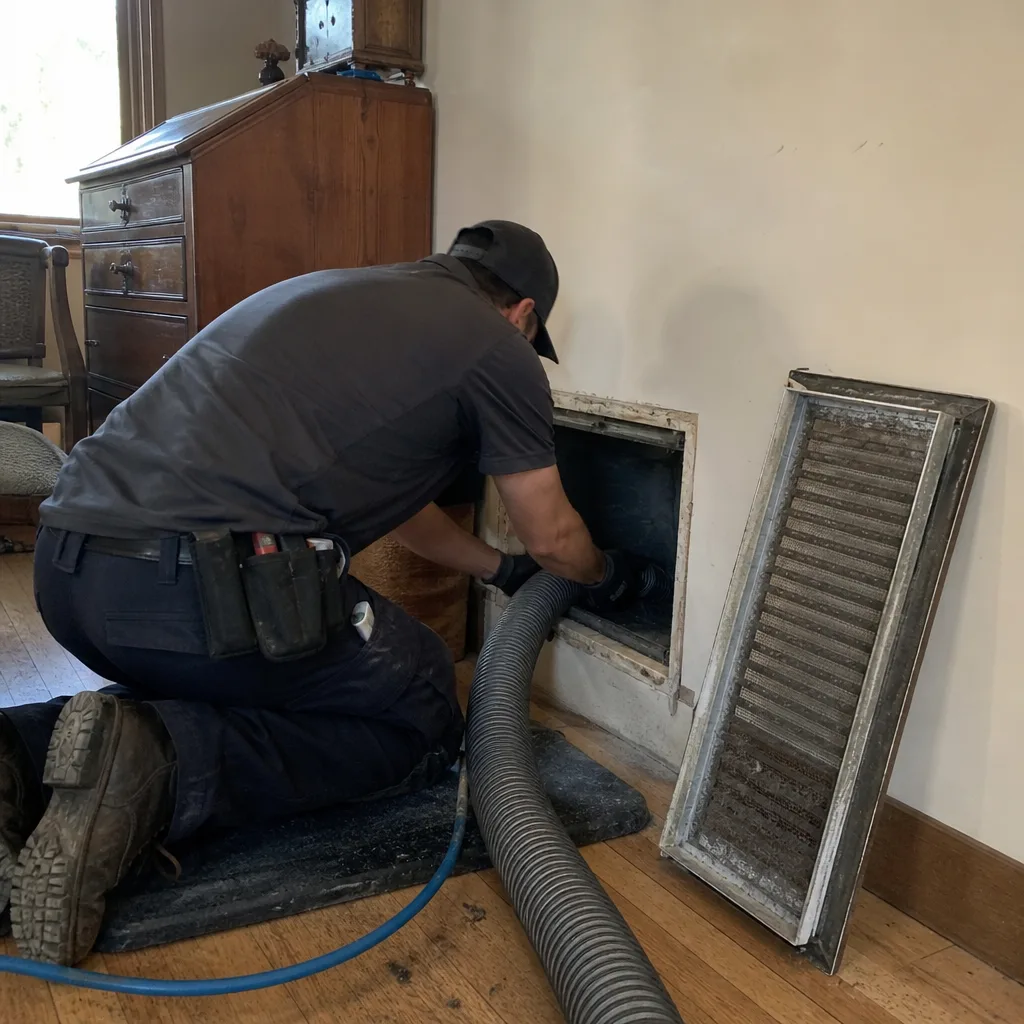 Before
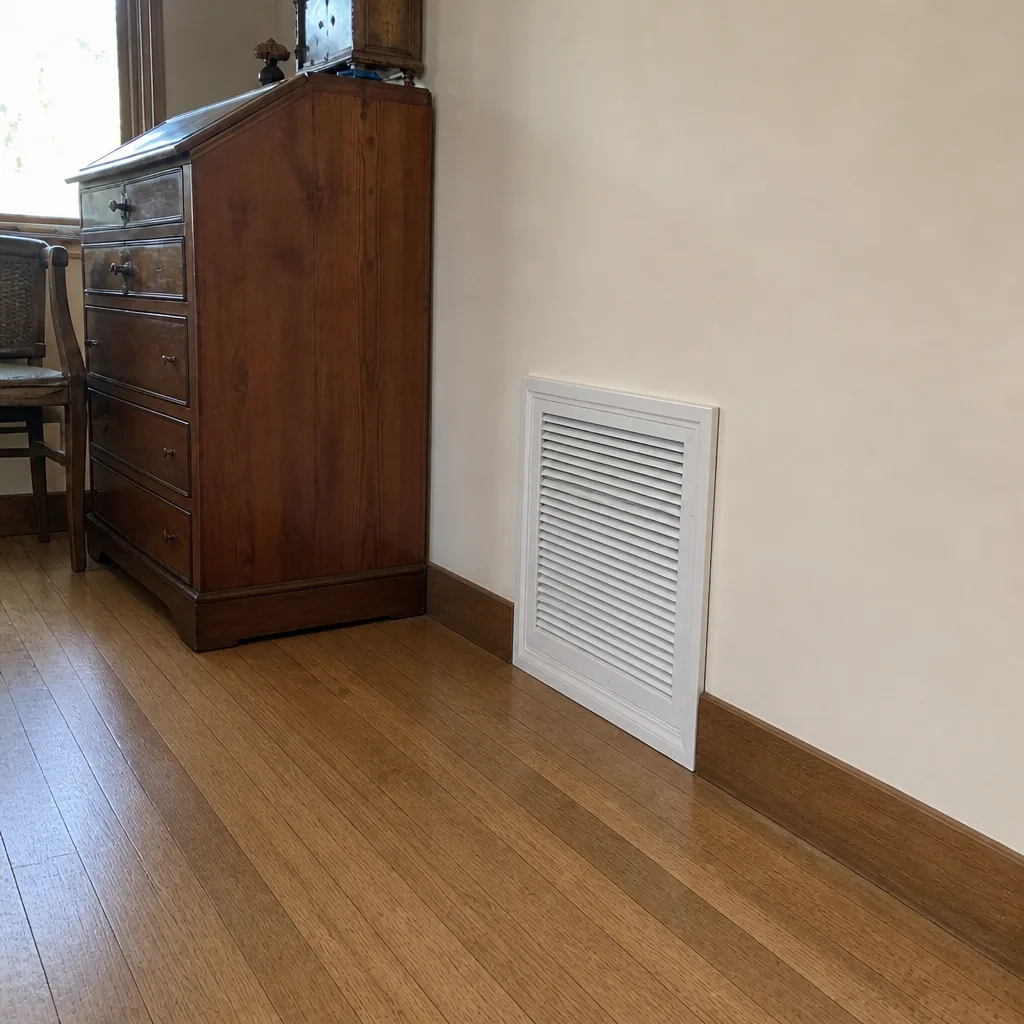 After
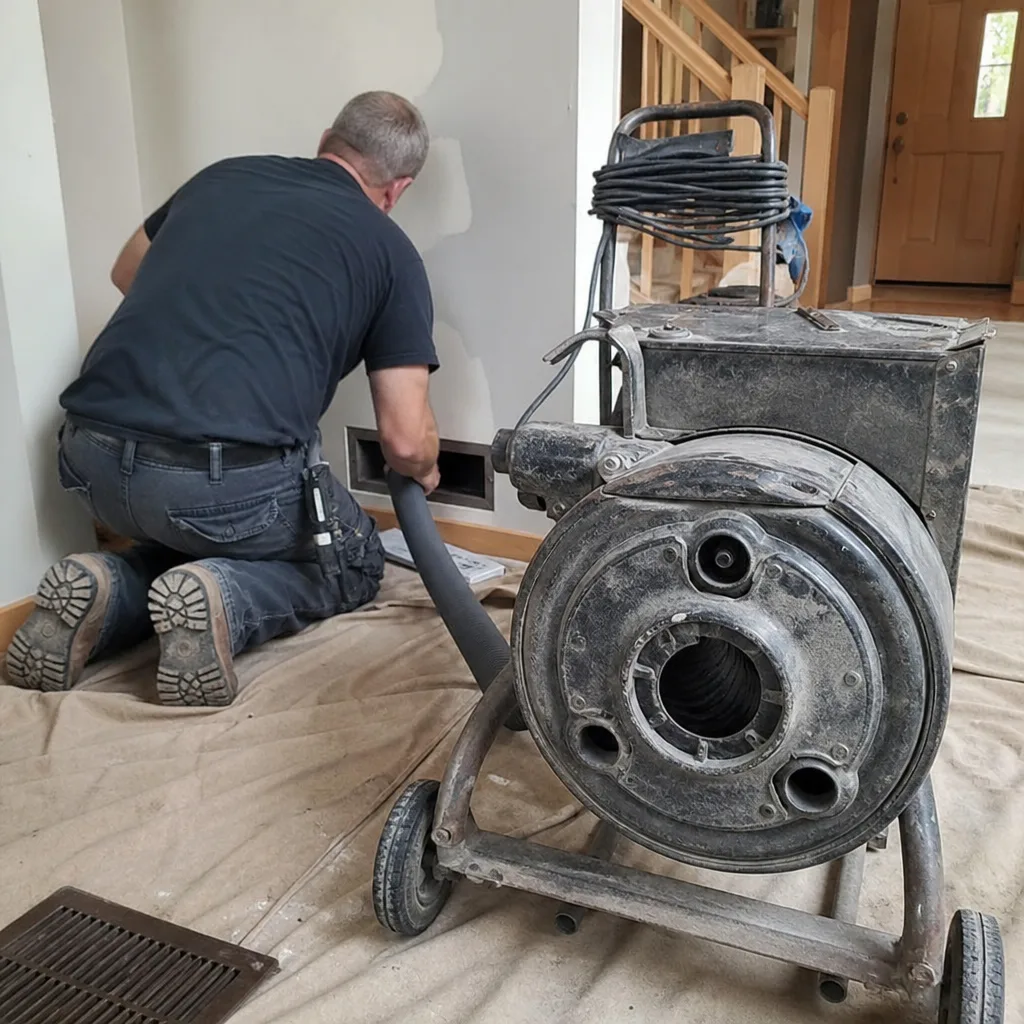 Before
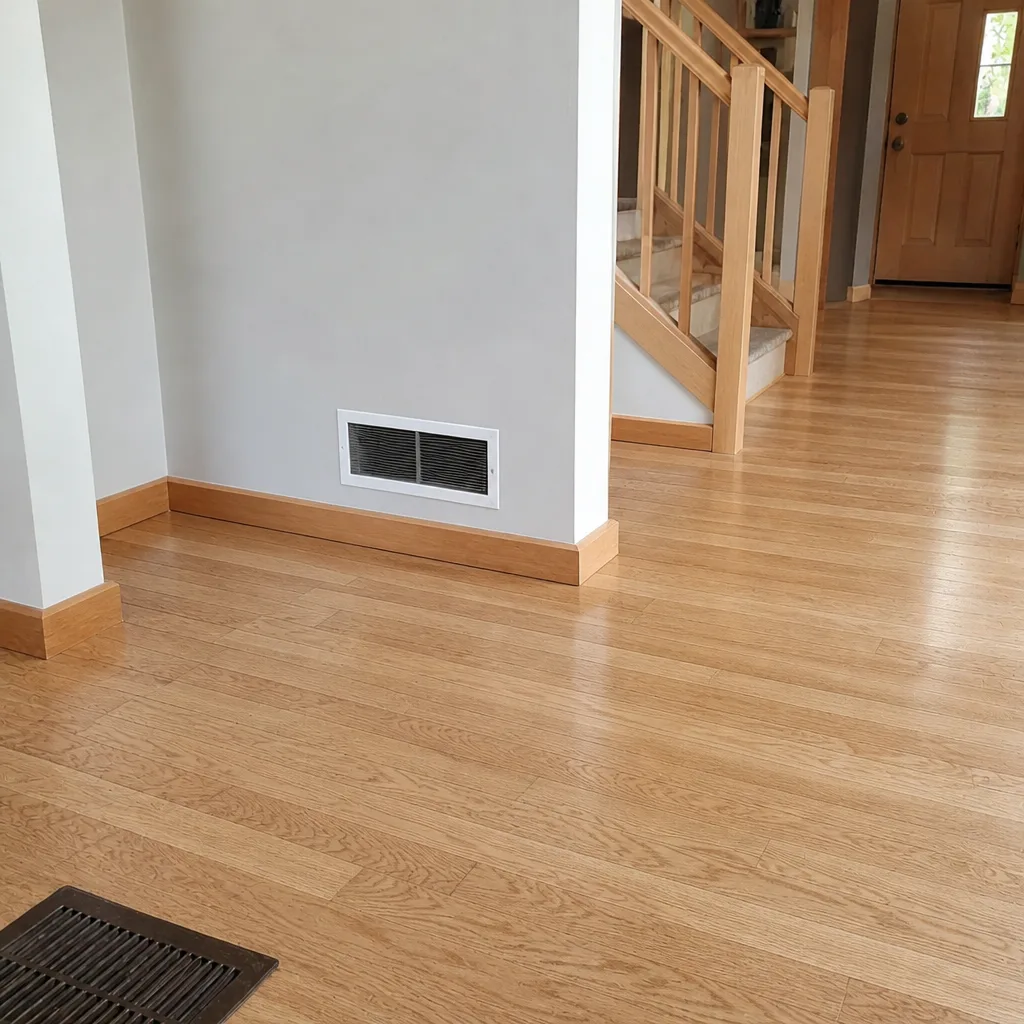 After
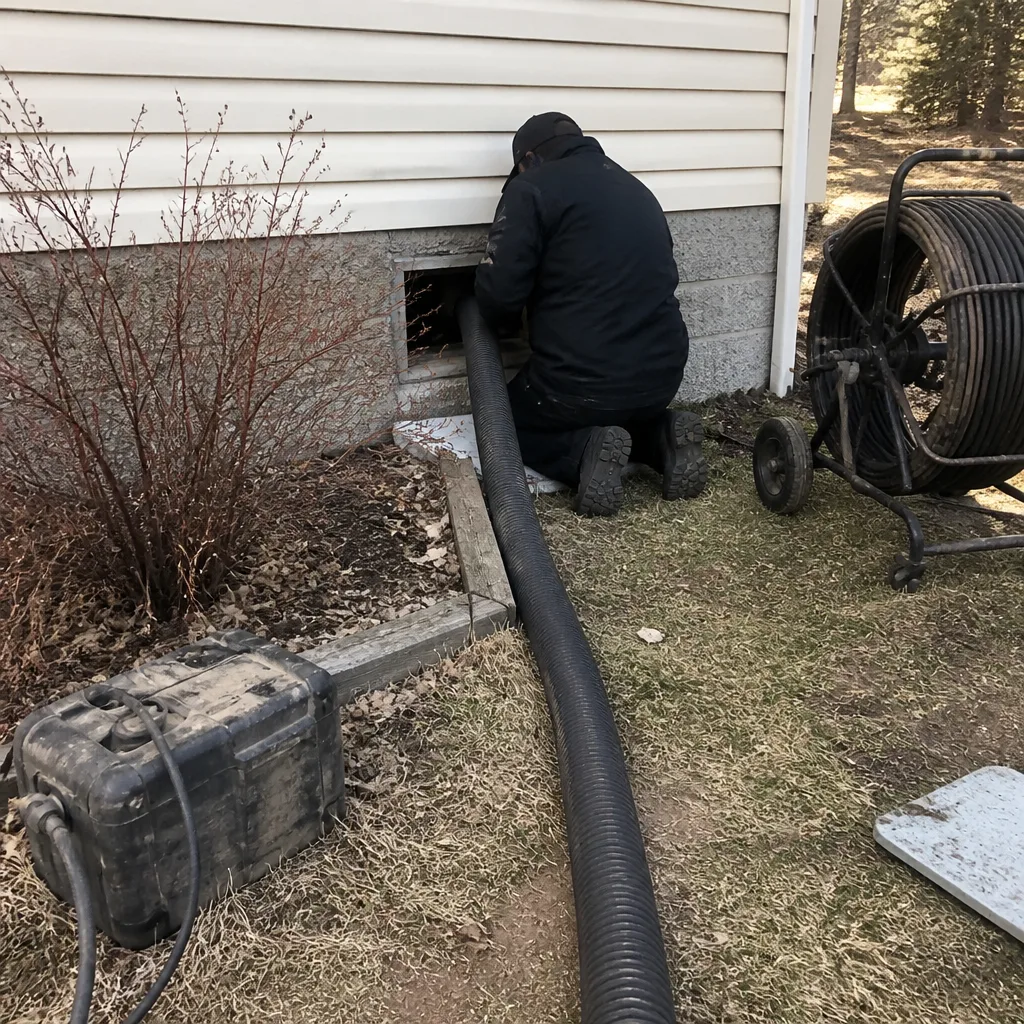 Before
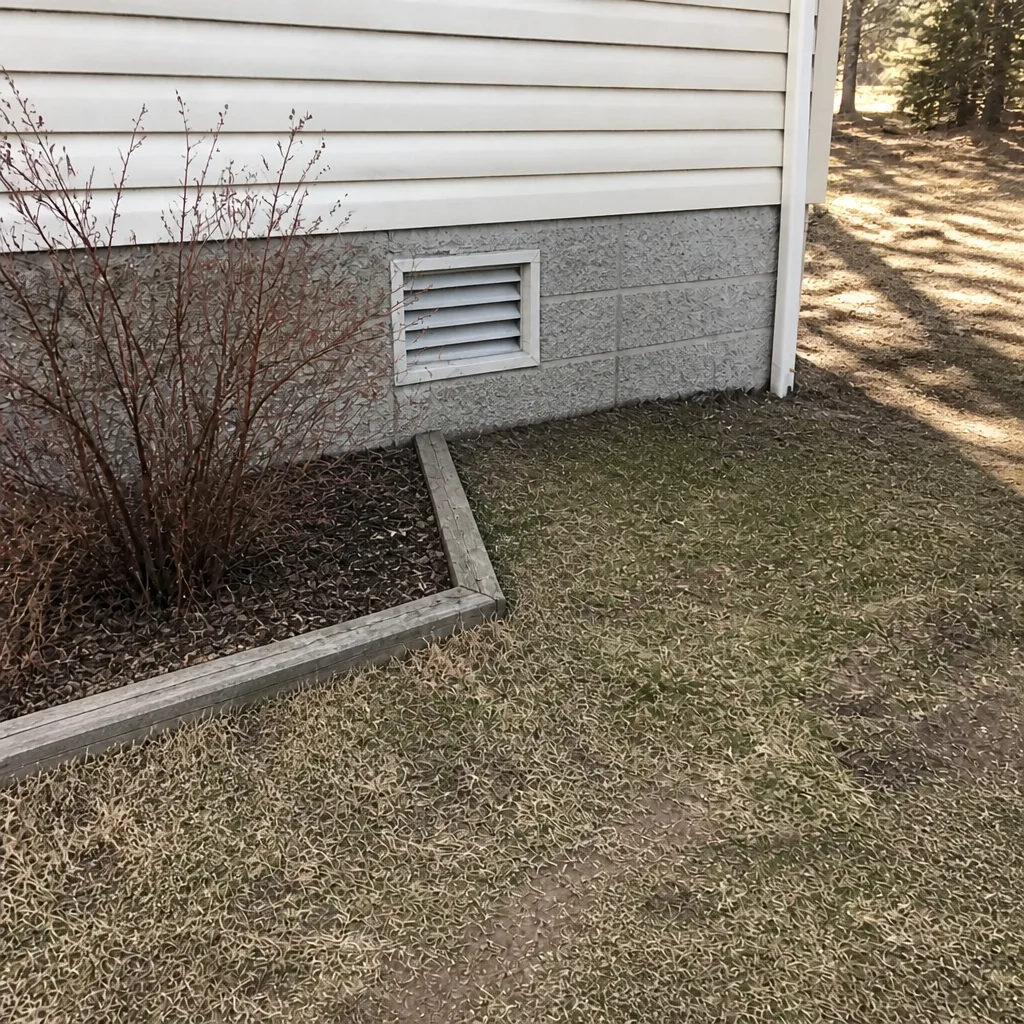 After
When to Call a Professional
Call a professional when contamination has moved beyond what you can reach. Specific triggers: post-fire smoke residue in the system, confirmed or suspected mold inside ductwork, vermin intrusion leaving droppings or nesting material, recent renovation that sent construction dust through the whole system, a long dryer vent run that needs clearing, or any persistent indoor air quality concern. Also call if the duct system has obvious disconnected joints or crushed runs, because cleaning and repairing those together makes the improvement last. Air Duct Cleaning Highlands offers free estimates in Highlands. Call (855) 658-5079. We answer 24/7. Fast dispatch from 7am to 7pm, Sunday through Friday. Our technicians have up to 13 years of experience, and every job ends with before-and-after photos of your own ductwork and a flat price per system agreed before work starts.
Frequently Asked Questions
No. A shop vac and a brush can clean the register boots and the first few feet of visible branch duct, but they cannot generate the negative pressure or the controlled agitation needed to remove contamination from the trunk lines, return plenums, or coil housing. Those are the areas where most contamination accumulates. The reachable portion is a small fraction of the system’s total internal surface. For those deeper areas, professional equipment is required. If your goal is a clean system, call (855) 658-5079 for a free estimate. Estimates are free.
Pricing is set per job by written estimate and depends on the size and configuration of your system, the number of branches, and whether repair and sealing are needed. We quote a flat price per system before work starts, never a per-vent price and never a coupon price that becomes a larger invoice once the technician is on site. The estimate is free. Call (855) 658-5079 for a written quote on your home.
Because they’re often for a different service. A very low quote usually means consumer-grade equipment, no negative-pressure containment, cleaning limited to the registers, and no repair of disconnected joints. That’s why comparing quotes on price alone is misleading. Ask each company what equipment they use, whether negative pressure is part of the setup, and whether repair and sealing are included. Call (855) 658-5079 for an honest quote that spells out exactly what’s included. Estimates are free.
Ask for before-and-after photos of the duct interiors, taken by the technician during the service. A company using the right equipment with HEPA filtration during work can document what was found and what was cleaned. If a company can’t or won’t document the work with photographs, that’s a signal to ask harder questions. Our service includes before-and-after photos of your own ductwork. Call (855) 658-5079 to schedule a free estimate.
For most homes, professional cleaning every few years, or more often if there are specific triggers like pets, allergies, renovation, or vermin, is reasonable. Homes in Highlands with long heating seasons and dry-air dust accumulation may need it on the shorter end of that range. Between professional visits, register cleaning and filter changes are good maintenance. If it’s been a while since yours was checked, a professional inspection is a good starting point. Call (855) 658-5079. Estimates are free.
You can and should keep the exterior cap and the last foot of the duct clear, because that’s where lint accumulates fastest and stays accessible. For long runs that go through walls or floors, professional dryer vent cleaning is safer and more thorough. A brush kit stuck inside a concealed duct is a genuine problem, and a partially cleared vent can leave lint trapped further in. If your dryer vent run is long or you’re not sure what’s inside it, call (855) 658-5079 for a free dryer vent estimate.
The Bottom Line
DIY duct cleaning is genuinely useful for registers, boots, visual inspection, filter upgrades, and clearing the exterior dryer vent cap. It is not a substitute for professional cleaning of the trunk lines, return plenums, and coil housing, because consumer equipment cannot reach those areas with the negative pressure and controlled agitation required. The savings on DIY are real for the limited tasks. The equipment gap between consumer tools and professional systems like Rotobrush, Nikro, and Abatement Technologies is not closeable with any add-on attachment. In Highlands, with its long heating season and dry-air dust conditions, the case for proper equipment gets stronger. Start with what you can do well, know where the line is, and call when the work moves beyond it. Air Duct Cleaning Highlands offers free estimates. Call (855) 658-5079. We answer 24/7. Fast dispatch from 7am to 7pm, Sunday through Friday. Explore our full Air Duct Cleaning Highlands service range to see what a complete system approach looks like in your home.
Written by the team at Air Duct Cleaning Highlands.