
Air Duct Cleaning: Repair or Replace? How Highlands Homeowners Decide
Most Highlands homeowners ask us some version of the same question: “Would it be cheaper to clean what I’ve got, or should we think about replacing the ductwork?” The answer isn’t a sales pitch, it’s an engineering judgment, and it rests on three things you can actually measure: how much air your ducts are leaking, what condition the material is in, and how old the system is relative to its expected service life. Get those three data points and the decision usually makes itself.
Before we go further, though, be honest with yourself about the scope. Some of this a careful homeowner can inspect. Diagnosing leakage or judging the condition of internal duct insulation isn’t really DIY territory. If you’d rather not climb through a crawlspace guessing, call (855) 658-5079 and we’ll take a look.
Start With Leakage, Not Cleanliness
Duct leakage is the single most underdiagnosed HVAC problem we see in Highlands-area homes. A system can look clean as a whistle from the register and still be bleeding conditioned air at every joint, seam, and boot. That matters because no amount of cleaning fixes a duct that’s actively losing air. You spend money scrubbing a system that then dumps a good chunk of what you paid for into a crawlspace. The U.S. EPA has estimated that 20-30% of conditioned air is lost through leaks in a typical residential system, which is a useful number to keep in your head when someone quotes you a cleaning job without measuring anything.
The measurement that matters is leakage at a tested pressure, usually written as CFM25. In plain terms, that’s the cubic feet per minute of air escaping when the ducts are pressurized to a standard reference point. It gives you a real number instead of a technician’s gut feeling. Broadly:
- Low leakage relative to system size means cleaning is worthwhile; the air you’re paying to condition is mostly reaching the rooms.
- Moderate leakage is the gray zone. Here, cleaning plus sealing usually beats replacement on cost, and you’ll feel the difference in room-by-room comfort.
- High leakage often means cleaning alone is money down the drain. Sealing (or replacing failed sections) has to come first or alongside it.
That’s the framework. We can’t give you a single magic leakage number that applies to every Highlands home, because system size and layout vary so much, but a technician should be able to tell you where you stand relative to your own system. If they can’t measure it, they can’t answer the question.
Know Your Duct Material’s Lifespan
Cleaning, repairing, or replacing hinges heavily on what your ducts are made of, because each material ages differently and fails in its own way. In our experience across Highlands, most homes have one of three types, and knowing which you’ve got saves a lot of second-guessing.
- Sheet metal can last indefinitely with basic maintenance. It dents and can pull apart at joints, but the metal itself doesn’t rot. Cleaning and re-sealing a sheet metal system is almost always the right call.
- Flexible insulated duct has a realistic service life of about 15-25 years. The inner liner degrades, the outer jacket tears, and runs sag or kink over time. Watch for visible sagging, tears in the jacket, or runs that pinch off at a bend and choke airflow.
- Duct board typically runs 20-30 years. It’s rigid and easy to damage; look for crumbling edges, damp spots, or exposed fibrous material where panels have broken down.
The tell for failing flex duct is usually visible the moment you look in a crawlspace: a run that dips low enough to collect dust and moisture, or a jacket that’s split at a fitting. Duct board failure often shows up as soft, friable material at the seams. If you see any of that, cleaning is only half the story; the damaged section needs fixing or replacing regardless.
Why Clean Before You Decide on Repair?
This is the part most homeowners get backwards. It’s tempting to want a repair-or-replace verdict first, then clean. In practice, cleaning an accessible system first makes real sense, because contamination revealed after cleaning often clarifies the repair scope. Once the dust is out, a technician can actually see the failed seams, torn insulation, disconnected collars, and crushed runs that the grime was hiding. Judging a repair before cleaning is a bit like deciding to remodel a room while the furniture’s still piled in it.
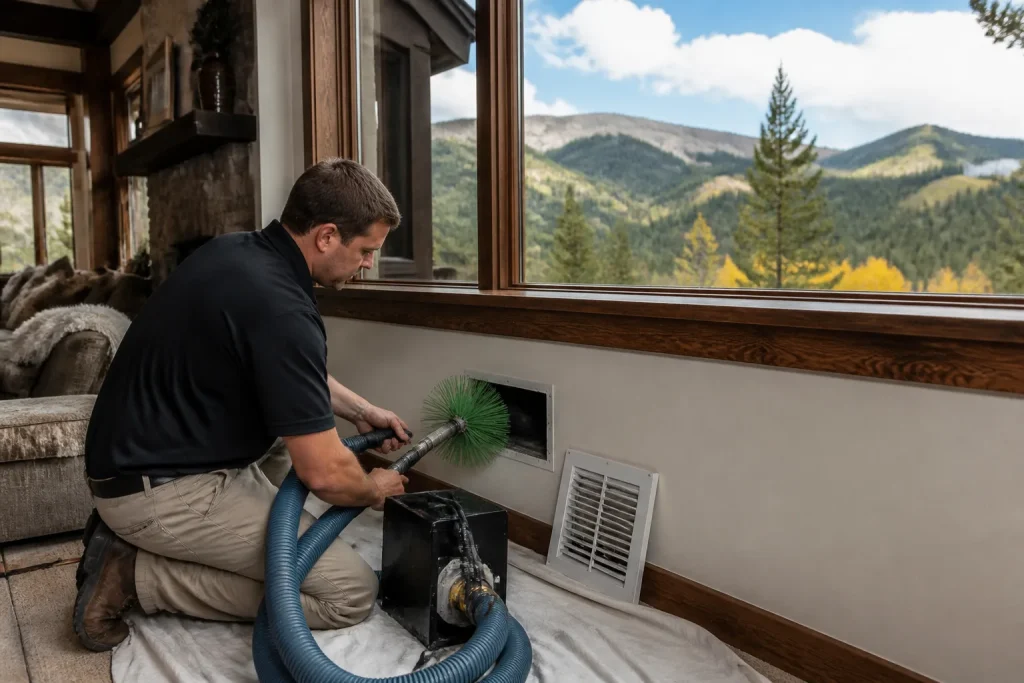
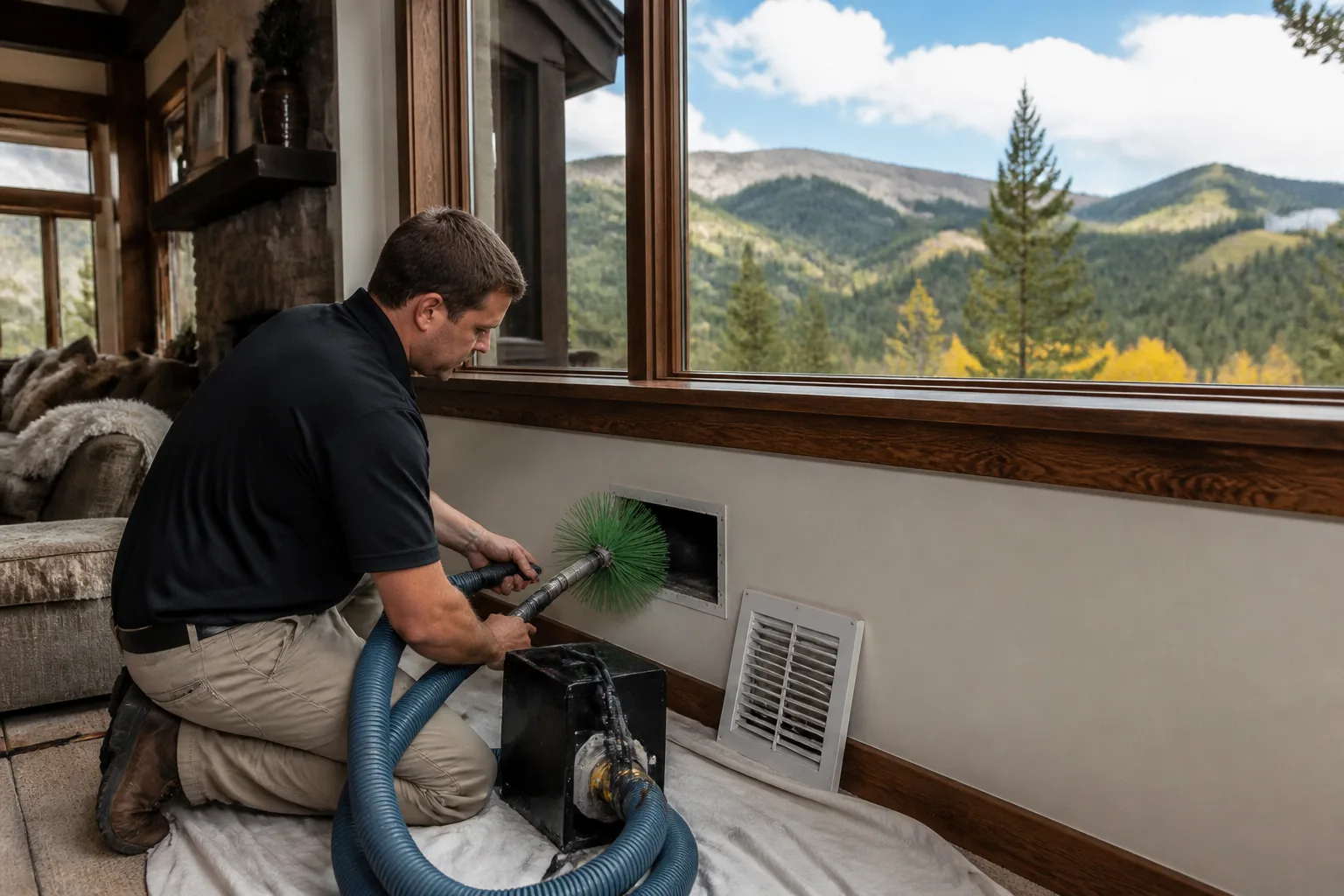
We’ll be upfront about how cleaning works when it’s done with proper equipment. Consumer-grade vacuums and rented machines don’t cut it; you need real negative pressure and agitation. That’s why we run professional systems from Rotobrush and Nikro, which agitate and vacuum simultaneously, and capture dislodged contaminants with Abatement Technologies air filtration rather than letting them float back into the living space. It’s the same class of equipment used in commercial restoration work, and it’s what makes a post-clean inspection actually trustworthy.
Once the ducts are clean and we can see clearly, you’re in a position to make a defensible decision: seal this, replace that one run, or plan for a full replacement. Cleaning isn’t wasted money even if you end up replacing a section; it’s how you get the information to spend wisely. It’s also a natural point to think about air duct cleaning as the first step in a bigger air quality plan.
When Replacement Beats Repair
Most ductwork problems are fixable. But there are specific scenarios where we’ll tell a Highlands homeowner that repair is throwing good money after bad and replacement is the honest recommendation. Here’s where that line sits:
- Collapsed or badly kinked flex runs. If a flexible run is crushed flat or kinked so hard airflow is choked, there’s nothing to clean or seal. It has to come out and be rerun.
- Suspected asbestos in pre-1980 duct board. Homes built before 1980 may have duct board or insulation containing asbestos. We don’t cut, disturb, or blow air through suspect materials. That’s a licensed abatement job, full stop. Get it tested and handled properly before anyone touches the system.
- Total repair cost above roughly 40% of replacement. When the accumulated cost of sealing, patching, and rerunning failed sections climbs past about 40% of what a fresh installation would run, replacement generally makes more financial sense. That threshold is a rule of thumb, not a law, but it’s a sane place to start the conversation.
Notice what’s not on that list: a system that’s merely dirty. Dirty is a cleaning job. Leaky-but-intact is a sealing job. It’s when structural failure stacks up against the cost of a rebuild that replacement wins. If we’re recommending it, we’ll show you the measurements and the failed sections that justify it.
How to Get a Decision-Ready Inspection
A treatment plan is only as good as the inspection behind it. Too many duct quotes are based on a glance and a guess, and that’s exactly how homeowners end up paying to clean ducts that needed sealing or replacing failed runs that were never flagged. A real inspection measures and documents. When you’re deciding between repair and replacement in Highlands, a proper inspection should include:
- A duct leakage test with actual CFM25 numbers you can keep, not a vague “your ducts are leaking.”
- An internal visual assessment of accessible runs, including photos or notes on the condition of insulation, joints, and collars.
- Identification of duct material and rough age so the lifespan question is answered, not assumed.
- A written summary that separates “clean this” from “seal this” from “replace this,” each with a reason attached.
Our technicians have up to 13 years of experience reading exactly these signals, and we document what we find so you’re making the call with evidence in hand. Once the mechanical work is done, we can also recommend filtration hardware from Honeywell or Aprilaire to keep the system from loading up again, which is the smarter long play than cleaning repeatedly and skipping the fix. If you want to protect the system further, HVAC cleaning keeps the air handler and coil from undoing a clean duct installation.
When to call a pro
If your inspection turns up anything on the replacement list – kinked runs, crumbling duct board, or suspect material in an older home – step back and get a professional opinion before spending another dollar. The stakes are real, both for your wallet and for air quality. One place a lot of homeowners forget to look is the laundry side: dryer vent cleaning is a genuine fire-safety service, not an afterthought, and we treat it as its own dedicated line rather than bundling it in.
The Bottom Line
Repair versus replace isn’t a gut call, it’s a data call. Measure the leakage, identify the material, and weigh repair cost against replacement. Clean first so you can see clearly, then decide. In most Highlands homes, a clean-and-seal gets you years more out of existing ductwork; replacement is reserved for collapsed runs, failed material, suspect asbestos, and systems where repair costs climb past about 40% of a rebuild.
If you’re in Highlands and want a decision-ready inspection with real measurements instead of a pressure pitch, Air Duct Cleaning Highlands offers free estimates – call (855) 658-5079. We answer 24/7. Fast dispatch from 7am to 7pm, Sunday through Friday, closed Saturday. We’ll clean, seal, or honestly tell you it’s time to replace, and we’ll show you the numbers that got us there.
Frequently Asked Questions
You need three data points: a duct leakage test, the material type and condition, and the system’s age relative to its service life. If leakage is moderate and the material is sound, cleaning plus sealing is usually the answer. If runs are collapsed, material is failing, or repair costs pass about 40% of replacement, replacement wins. Call (855) 658-5079 for an inspection – estimates are free.
In most cases we can seal leaky-but-intact ductwork rather than replace it. Sealing is the fix for joints, seams, and disconnected collars that are losing air. Replacement only comes into play when duct material has physically failed or runs are crushed beyond repair – call (855) 658-5079 and we’ll tell you which one you’re facing.
Because grime hides the failed seams, torn insulation, and crushed runs a technician needs to see. Cleaning first reveals the actual repair scope, so your decision is based on what’s really there. It’s not wasted money even if you end up replacing a section. Call (855) 658-5079 to book a clean-and-inspect.
If your home predates 1980 and the duct board or insulation may contain asbestos, stop. Don’t cut, disturb, or blow air through it. That’s a licensed abatement job, not a cleaning job, and it has to be tested and handled properly first. Call (855) 658-5079 and we’ll help you figure out the safest next step.
Written by the team at Air Duct Cleaning Highlands.
Need Air Duct Cleaning Help?
Call Air Duct Cleaning Highlands - the local pro we connect you with is licensed and insured, here with fast help in Highlands.
(855) 658-5079