
Rotobrush Air Duct Cleaning in Highlands: A Homeowner’s Guide
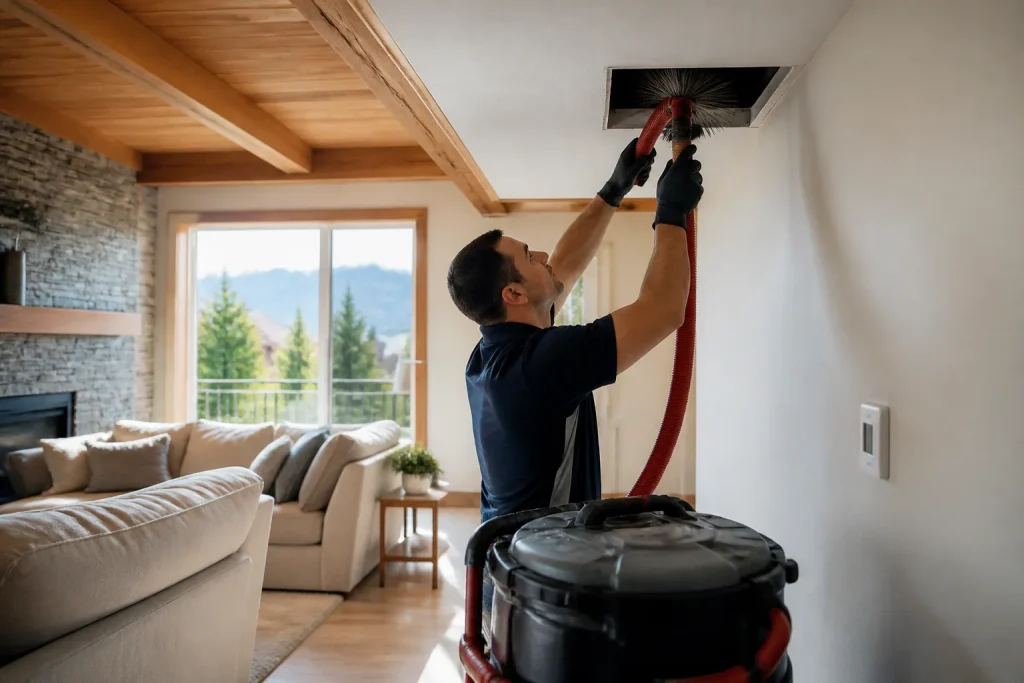
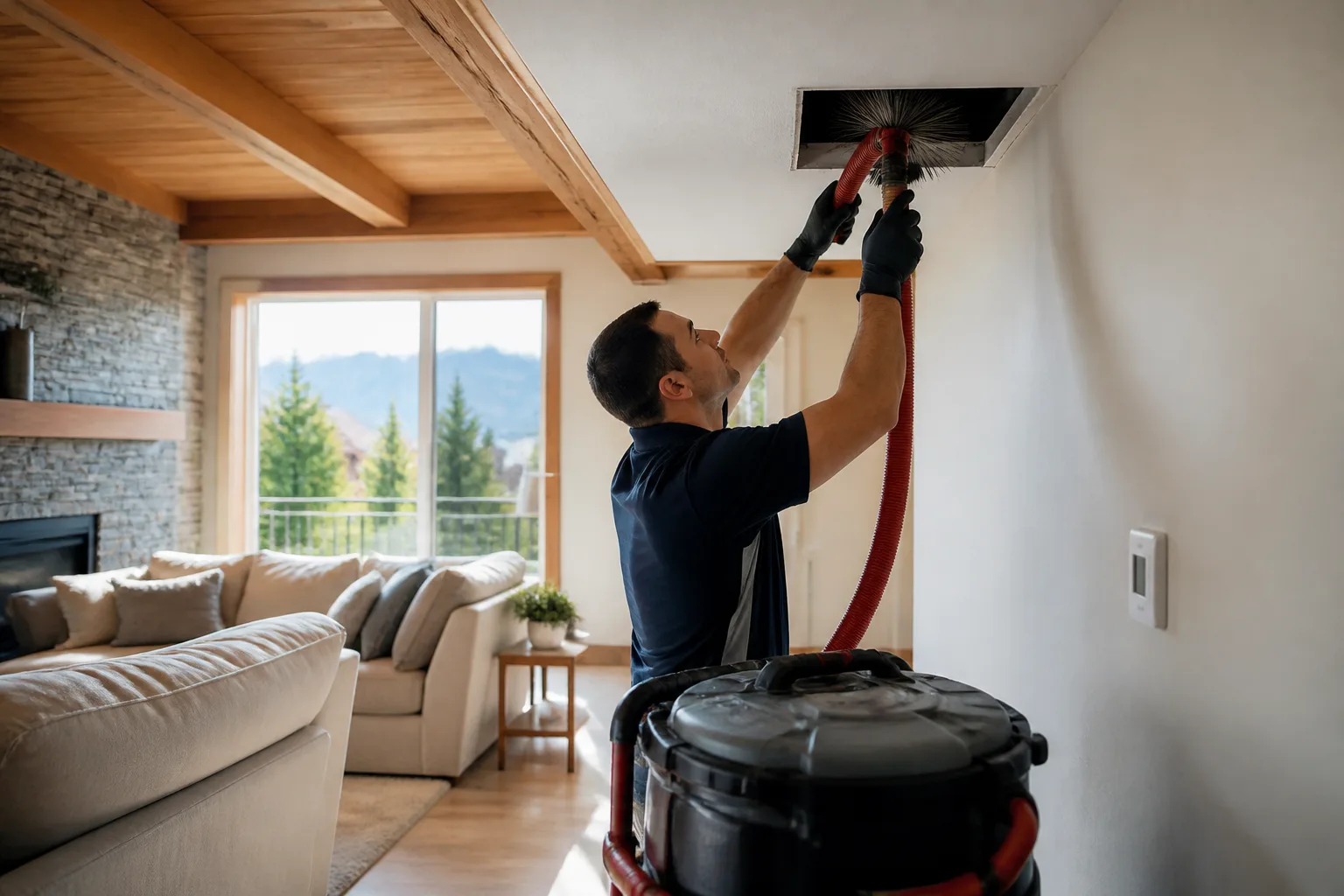
Rotobrush air duct cleaning in Highlands usually works like this: a rotating brush spins inside the duct while a vacuum pulls debris out at the same time. The machine is real, and it’s effective on the right ductwork. What gets left out of most sales pitches is the part that decides whether the job actually succeeds. That part is dwell time – how long the brush stays in each linear foot of duct – and it matters more than the brand name on the side of the machine. If you’d rather not sort through the claims yourself, call (855) 658-5079.
How does the Rotobrush system actually work?
Rotobrush systems agitate and vacuum simultaneously. A flexible whip with a rotating brush head is fed through the duct, and the brush knocks loose the layer of dust, hair, and lint stuck to the walls while a high-volume vacuum extracts it through the same hose. The brush rotation and the extraction happen together because dry debris that gets disturbed and left in place simply settles back down once the air handler runs again.
Two variables decide the outcome:
- Dwell time per linear foot. The brush has to move slowly enough that every inch of duct wall gets contacted. Racing a whip through a 25-foot run in a few seconds looks busy and accomplishes little.
- Extraction timing. The vacuum needs to be running and sealed to the system while the brush works, not after. Debris captured at the moment it’s dislodged never gets a chance to migrate into the living space.
In our experience, the difference between a thorough job and a cosmetic one shows up in the time spent in the ducts, not in the equipment brand. A whole-house Rotobrush job in a typical Highlands home runs well past an hour, sometimes several, depending on how many runs the system has and how much is in them. When we handle air duct cleaning, that time is the standard we hold the work to.
Where does Rotobrush work well, and where does it struggle?
Rotobrush performs at its best in rigid sheet metal duct – trunk lines and branch runs with consistent diameter, where the brush can make full contact with the walls and the airflow stays predictable. That’s where the tool was designed to shine.
Highlands homes built after the 1980s often run a different material: flexible insulated duct, the corrugated silver stuff that snakes through attics and crawl spaces. That’s where the honest answer gets less rosy. Flex duct has ridges and a mylar liner, and the brush can miss the valleys between corrugations. Push a stiff brush too hard against it and you risk tearing the liner, which turns a cleaning into a repair. Flex runs also bend, sag, and compress, so brush contact becomes uneven.
Rotobrush also isn’t the same as source-removal cleaning. If a system has active mold growth, rodent debris, or post-construction dust, the brush agitates the material, but it can’t always build the negative pressure needed to pull everything out. Those situations call for containment and HEPA filtration, which is where Abatement Technologies equipment comes in – it captures dislodged contaminants instead of recirculating them. Pairing the right machine with the right duct is the whole game in Highlands.
Why does Rotobrush equipment cost so much to own?
Rotobrush equipment can cost a provider $15,000 to $30,000 to own and maintain when you count the machine, the whip and brush assemblies, replacement heads, hoses, and the labor to keep it all running. That number explains a lot. A company advertising “Rotobrush cleaning” at $149 for a whole house either doesn’t own the equipment or isn’t spending enough time in each duct section for the brush to do what it’s designed to do.
Neither option serves the homeowner. Rented or borrowed equipment usually means a smaller vacuum and a faster pass. A too-fast pass means the brush touches the dust, lifts some of it, and leaves the rest stuck to the walls where it was.
It’s worth asking direct questions before booking anyone in Highlands:
- Do you own the Rotobrush system, or rent it?
- How long will you spend per duct run?
- What’s your process for flex duct versus rigid metal?
A provider who can answer those without hesitation is telling you something. So is one who can’t. When the quotes you’re getting don’t add up, the honest move is to walk through Air Duct Cleaning Highlands and compare the scope line by line.
What should a correctly performed Rotobrush job look like?
From the homeowner’s side, you should be able to see the work, or at least see the evidence of it. Here’s what a properly run job involves in a Highlands home:
- Access points. The technician cuts or opens access holes at the trunk and at each branch, then reseals them when finished. Ask how they plan to seal them before they start.
- Duration per zone. Each branch run gets its own pass. Expect the technician to spend real minutes in each one, not seconds.
- Containment. The vacuum stays connected and running while the brush works. Some providers add HEPA filtration at the returns to catch what’s in the air.
- The debris container. At the end, the collection container should hold a visible buildup – dust, lint, hair, construction grit. If it comes out nearly empty, either your ducts were spotless or the pass was too quick.
Before-and-after photos of your own ducts are a fair ask. A provider confident in the work will take them. That’s the kind of proof that matters more than a brochure.
How do you judge a provider’s Rotobrush proficiency?
Ask three questions and listen for specifics. Vague answers are a tell.
- Brush diameter options. Ducts come in different sizes. A provider who carries multiple brush heads and picks based on the run is thinking about contact. One who uses a single size for everything is not.
- Transition points between rigid and flex duct. Highlands homes often mix materials – rigid trunk, flex branches. The transition is where debris collects and where the brush needs a different approach. Ask how they handle it.
- Independent negative pressure. The vacuum should be maintaining suction on the system throughout, not just at the start. Ask whether they monitor it.
These questions also matter for the rest of the indoor air system. If the ducts are clean but the cabinet and coil are loaded with dust, you’ve solved half the problem. That’s why we also handle HVAC cleaning as part of the same visit, so the whole system gets addressed at once.
When to call a pro
If you’re seeing visible dust blowing from the registers, notice a musty smell when the system runs, or you’ve just finished a remodel, it’s time. Pest activity or water intrusion in the ductwork is another clear signal. Call (855) 658-5079. We answer 24/7. Fast dispatch from 7am to 7pm, Sunday through Friday.
Related services in Highlands
Ductwork is one part of a larger system. dryer vent cleaning is a dedicated service for us, not an afterthought tacked onto a duct job – lint buildup in a dryer vent is a leading cause of residential fires, and most duct cleaners skip it. We treat it as the fire-prevention service it is.
The Bottom Line
Rotobrush is a legitimate tool and a good one when used correctly. The brush and vacuum work together, contact matters, dwell time per foot matters more, and flex duct in Highlands homes needs a careful hand. If a price sounds too low for the equipment involved, the job is probably too fast for the ducts. A provider who can talk about brush diameters, transition points, and negative pressure is worth the conversation.
Our technicians have up to 13 years of experience, and we run Rotobrush alongside Nikro and Abatement Technologies equipment to match the machine to the duct. Duct repair and sealing are part of the menu too, so if we find a disconnected joint or a torn liner, we fix it rather than clean around it. If you’re in Highlands and need help, Air Duct Cleaning Highlands offers free estimates – call (855) 658-5079.
Frequently Asked Questions
Most whole-house Rotobrush jobs fall well above the promotional prices you see advertised, because the equipment and the time involved don’t support a cheap flat rate. The written estimate sets the final price, and it’s free. Call (855) 658-5079 for an exact quote – estimates are free.
It can be, with the right brush head and a careful hand. Flex duct liners tear if a stiff brush is pushed too hard or the technician rushes. Ask any provider how they adjust for flex before they start. Call (855) 658-5079 to talk through your duct type.
Most homes do fine with a cleaning every few years, and some go much longer. Homes with pets, recent remodels, or a history of water intrusion need it more often. Watch for visible dust at the registers or a musty smell rather than a calendar date. Call (855) 658-5079 for an assessment.
Ask for before-and-after photos of your own ducts and check the debris container at completion. A thorough job leaves a visible collection of dust, lint, and grit. If neither is offered, ask why. Call (855) 658-5079 to book an estimate with a provider who shows their work.
Written by the team at Air Duct Cleaning Highlands.
Need Air Duct Cleaning Help?
Call Air Duct Cleaning Highlands - the local pro we connect you with is licensed and insured, here with fast help in Highlands.
(855) 658-5079