
How to Choose the Right Air Duct Cleaning Company in Highlands
Any duct cleaning company can photograph a dirty filter before and a clean register after. That tells you nothing about what happened in the 40 feet of ductwork between them. The real evaluation happens before the job starts, based on the equipment you see coming through your door.
So here’s the direct answer to the title question: choose a company by its machinery, its inspection process, and its willingness to answer technical questions in plain language. If the crew arrives with a shop-vac and a rotary brush from a home improvement store, the rest of the conversation doesn’t matter.
In our experience working duct systems around Highlands, the gap between a proper cleaning and a cosmetic one comes down to three things: negative air pressure, contact agitation, and filtration. Hold those three in your head and you’ll spot a serious company in about ninety seconds. If you’d rather skip the research and just get a free assessment, call (855) 658-5079.
What Equipment Should a Professional Duct Cleaning Company Bring to Highlands?
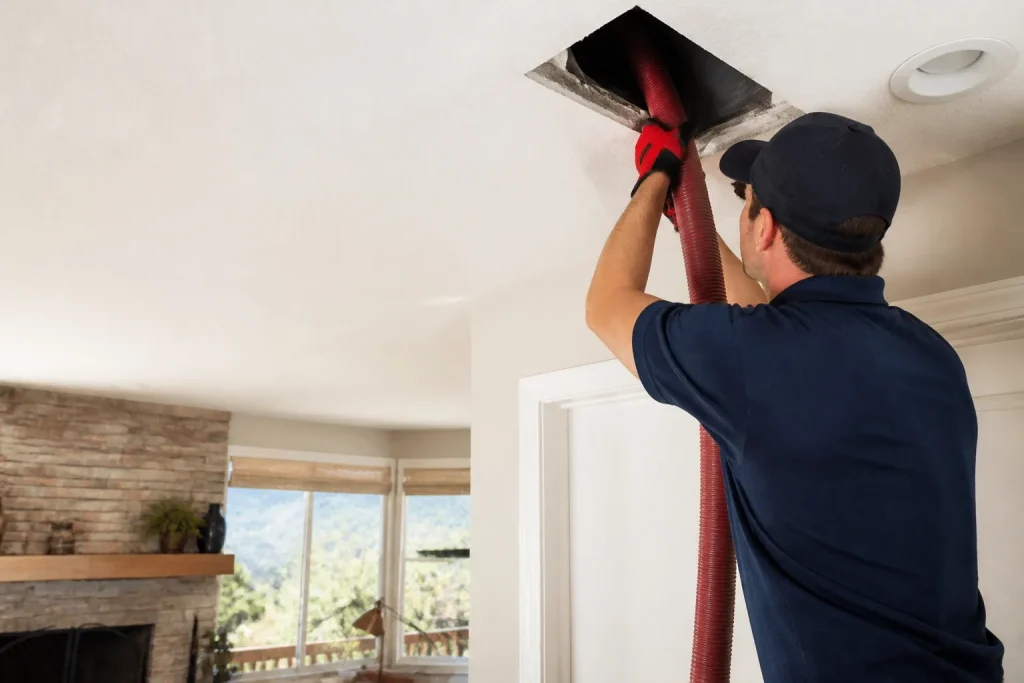
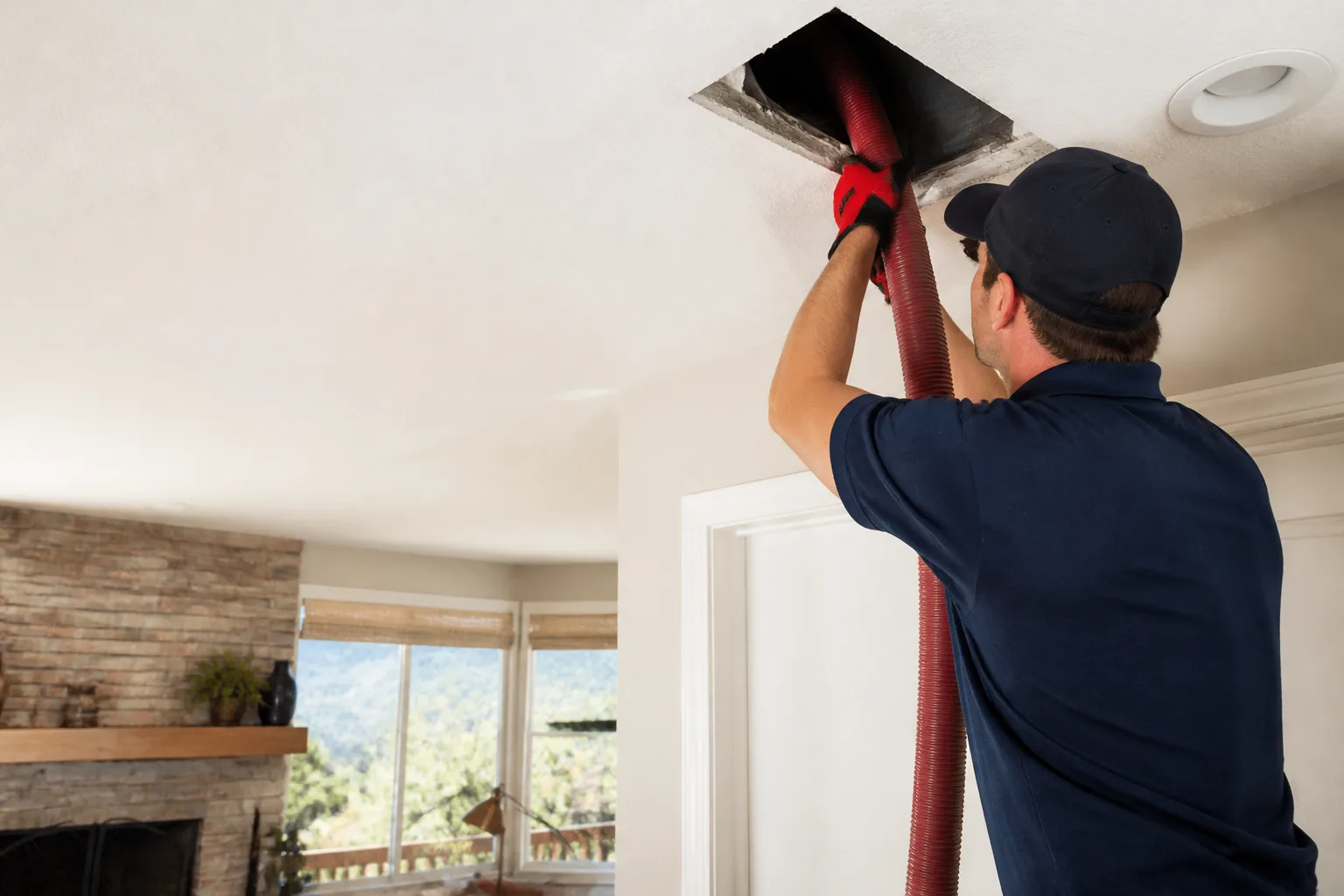
A professional-grade company should arrive with a high-CFM negative air machine (truck-mounted or a powerful portable unit), contact-agitation tools such as a rotary brush or air whip, and HEPA filtration on the vacuum. Each component does a different job, and a missing piece means the cleaning is incomplete.
Here’s what each one actually does, because this is where the sales language usually falls apart:
- Negative air machine. This is the vacuum source, and it’s the heart of the job. It pulls the entire duct system into negative pressure so that when contaminants are dislodged, they travel toward the machine instead of into your living room. A machine rated in the low hundreds of CFM (often a portable shop-style unit) can’t hold negative pressure across a whole residential system in a Highlands home with a finished basement and a long trunk run.
- Contact agitation tools. Vacuum alone won’t lift adhered dust, debris, or the biofilm that builds on duct walls. Equipment like a Rotobrush system agitates and vacuums simultaneously, which is why it’s standard in restoration and abatement work.
- HEPA filtration. The exhaust side matters as much as the intake. Abatement Technologies air filtration equipment is built to capture dislodged contaminants rather than recirculate them into the room, which is exactly the standard you want during service.
One touch of dark humor worth sharing: a company that advertises duct cleaning but has no vacuum hose larger than a garden hose is telling you something. Believe it.
Is NADCA Certification Enough on Its Own?
No. NADCA certification is a minimum credential to check, not a sufficient one. The certification confirms a company has been exposed to industry standards and assessment principles; it does not test whether the technician running the machine on your property can read static pressure, adjust agitation speed for fragile flex duct, or recognize when a system has a design problem instead of a dirt problem.
Treat NADCA membership the way you’d treat a driver’s license. Necessary. Not proof of skill. What you’re really evaluating is field competency, and that shows up in conversation:
- Do they ask about your system before quoting? Size, age, duct material, number of returns, recent renovations, pets, and any moisture or musty smells.
- Do they inspect the air handler? A technician who never opens the unit or looks at the blower compartment hasn’t seen the part of the system where contamination often concentrates.
- Do they talk about static pressure? A measured or at least discussed pressure reading tells you whether they understand airflow as a system, not just a surface to wipe.
- Do they explain the difference between cleaning and sealing? Loose joints and disconnected runs are common in older Highlands homes, and cleaning without addressing them wastes the effort.
In our experience, the companies that fail these questions are also the ones that can’t tell you which tools they’ll use until they’re already in the driveway.
What Should a Pre-Job Assessment Cover in Highlands?
A legitimate pre-job assessment covers the air handler, static pressure, duct material and condition, and your recent renovation and occupancy history. If the technician skips any of those, the quote is a guess dressed up as an estimate.
Highlands homes present a few specific conditions worth knowing about. Foothill winters mean the furnace runs for months on end, so the blower and return ducts see heavy continuous airflow and accumulate dust faster than systems that cycle on and off. A significant share of local housing stock has been updated, added onto, or finished in a basement, and that renovation work is one of the most common sources of construction debris and drywall dust in ductwork. A company that doesn’t ask whether you’ve had work done recently isn’t assessing your system; it’s quoting a number.
A proper assessment should also include a look at your dryer vent if it’s accessible, because a clogged vent is a fire risk, not a comfort issue. That’s a separate service line from duct cleaning, and a specialist who treats it as an afterthought rarely does it properly.
When to call a pro
If you notice visible dust blowing from a register after the furnace kicks on, a musty smell that returns within days of cleaning, or a dryer that takes noticeably longer to dry a load, those are signs the problem is in the system, not the room. That’s when a proper air duct cleaning assessment is worth the call.
Which Red Flags Should Highlands Homeowners Watch For?
The clearest red flags in the Highlands market are out-of-area companies running discount campaigns, phone quotes given without asking about system size or age, and “whole house” packages priced below $200. None of those reflect what a genuine cleaning costs to perform.
Think about what a thorough job requires: a machine rated to hold negative pressure across an entire residential system, an agitation tool run through every branch, HEPA filtration, and a technician who inspects before quoting. That work takes hours. A package priced below $200 cannot fund it. What usually happens is a low teaser price followed by an on-site upsell once the equipment is set up and the homeowner feels committed.
- Phone quotes with no questions. If nobody asks how many returns you have or how old the system is, they’re quoting a number, not your system.
- Out-of-area discount campaigns. A crew driving in from far outside the area has no stake in what your ductwork looks like a year later.
- No written scope. Ask exactly what will be cleaned, what tools will be used, and whether repairs or sealing are included. Get it in writing.
- No before-and-after documentation. A real company can show you photos of your own ducts, not a stock gallery.
We’d rather tell you honestly what a thorough job involves than hand you a coupon with an asterisk. If you want a straight assessment of what your system actually needs, call (855) 658-5079.
What’s the One Question That Separates Specialists From Generalists?
Ask: “What is your negative air machine’s CFM rating, and how do you verify it’s maintaining adequate pressure during the job?” A specialist answers in specifics. A generalist changes the subject. The answer tells you whether the company understands the physics of the work or just the sales script.
Why this question matters: a negative air machine has to overcome the resistance of your entire duct network, and that resistance changes as the job proceeds. A technician who monitors pressure and adjusts is doing the job correctly. One who hooks up a vacuum and walks away is hoping for the best. The same principle applies to HVAC cleaning, where the blower and coil need the same measured approach.
Specialists also tend to fix what they find. If the assessment turns up leaky joints, damaged flex runs, or a poorly connected branch, a company that only cleans can’t help you. A full-service specialist can repair and seal the system in the same visit, rather than cleaning around the problem and leaving you to hire someone else. That’s the practical difference between a one-time service and an actual air quality improvement.
Post-cleaning filtration matters too. Pairing the work with a properly specified filter or a system from Honeywell or Aprilaire lets you keep the ducts cleaner between services, which is the whole point of doing it right the first time.
Related services in Highlands
If your assessment points toward vent or system airflow problems rather than duct contamination alone, dryer vent cleaning is a separate, fire-safety focused service worth scheduling. You can learn more about our broader approach to Air Duct Cleaning Highlands and how the full service menu fits together.
The Bottom Line
Choosing the right air duct cleaning company in Highlands comes down to equipment, process, and honesty. Check the machinery, ask about negative pressure and contact agitation, insist on a real pre-job assessment, and treat sub-$200 “whole house” packages as a warning rather than a bargain. A company that can answer the CFM question and show you before-and-after photos of your own ducts is the one worth hiring.
If you’re in Highlands and need help, Air Duct Cleaning Highlands offers free estimates. Call (855) 658-5079. We answer 24/7. Fast dispatch from 7am to 7pm, Sunday through Friday. Our technicians have up to 13 years of experience, and we bring professional-grade equipment to every job.
Frequently Asked Questions
Pricing depends on system size, number of returns, duct material, and whether repairs or sealing are needed, so the final price is set per job by a written estimate after an on-site assessment. Be cautious of companies quoting under $200 for a whole house. Call (855) 658-5079 for an exact quote. Estimates are free.
Low quotes usually skip the equipment that makes the job work: a high-CFM negative air machine, proper contact agitation, and HEPA filtration. Cheaper quotes often rely on a portable shop-style vacuum and a quick surface pass, then add cost once the crew is on site. Call (855) 658-5079 if you want an honest assessment of what your system requires.
Ask for before-and-after photos of your own ductwork, and ask which tools were used in each branch. A specialist company can show you the interior condition at the start and the result at the end, plus explain what was agitated and what was vacuumed. Call (855) 658-5079 to schedule an inspection.
Most homes benefit from an assessment every few years, and more often after major renovations or if pets, allergies, or moisture issues are present. Highlands’ long heating season means the system runs heavily, so dust loads build steadily. The right interval depends on your system, not a fixed schedule. Call (855) 658-5079 to talk through your situation.
Written by the team at Air Duct Cleaning Highlands.
Need Air Duct Cleaning Help?
Call Air Duct Cleaning Highlands - the local pro we connect you with is licensed and insured, here with fast help in Highlands.
(855) 658-5079