
Emergency Air Duct Cleaning Near Me: What Highlands Homeowners Should Do First
If you think your ducts have been contaminated, the first thing to do is shut off your HVAC system completely. Every minute it runs after a sewage backup, a fire, or a rodent intrusion is spreading that contamination through every duct in the house. Calling a cleaning company first and shutting the system down second is backwards, and it’s the most common mistake we hear about. Get the system off, seal what you can, and then make the call. If you’d rather have a technician walk you through it, call (855) 658-5079.
What Actually Counts as a Duct Emergency in Highlands?
Most calls that come in as emergencies aren’t emergencies. That’s not a knock on the homeowner; it’s just that ductwork problems feel urgent because they involve the air you breathe. But the phrase “emergency air duct cleaning near me” gets used for two very different situations, and treating them the same wastes money or, worse, spreads contamination.
Three events genuinely qualify:
- Sewage intrusion. A backup that reaches ductwork, a flooded crawlspace under a home, or a sump failure that leaves standing water near flex duct. Sewage carries bacteria and pathogens, and air moving across contaminated duct surfaces distributes them through the living space.
- Structural fire or smoke event. Even a contained kitchen fire pushes combustion byproducts into the return side of the system. Smoke residue settles on duct walls and keeps off-gassing long after the fire is out.
- Active pest or rodent infiltration. Droppings, nesting material, and urine inside ducts are a genuine health concern, and a live infestation means the problem is ongoing, not historical.
What usually can wait for a scheduled appointment: musty odors that have been building for months, visible dust blowing from registers, a recent remodel that generated drywall dust, or a system that simply hasn’t been cleaned in years. Those deserve attention, but they aren’t emergencies, and rushing them doesn’t buy you anything.
The First 60 Minutes: A Sequence That Actually Limits Damage
The order of these steps matters more than the speed. Doing them out of sequence can push contamination deeper into the system.
- Shut off the HVAC system at the thermostat, then at the breaker. Thermostat first so the system isn’t running when you cut power. This is the single most important step in a Highlands home, and it’s the one people skip because they’re focused on the mess.
- Close and seal the supply registers. Painter’s tape or plastic sheeting over the supply grilles keeps contamination from drifting out of the ducts into rooms. Do this before you start moving air around with fans or opening windows.
- Seal the return grilles too, but only after the system is off. A running system pulls air through returns; a stopped system doesn’t, but sealing returns still prevents contaminants from settling back into the living space.
- Document everything for insurance. Photos of the source event, photos of the registers, photos of any visible debris. Timestamped photos on your phone are fine. This is the step homeowners regret skipping, because by the time a technician arrives, the visible evidence has often been disturbed.
- Get people and pets out of the affected rooms. Not the whole house necessarily, but the rooms with registers closest to the source.
- Call for help. Call (855) 658-5079. We answer 24/7, and fast dispatch runs from 7am to 7pm.
What NOT to do in that first hour: don’t run a portable air purifier and point it at a register hoping it’ll pull contamination out of the ducts, don’t reopen registers to “see if it’s better,” and don’t run ceiling fans. All three move contaminated air into the room instead of keeping it contained.
Why Altitude Makes Smoke Events More Urgent in Highlands
Highlands sits at roughly 8,500 feet, and lower air density changes how combustion byproducts behave inside ductwork. At altitude, air is thinner, and a system that keeps running after a smoke event moves those byproducts through the duct network differently than it would at sea level. The practical upshot: smoke residue reaches farther into the system faster, and it settles onto duct surfaces that a standard cleaning pass can miss.
There’s a second altitude factor worth knowing. Homes in Highlands often run their HVAC systems differently than lower-elevation homes, with longer heating cycles and more continuous air movement through the same duct network, especially during cold snaps. More run time means more opportunity for contamination to circulate before anyone notices the problem.
None of that means every Highlands smoke event needs an emergency response. It means the window for containing the problem is shorter here, and the cost of waiting is higher. That’s why the shutoff step comes before the phone call, not after.
What Real Emergency Duct Cleaning Requires
Here’s a question worth asking when you call: what equipment is on the truck right now? A company that has to order supplies or schedule a crew for later in the week isn’t performing emergency remediation, they’re booking an appointment and calling it urgent.
Genuine emergency duct work in a Highlands home involves:
- HEPA-rated negative air machines that create negative pressure in the duct system, so dislodged contaminants are captured rather than pushed into the living space.
- Containment capability at registers and at the air handler, so the work zone stays separated from the rest of the house.
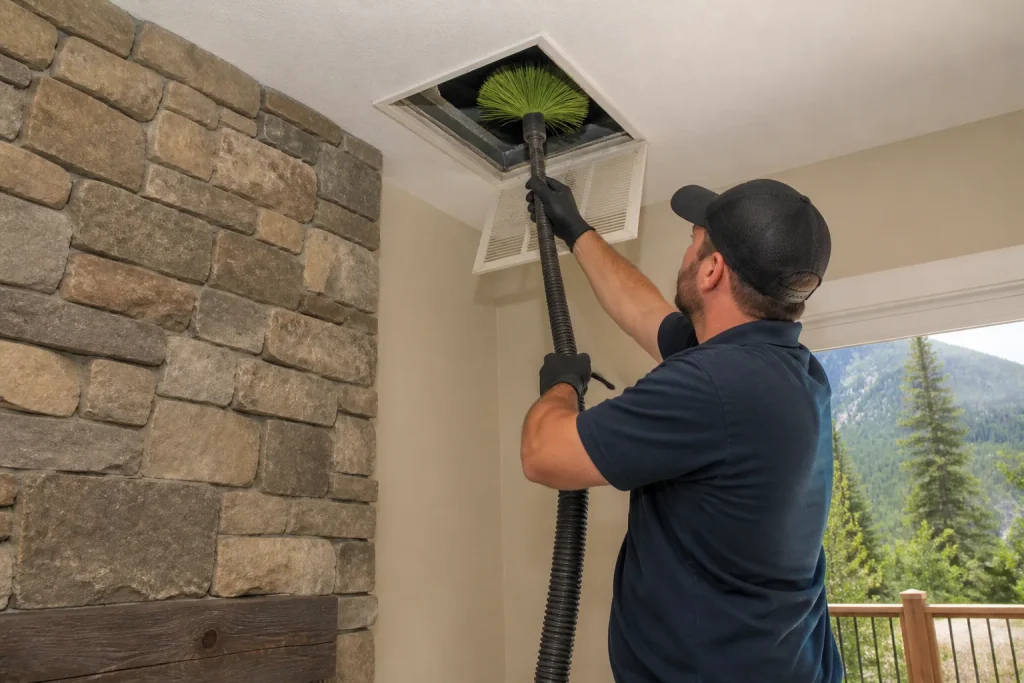
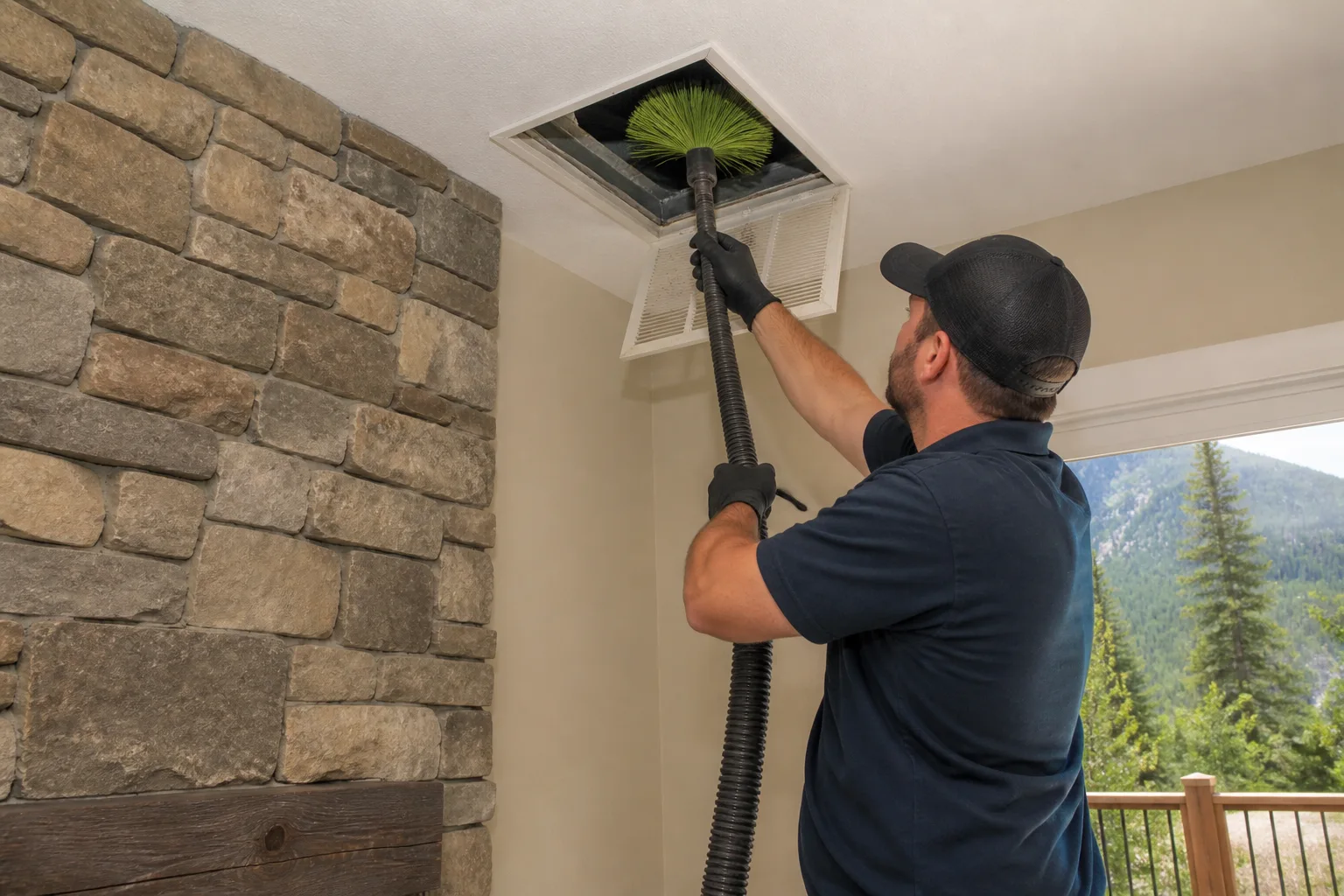
- Mechanical agitation equipment that reaches duct walls. A shop vac pushed into a register doesn’t agitate surfaces; it just moves loose debris around.
This is why we run equipment from Abatement Technologies and Nikro, and why our air duct cleaning work uses Rotobrush systems that agitate and vacuum simultaneously. That’s restoration-grade machinery, built for the kind of contamination that follows a sewage backup or a fire, not for a light dusting. When we do a job, we fix what we find, which sometimes means duct repair and sealing on top of the cleaning. Leaky or disconnected duct runs are exactly the path contamination uses to travel farther than it should.
When to Call a Pro (and When to Wait for a Scheduled Visit)
Call now for sewage intrusion, fire or smoke, or an active pest problem. Wait for a scheduled visit for musty odors, dust blowing from registers, post-renovation cleanup, or a system that hasn’t been serviced in years. If you’re unsure which category you’re in, call and describe what happened. We’ll tell you honestly whether you need fast dispatch or a regular appointment. If you call outside dispatch hours, we answer 24/7, and the call gets booked into the next opening, Sunday through Friday, 7am to 7pm.
Some jobs pair well with the main cleaning visit. If a dryer vent is also clogged, dryer vent cleaning is a dedicated service line for a reason: lint buildup is a leading cause of residential fires, and it belongs on the same visit. The same goes for HVAC cleaning, since the air handler and coil are part of the same system that moves air through your ducts. After mechanical cleaning, some Highlands homeowners choose filtration hardware from Honeywell or Aprilaire so the system keeps working after we leave.
One thing we’d rather say plainly: this work is thorough, not quick. A proper job means agitation, containment, and verification, and that takes real time. A contractor who promises you a fast pass over the registers isn’t doing the work.
The Bottom Line
Shut the system off first. Seal the registers. Photograph everything for your insurer. Then call. That order is what limits damage in Highlands, especially after a smoke event where altitude makes fast response matter more. And when you call, ask about HEPA-rated equipment and containment. Asking three good questions beats calling three companies.
If you’re in Highlands and need help, Air Duct Cleaning Highlands offers free estimates. Call (855) 658-5079. Our technicians have up to 13 years of experience, we’re equipped for cleaning, sanitizing, repair, and sealing in one visit, and we’ll tell you if the problem can wait. For the broader picture of what we do, start with Air Duct Cleaning Highlands.
Frequently Asked Questions
There’s no separate emergency price. The cost is set per job by the written estimate, and the estimate is free. Whole-system jobs vary with the size of the system and how far contamination has spread, so we quote after we see the ductwork rather than over the phone. Call (855) 658-5079 for an exact quote.
No. Running the fan moves contamination through every duct in the house and out through the registers. Shut the system off at the thermostat and the breaker before you do anything else. Then seal the registers and call a professional.
Usually because the work described isn’t the same work. A low quote often omits mechanical agitation, containment, or negative air equipment, which means the technician vacuums what’s reachable and leaves the rest. Ask what equipment will be on site before you book. Call (855) 658-5079 and we’ll explain exactly what a full job involves for your system.
For most homes, every few years is reasonable, and sooner after a fire, sewage event, pest problem, or major renovation. Homes in Highlands that run the system heavily through cold months may want a closer look more often. Call (855) 658-5079 and we can help you judge whether your ducts are due.
Written by the team at Air Duct Cleaning Highlands.
Need Air Duct Cleaning Help?
Call Air Duct Cleaning Highlands - the local pro we connect you with is licensed and insured, here with fast help in Highlands.
(855) 658-5079